Dalbergia nitidula
Baker
Glossy flat-bean
iNaturalist· cc-by-nc
(c) Mervyn Lotter, some rights reserved (CC BY-NC), uploaded by Mervyn Lotter
iNaturalist· cc-by-nc
(c) Francois du Randt, some rights reserved (CC BY-NC), uploaded by Francois du Randt
iNaturalist· cc-by-nc
(c) Troos van der Merwe, some rights reserved (CC BY-NC)
Description
A shrub or small tree. It loses its leaves during the year. It grows 4-12 m tall. The branches are stiff and erect. The crown is open. The bark is grey brown or reddish. It is rough and cracked. The leaves are compound with 4-7 pairs of leaflets and one at the tip. The leaflets are 2-3 cm long. The flowers are white and appear before the leaves. They occur in dense heads up to 10 cm across. Each flower is small and pea like. The fruit is a flat, thin brown pod. It is 7 cm long by 1.5 cm wide. It has a sharp tip. There are 1-2 seeds.
Edible Uses
Young leaves are chopped, washed, cooked and pounded with peanuts, then eaten with staple foods.
Traditional Uses
The young leaves are chopped, washed, cooked and pounded with peanuts and then eaten with the staple food.
This uses section is brief — help expand it
Medicinal Uses
The roots are aphrodisiac and emetic. They are pounded and soaked in warm water, the liquid is then gargled to treat toothache. The liquid should not be swallowed since the roots are toxic. An infusion of the roots is drunk as a cure for malaria and coughs. The roots are pounded and made into a soup that is used as a treatment for epilepsy. (see notes just above!) The leaves are chewed and applied to the site of a snakebite. The leaves are rubbed onto the skin as a cure for abscesses. The bark is used as a wound dressing and to treat ulcers. Several isoflavonoids, isoflavonoid-neoflavonoid dimers, pterocarpan-neoflavonoid oligomers and rotenoid glycosides have been isolated from the bark and heartwood.
Known Hazards
The roots are said to be toxic.
Distribution
It is a tropical plant. It grows in deciduous woodland. In Tanzania it grows between 300-1,700 m above sea level.
Where It Grows
Africa, Angola, Burundi, Central Africa, Congo, East Africa, Malawi, Mozambique, Namibia, Rwanda, South Africa, Southern Africa, Tanzania, Uganda, Zambia, Zimbabwe,
Cultivation
Plants can be grown from seed.
Propagation
Pods should be collected soon after maturing to avoid damage by insects. They are broken into one-seed pieces because extraction of seeds is difficult. These pieces are soaked in water for 6 hours before sowing. In general, germination is satisfactory and uniform. Seeds remain viable for a few months. Like many species within the family Fabaceae, once they have been dried for storage the seeds of this species may benefit from scarification before sowing in order to speed up germination. This can usually be done by pouring a small amount of nearly boiling water on the seeds (being careful not to cook them!) and then soaking them for 12 - 24 hours in warm water. By this time they should have imbibed moisture and swollen - if they have not, then carefully make a nick in the seedcoat (being careful not to damage the embryo) and soak for a further 12 hours before sowing. Softwood cuttings of many species, especially if taken from younger plants, will root in a well-drained, sandy medium in a closed case with bottom heat. Suckers.
Other Uses
The heartwood is purplish brown. It is hard, very durable and termite resistant. It is usually only available in small pieces, which limits its applications. It is used for building poles, pegs, fence poles, combs, clubs, tool handles and walking sticks. The wood is highly appreciated as firewood and for making charcoal.
Production
Leaves are collected during the rainy season.
Also Known As
Kafinulambasa, Lungwe, Mfunfu, Mgeja, Mhuga, Mjiha, Mobibi, Msinatemo, Munhenhe, Pinapasso, Purplewood dalbergia, Purplewood flat-bean, Unhungu
References (2)
- Ruffo, C. K., Birnie, A. & Tengnas, B., 2002, Edible Wild Plants of Tanzania. RELMA p 252
- World Checklist of Useful Plant Species 2020. Royal Botanic Gardens, Kew
More from Fabaceae
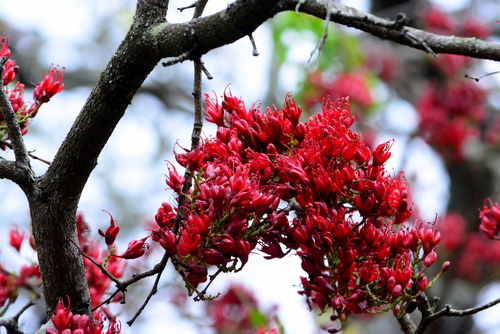
Schotia brachypetala
African Walnut, Tree fuchsia
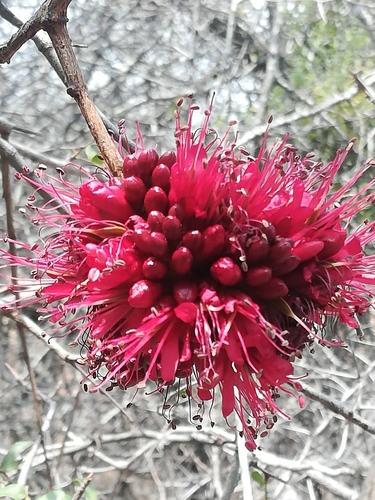
Schotia capitata
Dwarf boer-bean, Small schotia
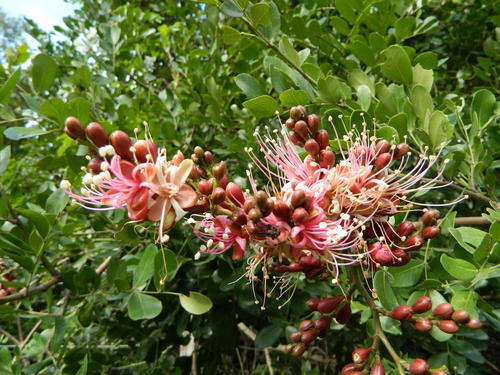
Schotia latifolia
Forest boerboon, Bush boer-bean
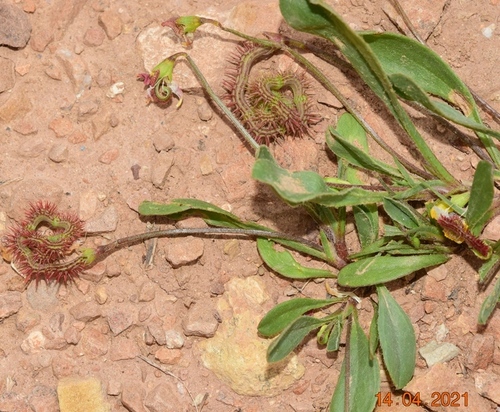
Scorpiurus muricatus
Prickly Scorpionstail
Scorpiurus vermiculatus
Prickly Scorpionstail, Common caterpillar plant
Senegalia ataxacantha
Flame acacia, Flame thorn