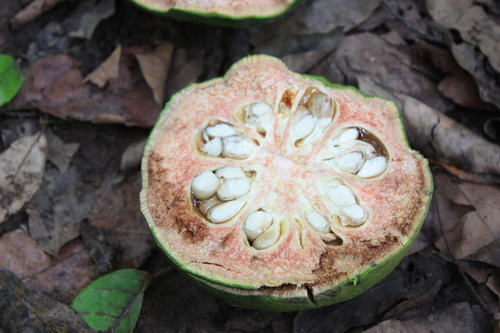
Acronychia chooreechillum
(Bailey) White
Mountain aspen
iNaturalist· cc-by-nc
(c) ryanthughes, some rights reserved (CC BY-NC)
iNaturalist· cc-by-nc
(c) ryanthughes, some rights reserved (CC BY-NC)
iNaturalist· cc-by-nc
(c) ryanthughes, some rights reserved (CC BY-NC)
Summary
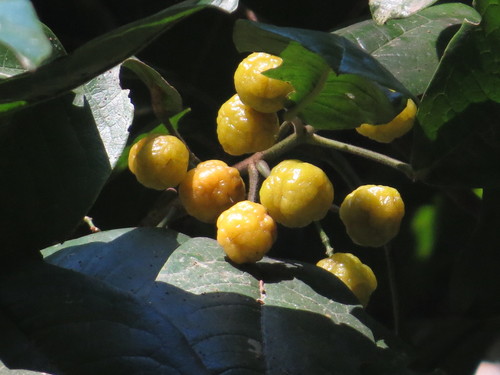
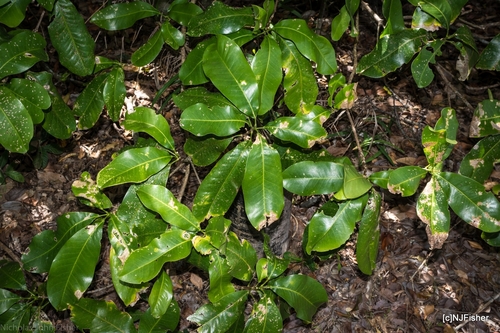
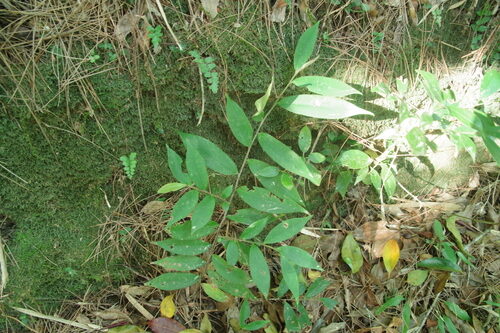
Source: WikipediaAcronychia chooreechillum, commonly known as mountain aspen, is a species of shrub or small rainforest tree that is endemic to north-eastern Queensland. It has mostly trifoliate leaves with elliptic to egg-shaped leaflets on stems that are more or less cylindrical, flowers in small groups in leaf axils and fleshy, egg-shaped or elliptical fruit.
Description
A shrub or small tree. It grows 5 m tall. There are prickles along the stem. The leaves are twice divided and there are 8-18 pairs of pinnae. There are up to 50 pairs of pinnules on each pinnae. The flowers are yellow. They are in large clusters at the ends of branches. The pods are flattened.
Edible Uses
The fruit is eaten.
Distribution
It is a tropical plant. It occurs in the rainforests in Northeast Queensland, Australia. It occurs in the higher altitudes. It will grow in cooler places but needs some protection from frosts. It needs well drained soil. It will grow in shade or sun.
Where It Grows
Australia*,
Cultivation
It is grown from seed. The seed are difficult to germinate. It can be grown from cuttings. Plants need to be well watered.
Production
Plants are very slow growing. Fruit are ripe July to September. (May to July)
Notes
There are 42-50 Acronychia species.
References (5)
- Cooper W & Cooper W T, 1994, Fruits of the Rain Forest. RD Press p 18
- Cooper, W. and Cooper, W., 2004, Fruits of the Australian Tropical Rainforest. Nokomis Editions, Victoria, Australia. p 457
- Elliot, W.R., & Jones, D.L., 1982, Encyclopedia of Australian Plants suitable for cultivation. Vol 2. Lothian. p 142
- Jones D, L, 1986, Ornamental Rainforest Plants in Australia, Reed Books, p 102
- Townsend, K., 1994, Across the Top. Gardening with Australian Plants in the tropics. Society for Growing Australian Plants, Townsville Branch Inc. p 69