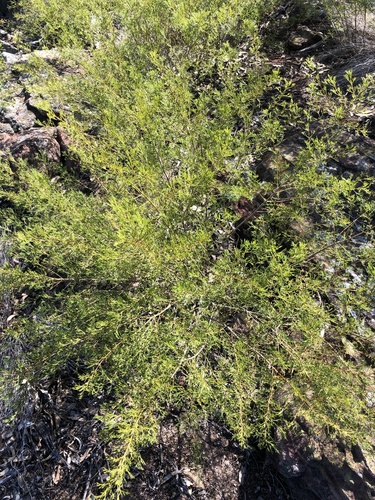
Citrus latifolia
(Yu. Tanaka) Tanaka
Bears' Lime, Tahitian lime, Persian lime
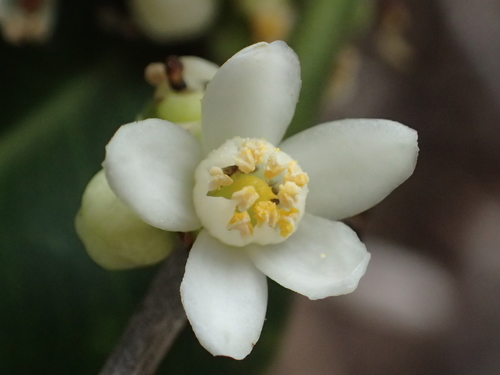
iNaturalist· cc-by-nc
(c) emaw3319, some rights reserved (CC BY-NC)
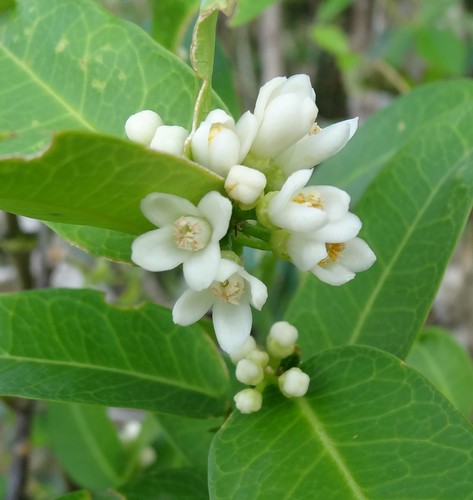
iNaturalist· cc-by-nc
(c) Brendan O'Loughlin, some rights reserved (CC BY-NC)
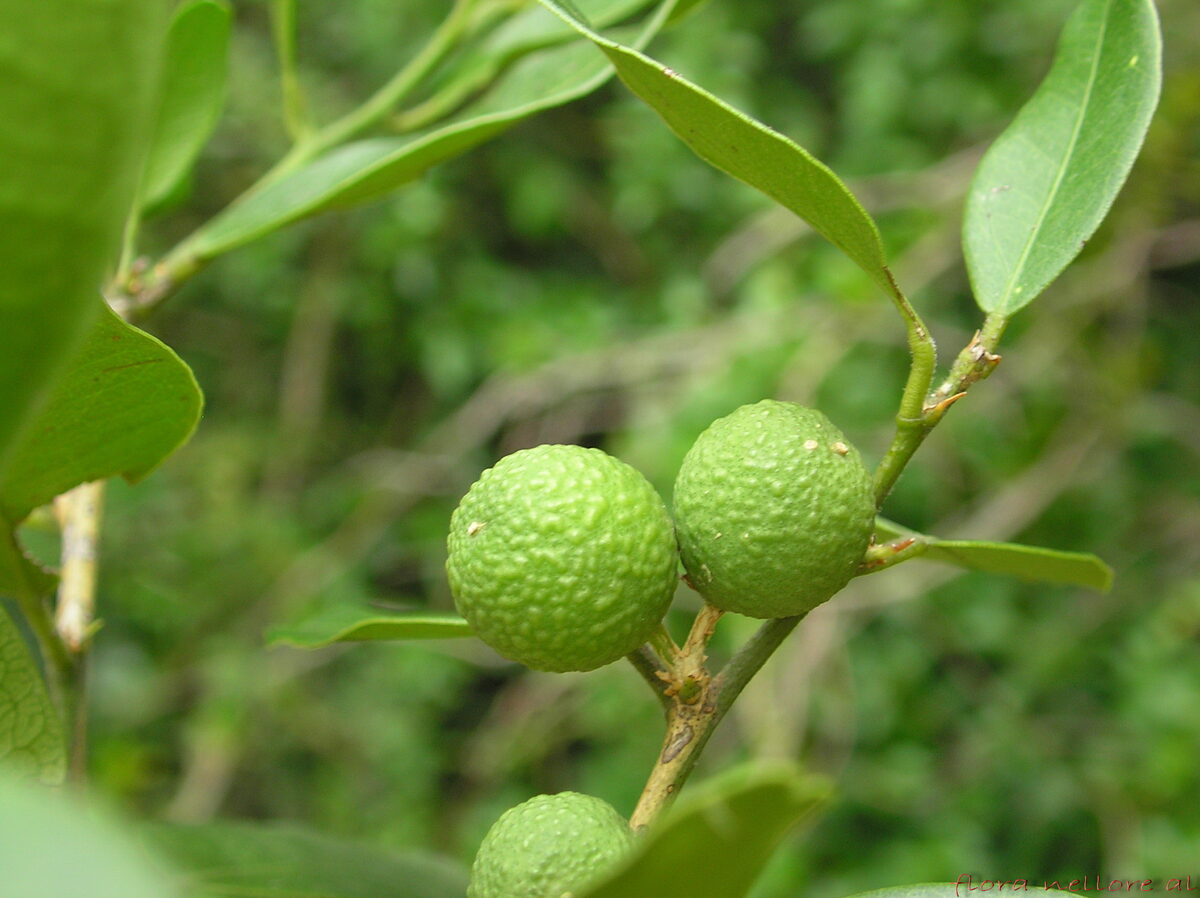
iNaturalist· cc-by-nc
(c) Brendan O'Loughlin, some rights reserved (CC BY-NC)
Summary
Source: WikipediaEvergreen tree growing 5 m tall by 5 m wide at a medium rate. Hardy to UK zone 10. Flowers are insect-pollinated. Notable for attracting wildlife. Grows in light sandy, medium loamy, and heavy clay soils with good drainage. Suitable for mildly acidic and neutral soils. Tolerates semi-shade (light woodland) and prefers moist soil.
Description
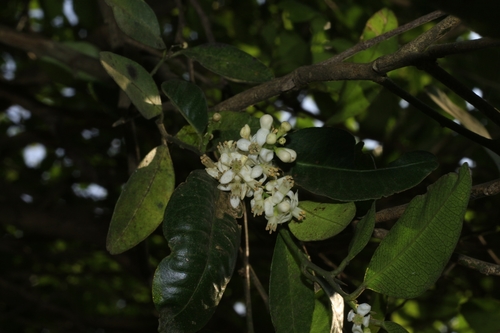
A small evergreen tree. It is almost thornless. It grows 1.8-4.5 m high. The branches droop. The leaves have broad, flat-winged leaf stalks. Young leaves are mauve. The flowers have a purple tinge and have a scent. They occur throughout the year. The fruit is medium sized, green and very sour. The fruit are round. They are 3-4 cm across. They can be 8-10 cm across. The skin is thin and smooth. The skin remains bright green when ripe. The pulp is green and seedless.
Edible Uses
The seedless, juicy, thin-skinned fruit has a translucent pale green flesh that is tender, very acidic, and sugarless, with an authentic lime flavour. The fruit is approximately 6cm in diameter, often with slightly nippled ends, and is usually sold while still green, though it yellows at full ripeness. Fruits are used to make drinks, and the juice can substitute for vinegar. It is also widely available dried, as it is commonly used in Persian cuisine. Compared to Key Lime (Citrus aurantifolia), Tahitian Lime is larger and thicker-skinned, with less intense citrus aromatics. It is less acidic than key limes and lacks their characteristic bitterness.
Traditional Uses
The fruit is used for juice and processed products.
This uses section is brief — help expand it
Medicinal Uses
The fruit juice is used medicinally. Given quickly, lime juice is an effective antidote for the painful oral irritation and inflammation caused by biting into aroids such as Dieffenbachia spp., Xanthosoma spp., Philodendron spp., and related species. It is also applied to relieve the effects of stinging corals. Citrus species are rich in vitamin C, flavonoids, acids, and volatile oils, and research into their active ingredients is ongoing. They contain coumarins such as bergapten, which sensitizes the skin to sunlight; bergapten is sometimes added to tanning preparations to promote pigmentation, though it can cause dermatitis or allergic reactions in some people. More recent applications include use as sources of antioxidants and chemical exfoliants in specialized cosmetics.
Distribution
It grows in temperate climates. It is more tolerant of cold than Mexican limes. It cannot tolerate wet soil. It needs a warm sheltered site. It suits hardiness zones 10-12.
Where It Grows
Asia, Australia, Brazil, French Polynesia, Hawaii, Mediterranean, Mexico, Middle East, India, Iran, Pacific, South America, Tahiti, USA,
Cultivation
Plants can be grown by grafting. A spacing of 4-6 m is suitable. Normally when seeds occur these give trees and fruit of mixed quality. Air-layering is the best method. Trees can be budded.
Propagation
Seed. Usually grafted.
Other Uses
An essential oil is extracted from the fruit peel. Lime juice is used as a hair rinse after shampooing, and can bleach light streaks into hair when applied and then exposed to sunlight. It is also applied to the face as a freshening lotion. The acid juice can clean items such as the insides of coffee and teapots, and diluted lime juice will dissolve calcium deposits in kettles overnight.
Production
A tree can produce 28-40 kg per year. They occur throughout the year. Most fruit are produced without fertilisation. Fruit can be stored after ripening on the tree or in a fridge for 6-8 weeks.
Other Information
It is a cultivated plant.
Notes
There are 20 Citrus species. Several hybrids have been formed. This one may be a cross between Citrus aurantifolia and another species.
Synonyms
Also Known As
Limao-tahiti, Limon tahiti
References (17)
- Arora, R. K., 2014, Diversity in Underutilized Plant Species - An Asia-Pacific Perspective. Bioversity International. p 63
- Cundall, P., (ed.), 2004, Gardening Australia: flora: the gardener's bible. ABC Books. p 384
- Etherington, K., & Imwold, D., (Eds), 2001, Botanica's Trees & Shrubs. The illustrated A-Z of over 8500 trees and shrubs. Random House, Australia. p 215
- Facciola, S., 1998, Cornucopia 2: a Source Book of Edible Plants. Kampong Publications, p 215
- Hibbert, M., 2002, The Aussie Plant Finder 2002, Florilegium. p 67
Show all 17 references Hide references
- Lorenzi, H., Bacher, L., Lacerda, M. & Sartori, S., 2006, Brazilian Fruits & Cultivated Exotics. Sao Paulo, Instituto Plantarum de Estuados da Flora Ltda. p 534
- Lyle, S., 2006, Discovering fruit and nuts. Land Links. p 135
- Morton, J. F., 1987, Fruits of Warm Climates. Wipf & Stock Publishers p 172
- Segura, S., et al, 2018, The edible fruit species in Mexico. Genet Resour Crop Evol (2018) 65:1767–1793
- Seidemann J., 2005, World Spice Plants. Economic Usage, Botany, Taxonomy. Springer. p 107
- Sharma, B.B., 2005, Growing fruits and vegetables. Publications Division. Ministry of Information and broadcasting. India. p 37
- Solomon, C., 2001, Encyclopedia of Asian Food. New Holland. p 220
- Staples, G.W. and Herbst, D.R., 2005, A tropical Garden Flora. Bishop Museum Press, Honolulu, Hawaii. p 503
- Systematic pomology (Kwaju Bunruigaku) 140. 1951
- Tankard, G., 1990, Tropical fruit. An Australian Guide to Growing and using exotic fruit. Viking p 58
- van Wyk, B., 2005, Food Plants of the World. An illustrated guide. Timber press. p 137
- Wiersema, J. H. & Leon, B., 2013, World Economic Plants. A Standard Reference CRC Press. 2nd Ed. p 180