Grewia conocarpoides
Burret
gbif· cc-by
Meise Botanic Garden
gbif· cc-by
Royal Botanic Gardens, Kew
gbif· cc-by
Royal Botanic Gardens, Kew
Description
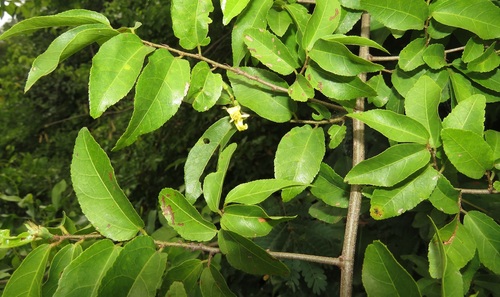
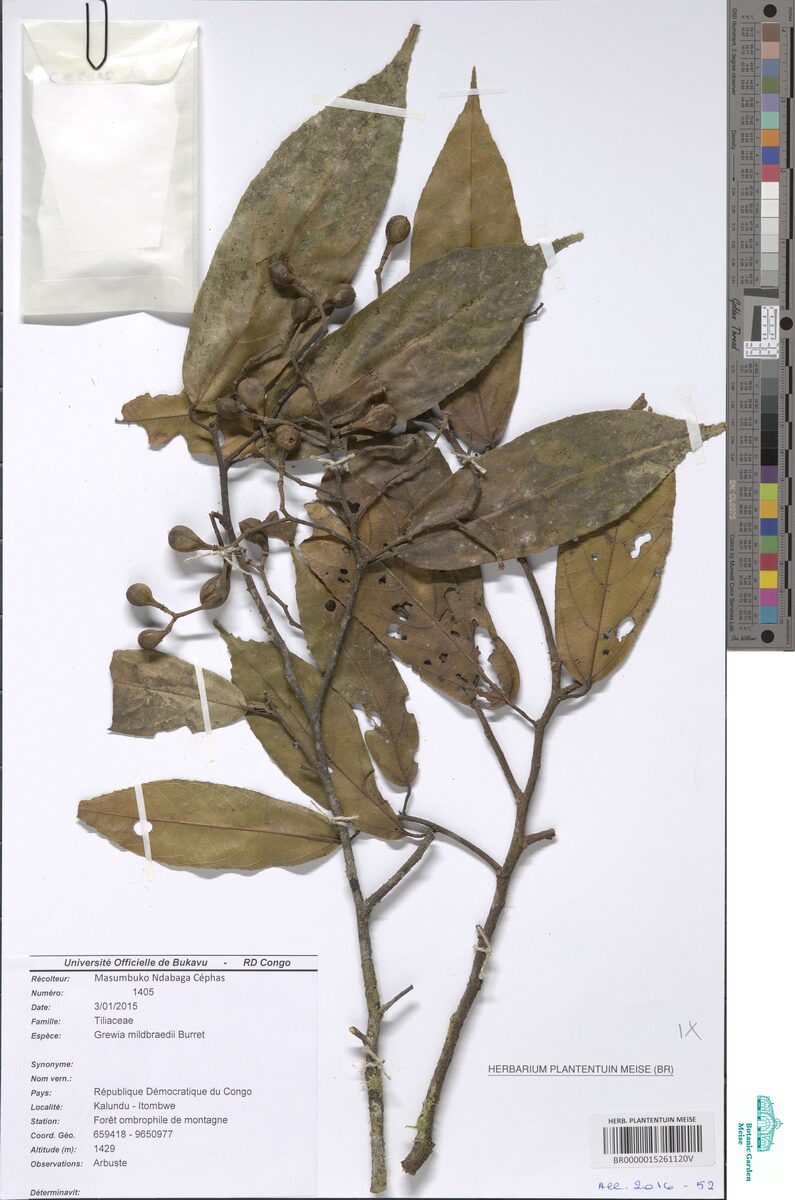
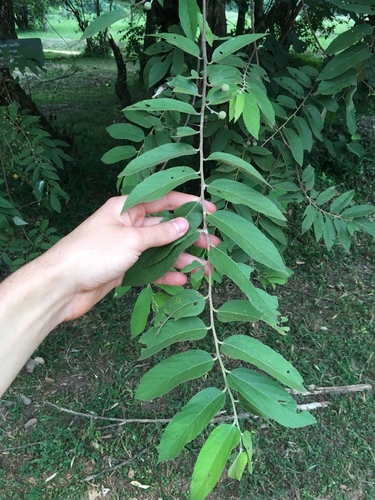
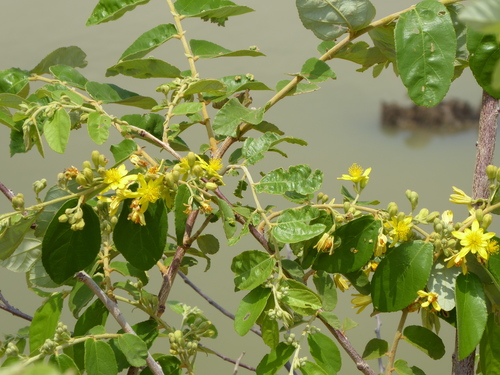
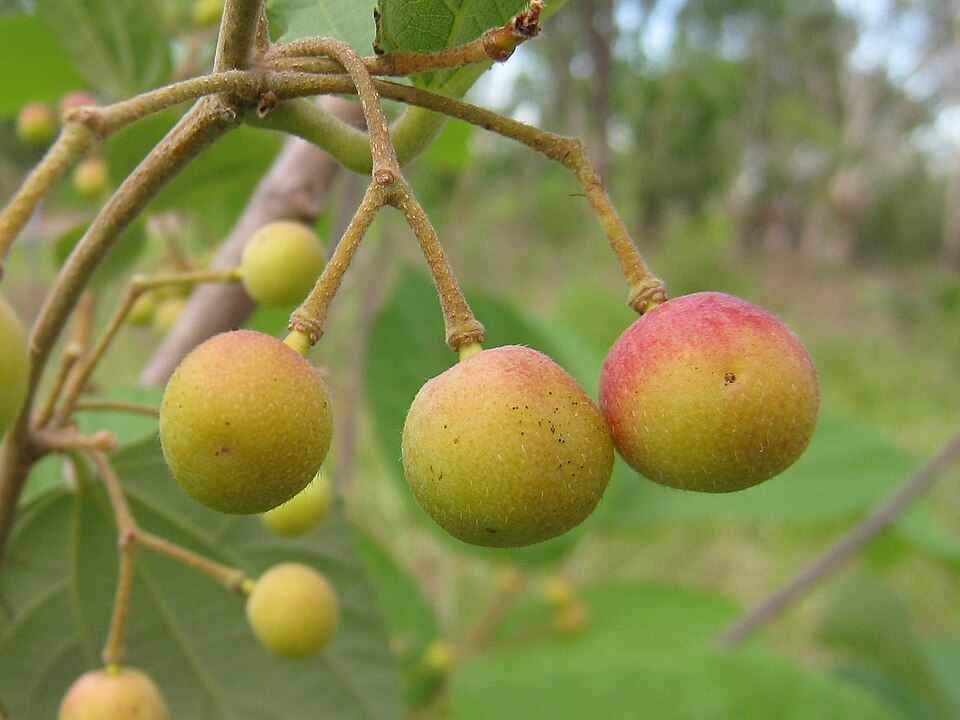
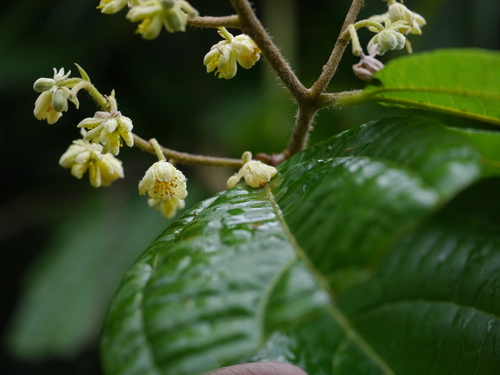
A shrub or small tree. It grows 5 m tall. The crown is round and dense. The bark is pale grey. The leaves are stiff and oblong. They are 6-9 cm long. There are small teeth around the edge. The leaves are green above and grey-white underneath due to hairs. The leaves have a long tip. The flowers are green to white. They have a strong scent. The fruit are fleshy berries. They are 1.7 cm across and orange-red when ripe.
Edible Uses
The ripe fruit are collected from the tree and eaten fresh as a snack, and are especially popular with children.
Traditional Uses
The ripe fruit are collected from the tree and eaten fresh as a snack.
This uses section is brief — help expand it
Medicinal Uses
Grewia species are valued in many cultures for their medicinal virtues. The main medicinal action appears to come from the mucilage that is found in the leaves, stems and roots, which has been shown to have soothing and healing properties. Taken internally it is often used as a remedy for diarrhoea and dysentery, for example, whilst externally it is applied to wounds, cuts, ulcers, irritations etc. The plant can be taken as a simple infusion or decoction, or it can be applied topically as a poultice of the plant, or the mucilage can be extracted from the plant, if required, by maceration and then decoction. We have no specific records for this species, but it is likely to have been used as a traditional medicine.
Distribution
It is a tropical plant. It grows in Miombo woodland. It grows between 800-1,200 m above sea level.
Where It Grows
Africa, Central Africa, Congo DR, East Africa, Tanzania, Zambia,
Cultivation
Plants can be grown from fresh seeds. It can be cut back and will re-grow.
Propagation
Seed - we have no specific information for this species but seed of this genus is generally best sown as soon as it is ripe. Stored seed has a hard seedcoat and may benefit from scarification before sowing in order to speed up and improve germination. This can usually be done by pouring a small amount of nearly boiling water on the seeds (being careful not to cook them!), allowing the mix to cool somewhat and then leaving it in a warm place to soak for 12 - 24 hours. Sow the seeds in situ or in a nursery seedbed or trays - do not allow the compost to become dry. Germination and early growth are usually quite quick. Cuttings - best taken with a heel.
Other Uses
The wood is hard and heavy. It is used for building poles, walking sticks, clubs, tool handles, withies and bows. The wood is used for fuel.
Production
In Tanzania ripe fruit are available from April to June.
Other Information
The fruit are eaten especially by children.
Notes
They are also put in the family Tiliaceae.
Synonyms
References (3)
- JSTOR Global Plants (As Grewia gilviflora)
- Njana, M. A., et al, 2013, Are miombo woodlands vital to livelihoods of rural households? Evidence from Urumwa and surrounding communities, Tabora, Tanzania. Forests, Trees and Livelihoods, 22:2, 124-140
- Ruffo, C. K., Birnie, A. & Tengnas, B., 2002, Edible Wild Plants of Tanzania. RELMA p 346