Senna reticulata
(Willd.) H. S. Irwin & Barneby
Golden lantern tree
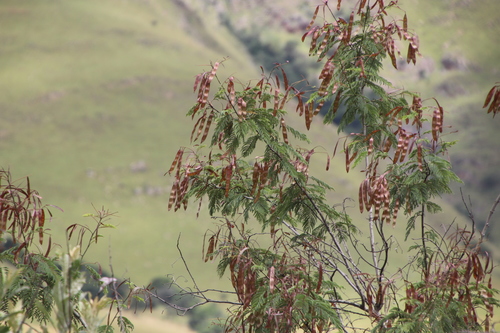
iNaturalist· cc-by-nc
(c) Edith Belén Jiménez Díaz, some rights reserved (CC BY-NC), uploaded by Edith Belén Jiménez Díaz
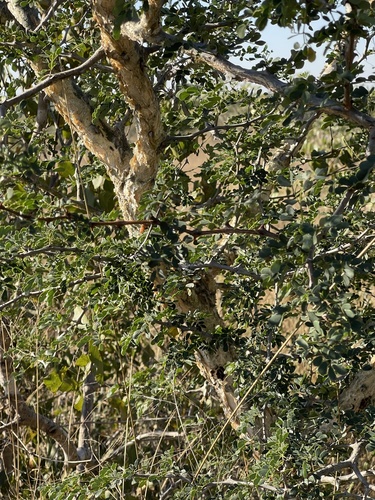
iNaturalist· cc-by
(c) Ricard Busquets Reverte, some rights reserved (CC BY)
Summary
Source: WikipediaSenna reticulata, the mangerioba grande or maria mole in Portuguese, is a pioneer tree species found on highly fertile floodplains in South America. It has some medicinal uses, but is regarded by farmers as a noxious weed, named matapasto (meadow killer) due to its ability to grow fast and outshade neighbouring plants.
Description
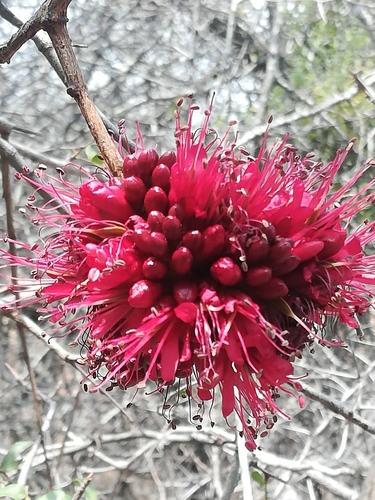
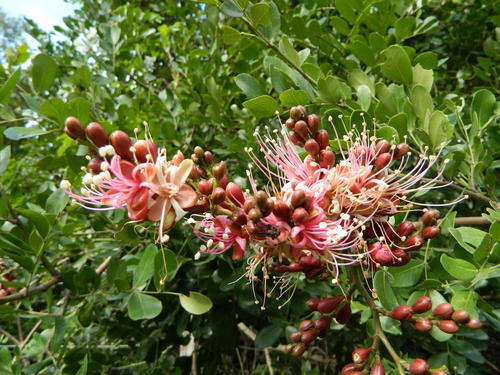
A tree. It grows 12 m tall. The branches occur from the base. They are irregularly angled. The leaves are compound with leaflets along the stalk. There are 8-14 pairs of leaflets that are oblong and 7-18 cm long by 3-8 cm wide. The flowers are in groups at the ends of branches. They have yellow bracts. The flowers are buttercup shaped and orange to yellow. The fruit is a black pod 10-15 cm long. It is enlarged on each side with ribs across it. The seeds are narrowly oval, flattened and 5 mm long.
Medicinal Uses
It is used in the local folk medicine for liver problems and rheumatism. 1,3,8-Trihydroxyanthraquinone is an organic compound found in alcoholic extracts of the wood of the plant. The extract also contains, among other products chrysophanol (1,8-dihydroxy-3-methylanthraquinone), physcion (1,8-dihydroxy-3-methyl-6-methoxyanthraquinone), aloe-emodin (3-carbinol-1,8-dihydroxyanthraquinone), lunatin (3-methoxy-1,6,8-trihydroxyanthraquinone), emodin (6-methyl-1,3,8-trihydroxyanthraquinone), and chrysophanol-10,10'-bianthrone. The xanthonoid cassiaxanthone can be found in S. reticulata as well as the anthraquinone rhein.
Known Hazards
The branches and inflorescence are nearly always infested by small ants that can bite severely.
Distribution
It is a tropical plant. It grows along river banks and on the edges of forests in wet areas up to 1,000 m above sea level.
Where It Grows
Amazon*, Belize, Bolivia, Brazil, Central America, Colombia, Costa Rica, Ecuador, El Salvador, French Guiana, Guatemala, Guyana, Honduras, Mexico, Nicaragua, Panama, Peru, South America, Suriname, Trinidad-Tobago, Venezuela,
Cultivation
Plants can be grown from seeds.
Propagation
Seed - it has a hard seedcoat and may benefit from scarification before sowing in order to speed up and improve germination. This can usually be done by pouring a small amount of nearly boiling water on the seeds (being careful not to cook them!) and then soaking them for 12 - 24 hours in warm water. By this time they should have imbibed moisture and swollen - if they have not, then carefully make a nick in the seedcoat (being careful not to damage the embryo) and soak for a further 12 hours before sowing.
Other Uses
The plant often springs up abundantly on cleared land, forming dense stands of great extent. This makes the plant an ideal candidate as a pioneer species for restoring native woodland.
Notes
Also as Caesalpinaceae.
Synonyms
Also Known As
Pohon lentera emas, Retama