Crotalaria senegalensis
(Pers.) Bacle ex DC.
iNaturalist· cc-by-nc-sa
(c) MBG, some rights reserved (CC BY-NC-SA)
Description
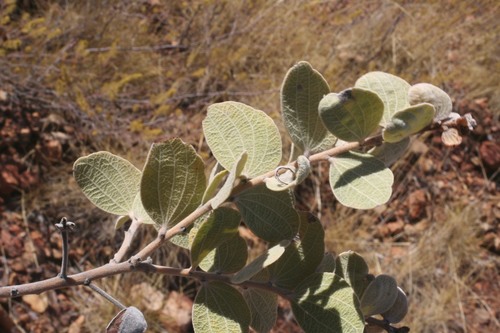
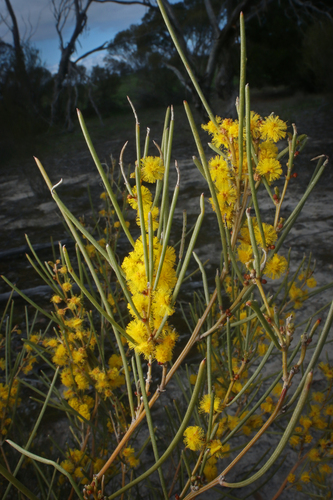
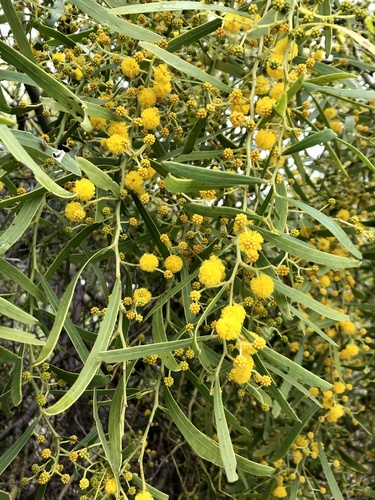
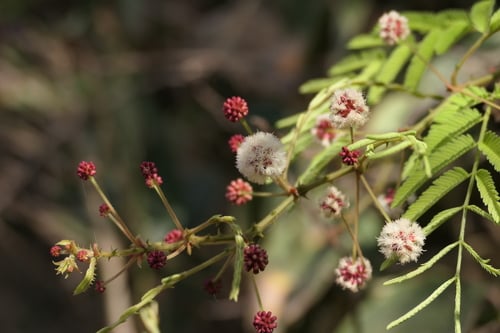
An annual herb. It grows up to 1 m tall. It is slightly woody and can be erect or lying over. The leaves are compound and have 3 leaflets. The leaflets are 2-7 cm long by 1-3 cm wide. They are narrowly oval. They are hairy underneath. The flowering shoots are 12-45 cm long with 16-40 loosely arranged flowers. They are bright yellow. The fruit are pods 1-2 cm long and 0.6 cm wide. The seeds are 3 mm long. They are yellowish-brown.
Edible Uses
The leaves are eaten as a vegetable and are occasionally harvested.
Distribution
It is a tropical plant. It grows in dry fields in the drier regions of West Africa. It grows in savannah. It is usually on sand between 250-1,650 m above sea level.
Where It Grows
Africa, Angola, Australia, Botswana, Burkina Faso, Cameroon, Cape Verde, Central Africa, Congo, East Africa, Ethiopia, Malawi, Mozambique, Nigeria, Senegal, Southern Africa, Tanzania, West Africa, Zambia, Zimbabwe,
Other Information
It is occasionally harvested.
Also Known As
Barasan, Masode fayar, Sarabuni
References (4)
- Abukutsa-Onyango, M.O., 2004. Crotalaria brevidens Benth. [Internet] Record from Protabase. Grubben, G.J.H. & Denton, O.A. (Editors). PROTA (Plant Resources of Tropical Africa), Wageningen, Netherlands. < http://database.prota.org/search.htm>. Accessed 15 October 2009.
- Burkill, H. M., 1985, The useful plants of west tropical Africa, Vol. 3. Kew.
- Grubben, G. J. H. and Denton, O. A. (eds), 2004, Plant Resources of Tropical Africa 2. Vegetables. PROTA, Wageningen, Netherlands. p 230
- World Checklist of Useful Plant Species 2020. Royal Botanic Gardens, Kew