Crotalaria trichotoma
Bojer
Cusara pea
iNaturalist· cc0
no rights reserved, uploaded by 葉子
iNaturalist· cc-by-nc
(c) Matthew Thompson, some rights reserved (CC BY-NC)
iNaturalist· cc-by-nc
(c) tern911, some rights reserved (CC BY-NC)
Description
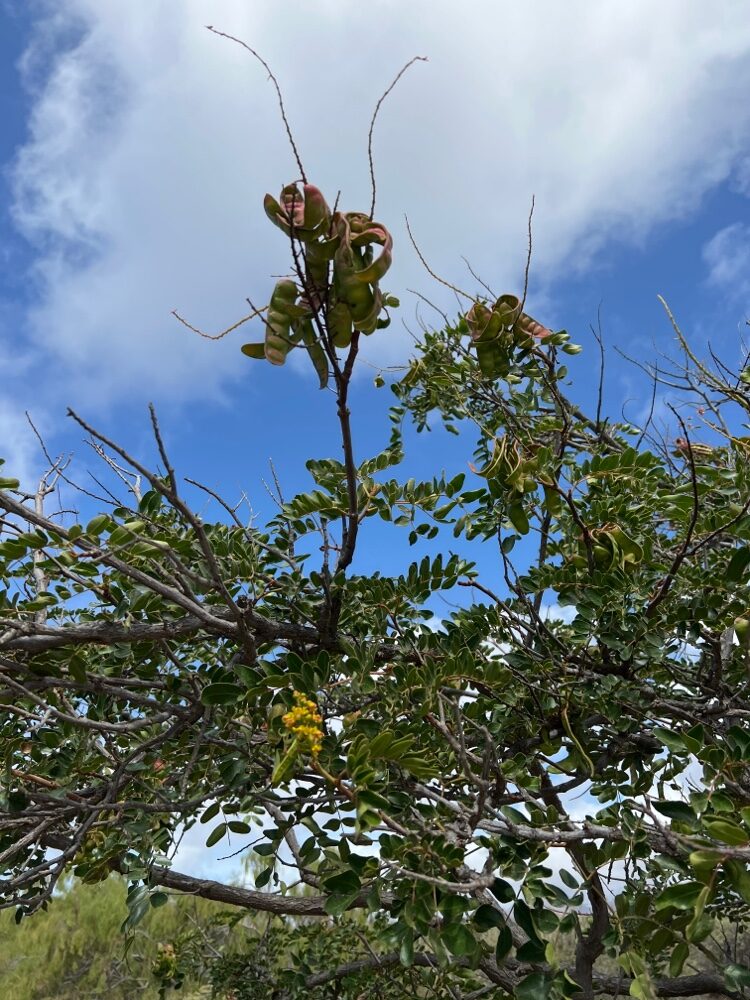
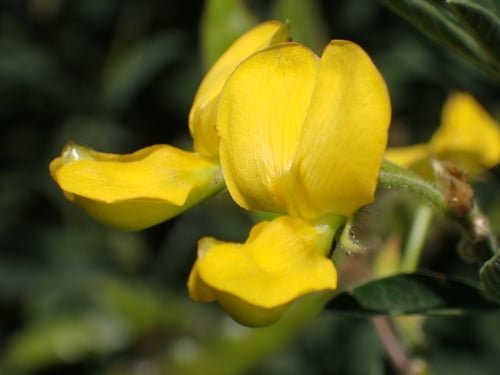
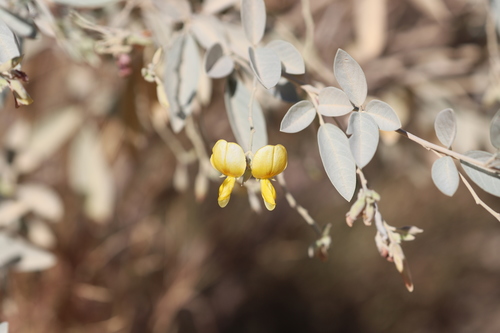
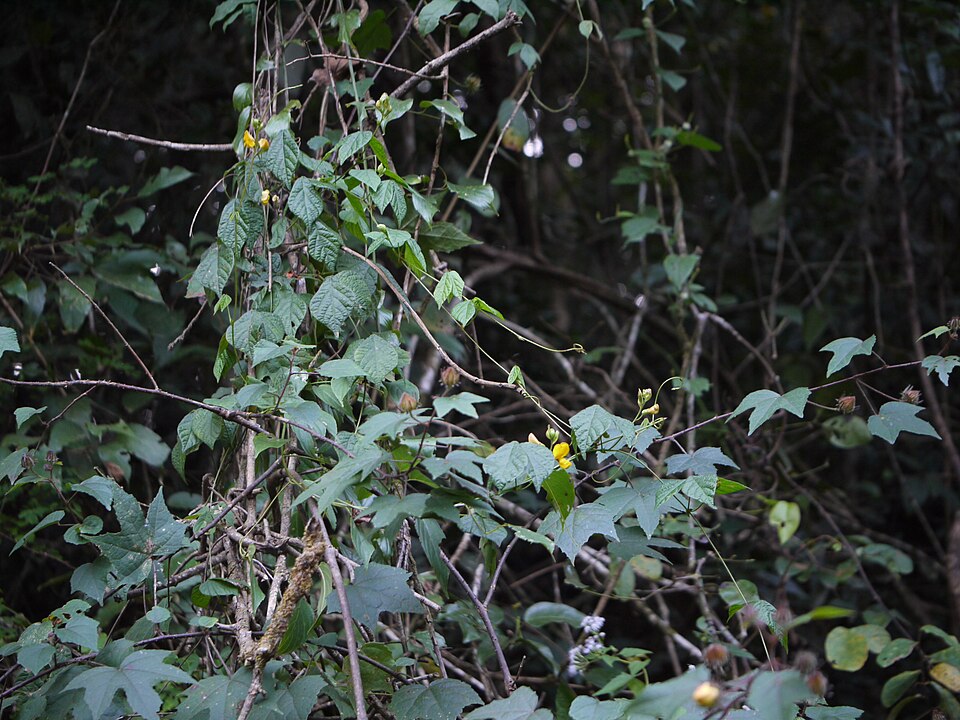
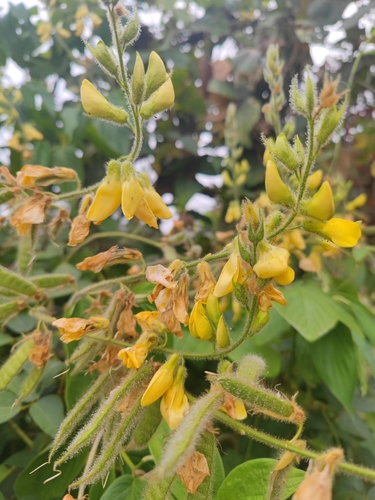
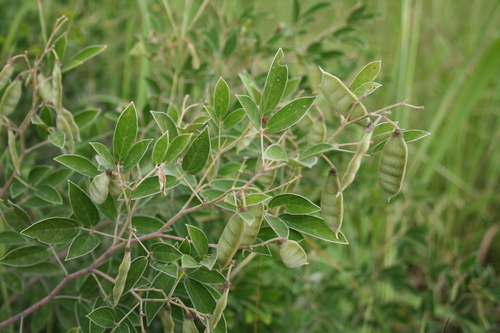
A shrub. It grows 2 m tall. The branches are angled with ribs along them and are hairy. The leaves have 3 leaflets. The leaflets are narrowly oval and 6-10 cm long by 1-2 cm wide. They are hairy underneath. There are 10-20 flowers together at the ends of the branches. The flowers are yellow. The pod is 3-4 cm long by 0.7-1.2 wide. There are 50-70 seeds. The seeds are a dull orange. They are 2.2-2.8 mm long.
Traditional Uses
Caution: It should probably not be eaten in large amounts due to alkaloids.
This uses section is brief — help expand it
Known Hazards
No specific mention of toxicity has been seen for this species, but many members of this genus are known to contain pyrrolizidine alkaloids, the most potent of which in this genus are monocrotaline, retrorsine and retronecine. These alkaloids have a cumulative effect upon the body and, unless concentrations in a plant are high, occasional consumption is generally completely safe. Pyrrolizidine alkaloids are derived from amino acids including ornithine. Many of these alkaloids have pronounced hepatic toxicity, but the lungs and other organs may be affected as well. Mutagenic and carcinogenic activities of pyrrolizidine alkaloids have also been reported.
Distribution
It is a tropical plant. It grows up to 1,200 m above sea level.
Where It Grows
Asia, Australia, Brazil, Central America, China, India, Madagascar, Mauritius, Mozambique, Nicaragua, South America, Tanzania, Zimbabwe,
Cultivation
Plants can be grown from seeds. The seeds should be soaked in warm water before planting.
Propagation
Seed - sow in situ. Pre-soaking the seed for 12 hours in warm water can help to reduce germination time.
Other Uses
The bark contains fibre, but this is of poor quality. It is unsuitable for making bags, but is possibly adequate for cordage. Because of its quick growth and good production of green matter, this species is grown as a green manure and cover crop in tea, coffee, rubber and citrus plantations. It is especially grown in locations where Crotalaria micans is severely attacked by Ragmus bugs or where a lower-growing cover is preferred. This species performs better on degraded and compacted soils than most other green manure crops. It is cultivated before pineapples in order to reduce problems from nematode pests. The nemotodes hatch when this species is growing, but the plant contains the pyrrolizidine alkaloid monocrotaline, which is toxic to root-knot nematodes (Meloidogyne spp.)..
Synonyms
References (1)
- World Checklist of Useful Plant Species 2020. Royal Botanic Gardens, Kew