Celtis laevigata var. reticulata
Willd., (Torr.) L. D. Benson
Western Hackberry, Netleaf hackberry
iNaturalist· cc-by-sa
(c) Douglas Goldman, some rights reserved (CC BY-SA), uploaded by Douglas Goldman
iNaturalist· cc-by-nc
(c) Becky Brenner, some rights reserved (CC BY-NC), uploaded by Becky Brenner
iNaturalist· cc-by-nc
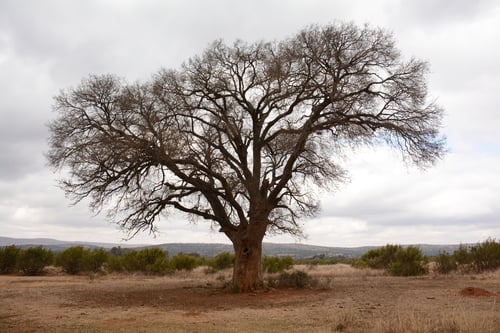
(c) Roberto R. Calderón, some rights reserved (CC BY-NC), uploaded by Roberto R. Calderón
Summary
Source: WikipediaCeltis laevigata is a medium-sized tree native to North America. Common names include sugarberry, southern hackberry, or in the southern U.S. sugar hackberry or just hackberry. Sugarberry is easily confused with common hackberry (C. occidentalis) where the range overlaps. Sugarberry has narrower leaves with mostly smooth margins, the berries are juicier and sweeter, while the bark is less corky. The species can also be distinguished by habitat: where the ranges overlap, common hackberry occurs primarily in upland areas, whereas sugarberry occurs mainly in bottomland areas. Sugarberry's range extends from the Southeastern United States west to Texas and south to northeastern Mexico. It is also found on the island of Bermuda.
Description
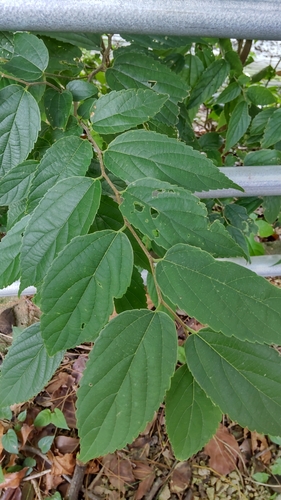
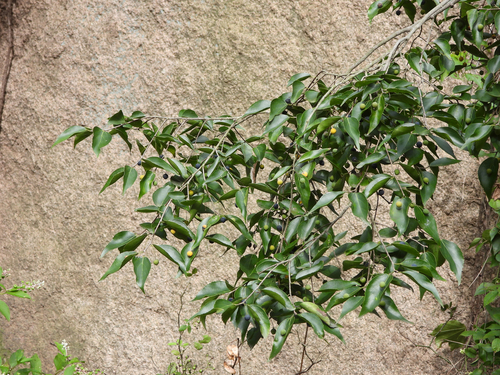
A deciduous tree or large shrub. It has a short trunk. The bark is warty. The crown is open and spreading. It grows 6-9 m tall. The trunk can be 30 cm across. The leaves are in 2 rows. They are 2.5-6 cm long by 2-4 cm wide. They vary in shape but are often oval. The base is unequal and rounded or notched. There are 3 main veins. The leaves are dark green and rough above and yellow-green underneath. There is a network of raised veins underneath. The flowers are 3 mm wide and green. There are male and female flowers at the base of young leaves. The fruit are small and pea size. They are orange-red.
Edible Uses
The fruit are pounded into a paste with seeds and all and eaten with animal fat or corn meal. They can also be eaten fresh or made into jams and jellies.
Traditional Uses
The fruit are pounded into a paste, seeds and all and eaten with animal fat or corn meal. They can also be eaten fresh or made into jams and jellies.
Distribution
It grows in moist soils along streams. It can also grow in deserts. It can grow in arid places. In the southern USA it grows between 450-1800 m altitude. It suits hardiness zones 6-10. Arboretum Tasmania. ?
Where It Grows
Australia, Britain, Mexico, North America, Tasmania, USA,
Notes
There are 70-100 Celtis species. They are mostly in the tropics. There are 8-10 species in tropical America. Also put in the family Ulmaceae.
Synonyms
Also Known As
Palo blanco
References (10)
- Ann. Lyceum Nat. Hist. New York 2:247. 1828
- Beckstrom-Sternberg, Stephen M., and James A. Duke. "The Foodplant Database." http://probe.nalusda.gov:8300/cgi-bin/browse/foodplantdb.(ACEDB version 4.0 - data version July 1994)
- Brickell, C. (Ed.), 1999, The Royal Horticultural Society A-Z Encyclopedia of Garden Plants. Convent Garden Books. p 244
- Cundall, P., (ed.), 2004, Gardening Australia: flora: the gardener's bible. ABC Books. p 353
- Etherington, K., & Imwold, D., (Eds), 2001, Botanica's Trees & Shrubs. The illustrated A-Z of over 8500 trees and shrubs. Random House, Australia. p 197
Show all 10 references Hide references
- Facciola, S., 1998, Cornucopia 2: a Source Book of Edible Plants. Kampong Publications, p 75
- https://www.fireflyforest.com/flowers/category/edible-plants/ Edible Plants – Southeastern Arizona Wildflowers and Plants
- Little, E.L., 1980, National Audubon Society Field Guide to North American Trees. Alfred A. Knopf. p 415
- Medsger, O. P., 1939, Edible Wild Plants. Macmillan Company. p 5 (As Celtis reticulata)
- Plants for a Future database, The Field, Penpol, Lostwithiel, Cornwall, PL22 0NG, UK. http://www.scs.leeds.ac.uk/pfaf/