Humulus japonicus
Siebold.&Zucc.
Japanese Hop
wikimedia· cc-by-sa
Yoshikazu Takahira (via Wikimedia Commons)
wikimedia· pd
Siebold & Zucc (via Wikimedia Commons)
wikimedia· cc-by-sa
Kenraiz (via Wikimedia Commons)
Description
Humulus japonicus is a PERENNIAL CLIMBER growing to 6 m (19ft 8in) at a fast rate. See above for USDA hardiness. It is hardy to UK zone 5 and is not frost tender. It is in flower from July to August, and the seeds ripen from September to October. The species is dioecious (individual flowers are either male or female, but only one sex is to be found on any one plant so both male and female plants must be grown if seed is required). and is pollinated by Wind. The plant is not self-fertile. Suitable for: light (sandy), medium (loamy) and heavy (clay) soils. Suitable pH: mildly acid, neutral and basic (mildly alkaline) soils. It can grow in semi-shade (light woodland) or no shade. It prefers moist soil.
Edible Uses
Oil. Young leaves and young shoots - cooked. Use before the end of May.
Medicinal Uses
Diuretic Tonic Urinary. The whole plant is diuretic and a genito-urinary tonic.
Distribution
E. Asia - China, Japan, Korea.
Where It Grows
TEMPERATE ASIA: Mongolia, Russian Federation (Primorye, Amur), China (Anhui Sheng, Fujian Sheng, Guangdong Sheng, Guangxi Zhuangzu Zizhiqu, Guizhou Sheng, Hainan Sheng, Hebei Sheng, Heilongjiang Sheng, Henan Sheng, Hubei Sheng, Hunan Sheng, Jiangsu Sheng, Jiangxi Sheng, Jilin Sheng, Liaoning Sheng, Shaanxi Sheng, Shandong Sheng, Shanxi Sheng, Sichuan Sheng, Xizang Zizhiqu, Yunnan Sheng, Zhejiang Sheng), Korea, Japan (Hokkaidô, Honshu, Kyushu, Ryukyu Islands, Shikoku), Taiwan TROPICAL ASIA: Vietnam
Cultivation
Easily grown in a good garden soil in sun or semi-shade. Prefers a deep rich loam. A fast growing plant, with annual stems of up to 10 metres long being produced. Plants rarely survive the winter outdoors in Britain, so are best grown as annuals. This report needs confirmation since the plant is also reported as being hardy in zone 5 which would mean that it should succeed outdoors virtually anywhere in Britain. A climbing plant, supporting itself by twining around the branches of other plants. The bruised leaves are refreshingly aromatic whilst the flowers cast a pleasing scent. Dioecious. Male and female plants must be grown if seed is required.
Propagation
Seed - sow spring in a cold frame. When they are large enough to handle, prick the seedlings out into individual pots and grow them on in the greenhouse for their first winter. Plant them out into their permanent positions in late spring or early summer, after the last expected frosts. Division in spring as new growth begins. Take the divisions when the new shoots are about 10cm above ground level. Larger clumps can be replanted direct into their permanent positions, though it is best to pot up smaller clumps and grow them on in a cold frame until they are rooting well. Plant them out in the spring. Basal cuttings in March. Harvest the shoots when they are about 10 - 15cm long with plenty of underground stem. Pot them up into individual pots and keep them in light shade in a cold frame or greenhouse until they are rooting well. Plant them out in the summer.
Other Uses
Oil. The seed oil is used to make soap.
Synonyms
More from Cannabaceae
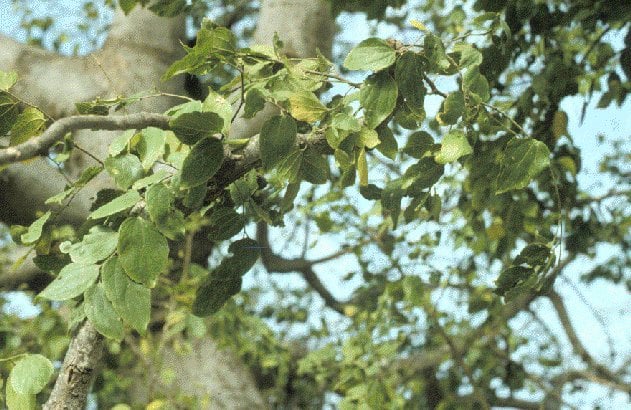
Celtis integrifolia
Nettle tree, African false elm
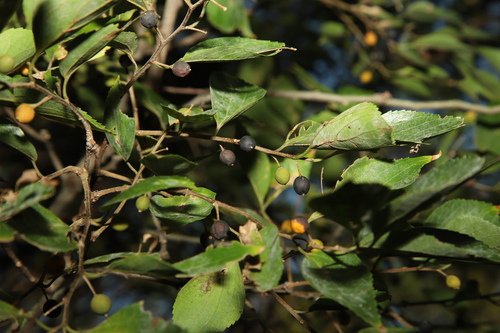
Celtis jessoensis
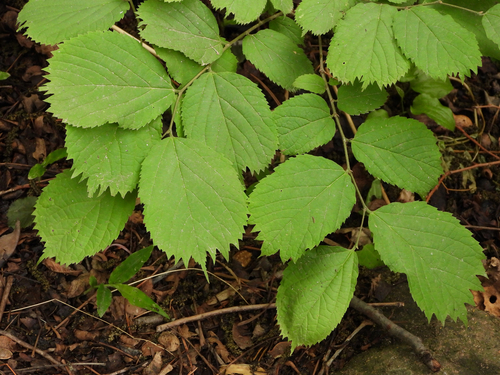
Celtis koraiensis
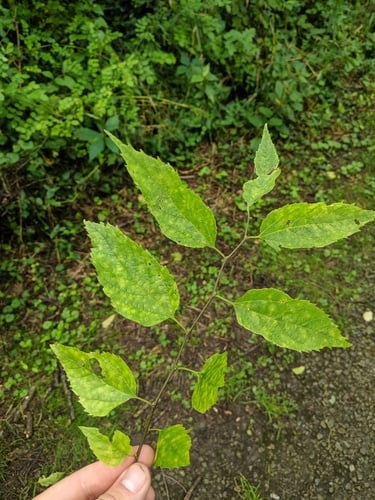
Celtis laevigata
Sugarberry, Mississippi Sugarberry, Mississippi hackberry, Sugar hackberry, Southern hackberry
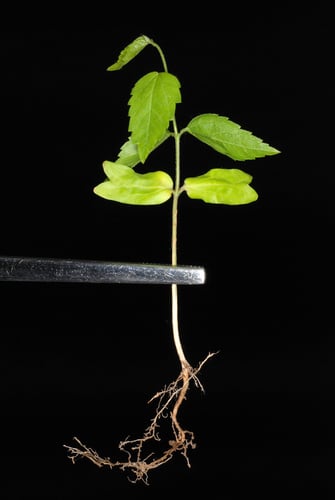
Celtis laevigata var. reticulata
Western Hackberry, Netleaf hackberry
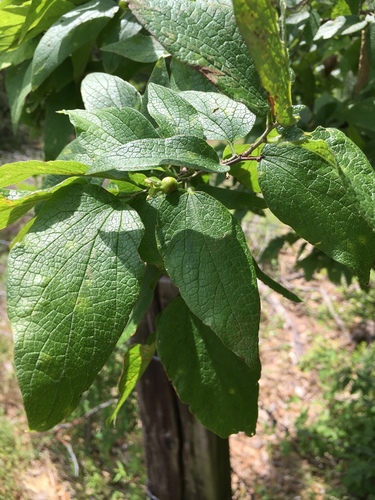
Celtis lindheimeri
Lindheimer's Hackberry