Celtis tournefortii
Lam.
Balkan nettle tree
iNaturalist· cc-by-nc
(c) fotis-samaritakis, some rights reserved (CC BY-NC), uploaded by fotis-samaritakis
iNaturalist· cc-by-nc
(c) fotis-samaritakis, some rights reserved (CC BY-NC), uploaded by fotis-samaritakis
iNaturalist· cc-by-nc
(c) fotis-samaritakis, some rights reserved (CC BY-NC), uploaded by fotis-samaritakis
Summary
Source: WikipediaCeltis tournefortii, commonly known as the oriental hackberry, is a deciduous tree in the genus Celtis. The species is found in southeastern Europe from Sicily east to the Balkans and Crimea, West Asia, and the Caucasus. It can grow up to 6 metres (20 ft) in height and grows in plains and dry forests.
Description
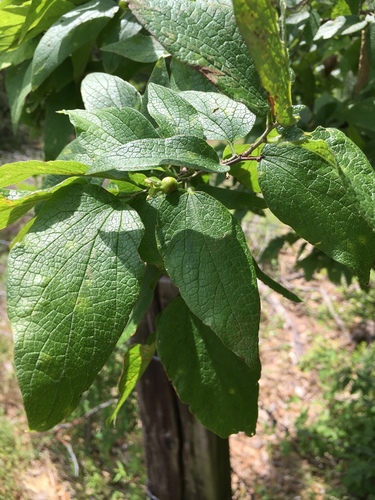
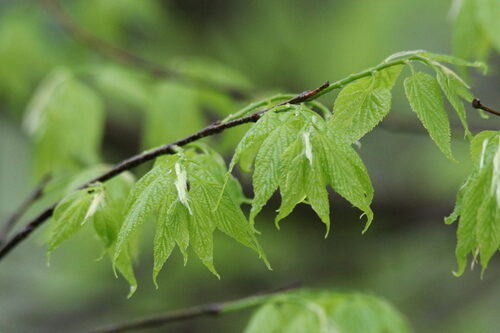
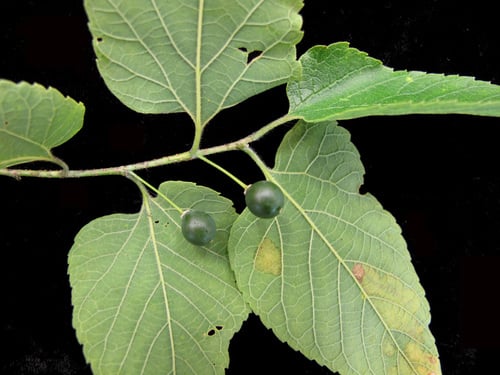
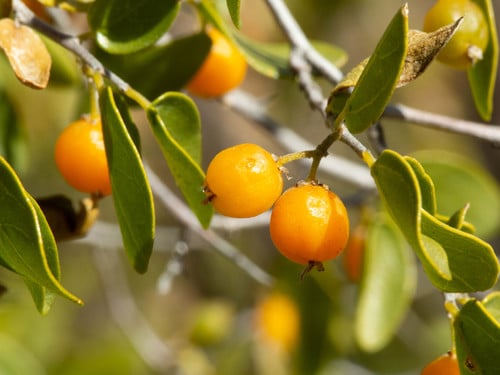
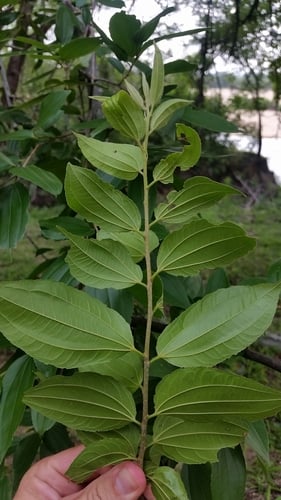
A shrubby tree. It often grows 6 m high. The leaves have blunt teeth. The leaves do not have hairs underneath.
This description is brief — help expand it
Edible Uses
The small fruit can be eaten raw. It likely consists of a thin layer of sweet but dry, mealy flesh wrapped around a large seed, though detailed information is limited.
Traditional Uses
The fruit are eaten raw.
This uses section is brief — help expand it
Medicinal Uses
None known.
Distribution
It is a Mediterranean and temperate climate plant. It grows on dry limestone hills.
Where It Grows
Australia, Europe, Greece, Iraq, Mediterranean, Middle East, Turkey, Türkiye,
Cultivation
Succeeds in any reasonably good soil, preferring a good fertile well-drained loamy soil. Succeeds on dry gravels and on sandy soils. Established plants are very drought resistant. Trees prefer hotter summers and more sunlight than are normally experienced in Britain, they often do not fully ripen their wood when growing in this country and they are then very subject to die-back in winter. Trees can be very long-lived, perhaps to 1000 years. This tree is more likely to thrive in Britain than most species in the genus. This species is closely related to C. glabrata. Plants in this genus are notably resistant to honey fungus.
Propagation
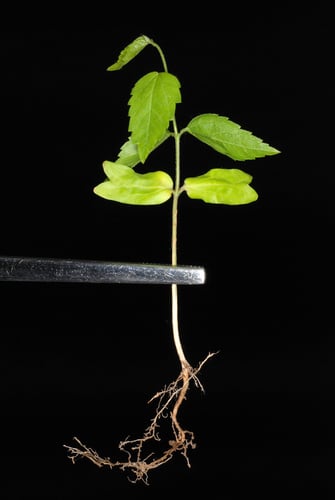
Seed is best sown as soon as it is ripe in a cold frame. Stored seed should be given 2–3 months of cold stratification before sowing in February or March in a greenhouse. Germination rates are generally good, though stored seed may take 12 months or more to germinate. Seed remains viable for up to 5 years. Prick seedlings out into individual pots as soon as they are large enough to handle. Seedling leaves often display white patches lacking chlorophyll, which is normal — older plants produce fully green leaves. Grow seedlings on in a cold frame through their first winter, then plant out the following late spring or early summer, providing some frost protection during their first winter outdoors. Can also be propagated by cuttings.
Other Uses
None known.
Notes
There are 70-100 Celtis species. They are mostly in the tropics. There are 8-10 species in tropical America. Also put in the family Ulmaceae.
Also Known As
Dardagan, Derdogan, Gengeres, Gernoso, Gingirez, Taav, Taew, Tee, Teev, Tuev
References (12)
- Blamey, M and Grey-Wilson, C., 2005, Wild flowers of the Mediterranean. A & C Black London. p 34
- Dogan, A. & Tuzlaci, E., 2015, Wild Edible Plants of Pertek (Tunceli-Turkey). Marmara Pharmaceutical Journal 19: 126-135
- Encycl. 4:138. 1797
- Ertug, F., 2000, An Ethnobotanical Study in Central Anatolia (Turkey). Economic Botany Vol. 54. No. 2. pp. 155-182
- Ertug, F, Yenen Bitkiler. Resimli Türkiye Florası -I- Flora of Turkey - Ethnobotany supplement
Show all 12 references Hide references
- Hibbert, M., 2002, The Aussie Plant Finder 2002, Florilegium. p 62
- Plants for a Future database, The Field, Penpol, Lostwithiel, Cornwall, PL22 0NG, UK. http://www.scs.leeds.ac.uk/pfaf/
- Polat, R., et al, 2015, Survey of wild food plants for human consumption in Elazig (Turkey). Indian Journal of Traditional Knowledge. Vol. 1(1): 69-75
- Polat, R., et al, 2017, Survey of wild food plants for human consumption in Bingol, (Turkey). Indian Journal of Traditional Knowledge. Vol. 16(3) July 2017, pp. 378-384
- Sfikas, G., 1984, Trees and shrubs of Greece. Efstathiadis Group. Athens. p 142
- Yesil, Y., et al, 2019, Wild edible plants in Yeşilli (Mardin-Turkey), a multicultural area. Journal of Ethnobiology and Ethnomedicine (2019) 15:52
- Yesil, Y., et al, 2019, Traditional knowledge of wild edible plants in Hasankeyf (Batman Province, Turkey). Acta Societatis Botanicorum Poloniae. 88(3):3633