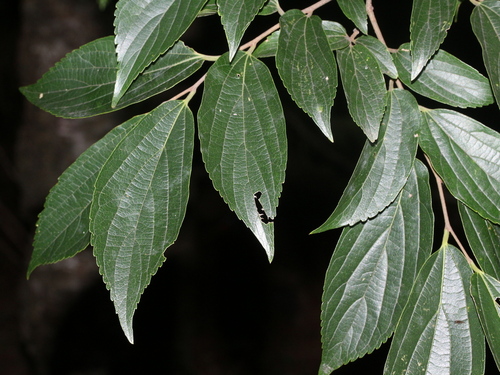
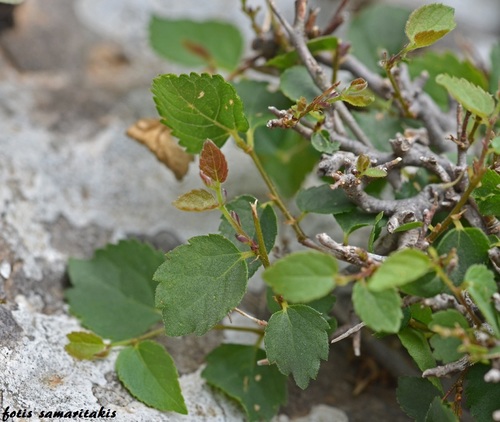
Celtis zenkeri
Engl.
iNaturalist· cc-by-nc
(c) Robin Heymans, some rights reserved (CC BY-NC), uploaded by Robin Heymans
wikimedia· cc-by-sa
Wikimedia Commons - Arianza1
Summary
Source: WikipediaCeltis zenkeri is a species of flowering plant native to sub-Saharan Africa.
Description
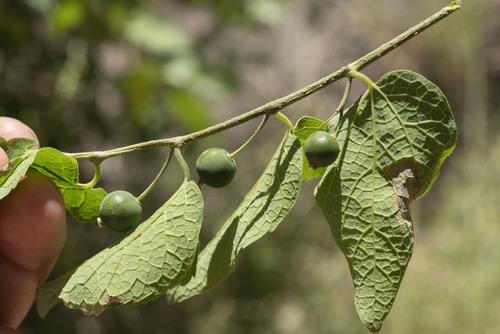
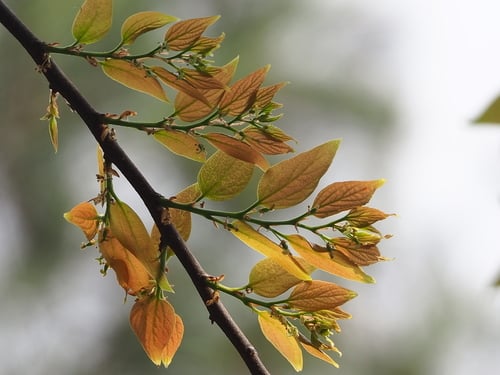
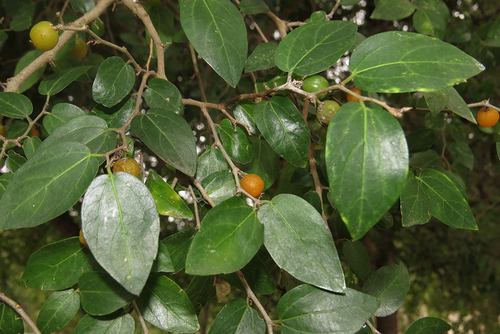
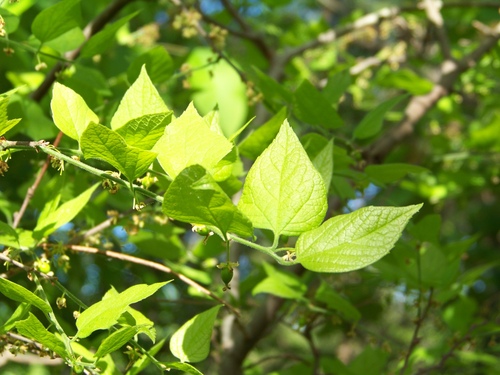
A large evergreen tree. It grows 25-30 m high. It has buttresses 3 m high. The leaves are alternate. They are oval with a slight tip at the end.
This description is brief — help expand it
Edible Uses
The leaves are eaten as a vegetable.
Medicinal Uses
A decoction of the bark is used to treat coughs and epilepsy. The plant (part not specified) is used in the treatment of skin complaints and cuts.
Distribution
It is a tropical plant. It grows near the edges of deciduous forest. In Ethiopia it grows between 500-1,800 m above sea level.
Where It Grows
Africa, Angola, Cameroon, Central Africa, Central African Republic, CAR, Congo DR, Congo R, Côte d'Ivoire, East Africa, Ethiopia, Ghana, Guinea, Guinée, Ivory Coast, Nigeria, Sudan, Tanzania, West Africa,
Propagation
Seed - best sown as soon as it is ripe in a nursery seedbed in a sunny position. A high germination rate can be expected, with the seeds sprouting within 28 - 42 days. The seedlings grow away quickly..
Other Uses
The leaves have a rough surface and are used as a sandpaper for smoothing wood etc. The heartwood is creamy white to light yellow, bordering on light brown; it is not distinctly demarcated from the sapwood. The grain is usually straight, sometimes interlocked; texture moderately fine; fresh cut and rewetted wood has an unpleasant odour. The wood is of moderate weight; fairly hard; of low durability, being susceptible to attacks of fungi, dry wood borers and termites. It seasons slowly, with a high risk of checking and distortion; once dry it is moderately stable in service. It works well with both hand and machine tools, though it has a moderate blunting effect on cutting tools so stellite-tipped and tungsten carbide are recommended; straight-grained stock planes well, but a cutting angle of 15° is recommended to avoid tearing in wood with interlocked grain; it finishes and polishes very well; is difficult to nail and screw so pre-boring is recommended to prevent splitting; it glues well. The wood is used for light construction, flooring, joinery, interior trim, frames, staircases, furniture, ladders, crates, boxes, match splints, tool handles, hardboard and particle board. The wood is used for fuel and to make charcoal.
Notes
Also put in the family Ulmaceae.
Synonyms
Also Known As
Bado, Esa, Isa, Kobae, Kobaey, Tongo
References (7)
- Awas, T., 1997, A Study on the Ecology and Ethnobotany of Non-cultivated Food Plants and Wild Relatives of Cultivated crops in Gambella Region, Southwestern Ethiopia. Addis Ababa University. p 72
- Burkill, H. M., 1985, The useful plants of west tropical Africa, Vol. 5. Kew.
- Chapman, J. D. & Chapman, H. M., 2001, The Forest Flora of Taraba and Andamawa States, Nigeria. WWF & University of Canterbury. p 205
- Grubben, G. J. H. and Denton, O. A. (eds), 2004, Plant Resources of Tropical Africa 2. Vegetables. PROTA, Wageningen, Netherlands. p 560
- Lulekal, E., et al, 2011, Wild edible plants in Ethiopia: a review on their potential to combat food insecurity. Afrika Focus - Vol. 24, No 2. pp 71-121
Show all 7 references Hide references
- von Katja Rembold, 2011, Conservation status of the vascular plants in East African rain forests. Dissertation Universitat Koblenz-Landau p 160
- World Checklist of Useful Plant Species 2020. Royal Botanic Gardens, Kew