Celtis tenuifolia
Nutt.
Small hackberry, Dwarf hackberry, Georgia hackberry, Ypland hackberry
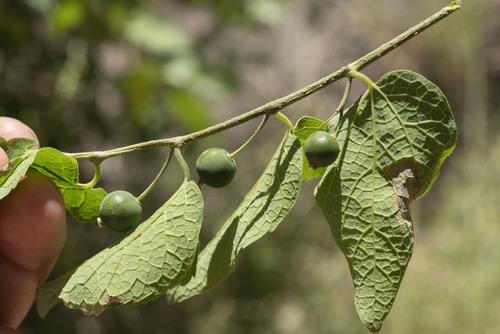
iNaturalist· cc-by
(c) botanygirl, some rights reserved (CC BY), uploaded by botanygirl
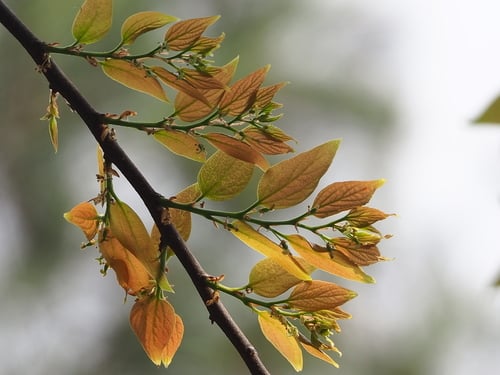
iNaturalist· cc-by-sa
(c) Douglas Goldman, some rights reserved (CC BY-SA), uploaded by Douglas Goldman
iNaturalist· cc-by-sa
(c) Douglas Goldman, some rights reserved (CC BY-SA), uploaded by Douglas Goldman
Summary
Source: WikipediaCeltis tenuifolia, the dwarf hackberry or Georgia hackberry, is a shrub or small tree 2-to-12-meter-high (6.6 to 39.4 ft). It is native to eastern North America but is very uncommon north of the Ohio River. In Canada, dwarf hackberry is designated as threatened and protected under Canada's Species at Risk Act.
Description
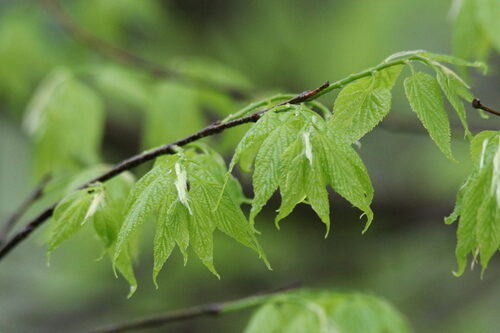
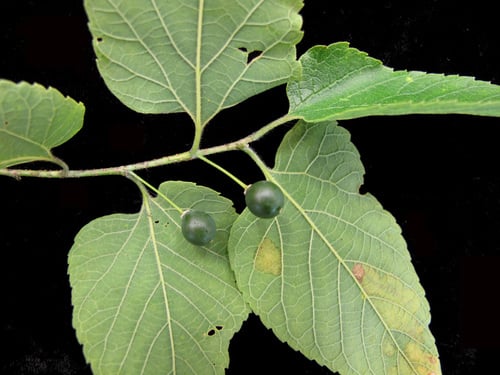
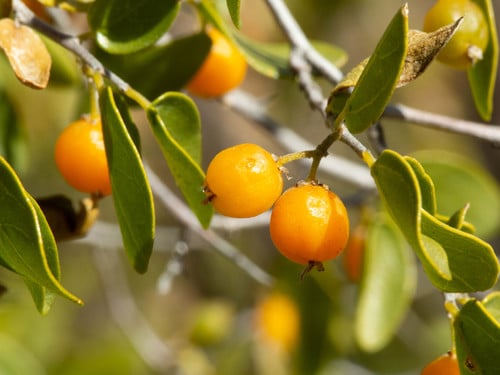
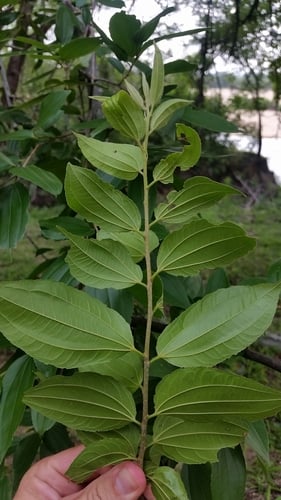
A deciduous shrub or small tree. It can grow 9 m high. It has an irregular shape. The trunk can be 10 cm across. The leaves have a rough surface. They are round and 5 cm long. They are grey-green. The flowers are 3 mm wide and green. Male and female flowers are at the base of young leaves. The fruit are dark red. They are 6-8 mm across. They have one seed.
Edible Uses
The fruit is eaten raw and has a sweet, mealy, pleasant-tasting flesh, though the flesh is thin and the fruit small — up to 10mm in diameter — with a single large seed. Trees in Britain often bear large crops, but the edible portion on each individual fruit is so minimal that harvesting is scarcely worthwhile.
Traditional Uses
The fruit are small but have edible pulp.
This uses section is brief — help expand it
Medicinal Uses
None known.
Distribution
It is a temperate plant. It grows naturally in the dry Rocky Mountains in the USA. It grows up to 450 m altitude. It is usually on limestone. It suits hardiness zones 5-9.
Where It Grows
Canada, Central Asia, North America, Tajikistan, USA,
Cultivation
Succeeds in any reasonably good soil, preferring a good fertile well-drained loamy soil. Succeeds on dry gravels and on sandy soils. Established plants are very drought resistant. Trees prefer hotter summers and more sunlight than are normally experienced in Britain, they often do not fully ripen their wood when growing in this country and they are then very subject to die-back in winter. This species is very closely related to C. occidentalis, and it is considered to be no more than a sub-species by many authorities. Trees can be very long-lived, perhaps surviving for 1000 years in the wild. Plants in this genus are notably resistant to honey fungus.
Propagation
Seed is best sown as soon as it is ripe in a cold frame. Stored seed should be given 2–3 months of cold stratification before sowing in February or March in a greenhouse. Germination rates are usually good, though stored seed may take 12 months or more to germinate. Seed can be stored for up to 5 years. Prick seedlings out into individual pots as soon as they are large enough to handle. Seedling leaves often show white patches lacking chlorophyll — this is normal, and older plants produce fully green leaves. Grow seedlings on in a cold frame through their first winter, then plant out the following late spring or early summer, with some cold protection during their first winter outdoors. Cuttings can also be used.
Other Uses
The wood is very tough, pliable, and durable, though of no commercial value. The flexible thin shoots are used as walking sticks, and the wood is also an excellent fuel.
Notes
There are 70-100 Celtis species. They are mostly in the tropics. There are 8-10 species in tropical America. Also put in the family Ulmaceae.
Synonyms
References (6)
- Etherington, K., & Imwold, D., (Eds), 2001, Botanica's Trees & Shrubs. The illustrated A-Z of over 8500 trees and shrubs. Random House, Australia. p 197
- Farrar, J.L., 1995, Trees of the Northern United States and Canada. Iowa State University press/Ames p 362
- Gen. N. Amer. pl. 1:202. 1818
- Little, E.L., 1980, National Audubon Society Field Guide to North American Trees. Alfred A. Knopf. p 416
- Medsger, O. P., 1939, Edible Wild Plants. Macmillan Company. p 5 (As Celtis mississippiensis)
Show all 6 references Hide references
- Plants for a Future database, The Field, Penpol, Lostwithiel, Cornwall, PL22 0NG, UK. http://www.scs.leeds.ac.uk/pfaf/