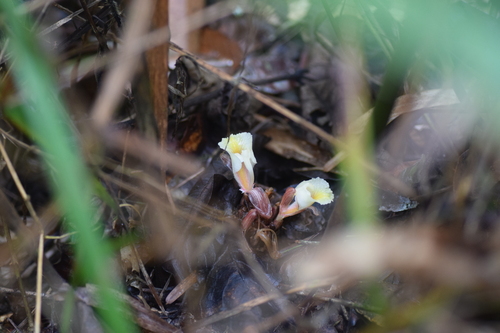
Elettaria ensal
(Gaertn.) Abeyw.
Long cardamom
wikimedia· cc-by
Wikimedia Commons - No Author Listed
wikimedia· cc-by
No Author Listed (via Wikimedia Commons)
Summary
Source: WikipediaElettaria ensal is a monocotyledonous plant species that was first described by Joseph Gaertner, and got its current name from Bartholomeusz Aristides Abeywickrama. Elettaria ensal is part of the genus Elettaria and the family Zingiberaceae.
Description
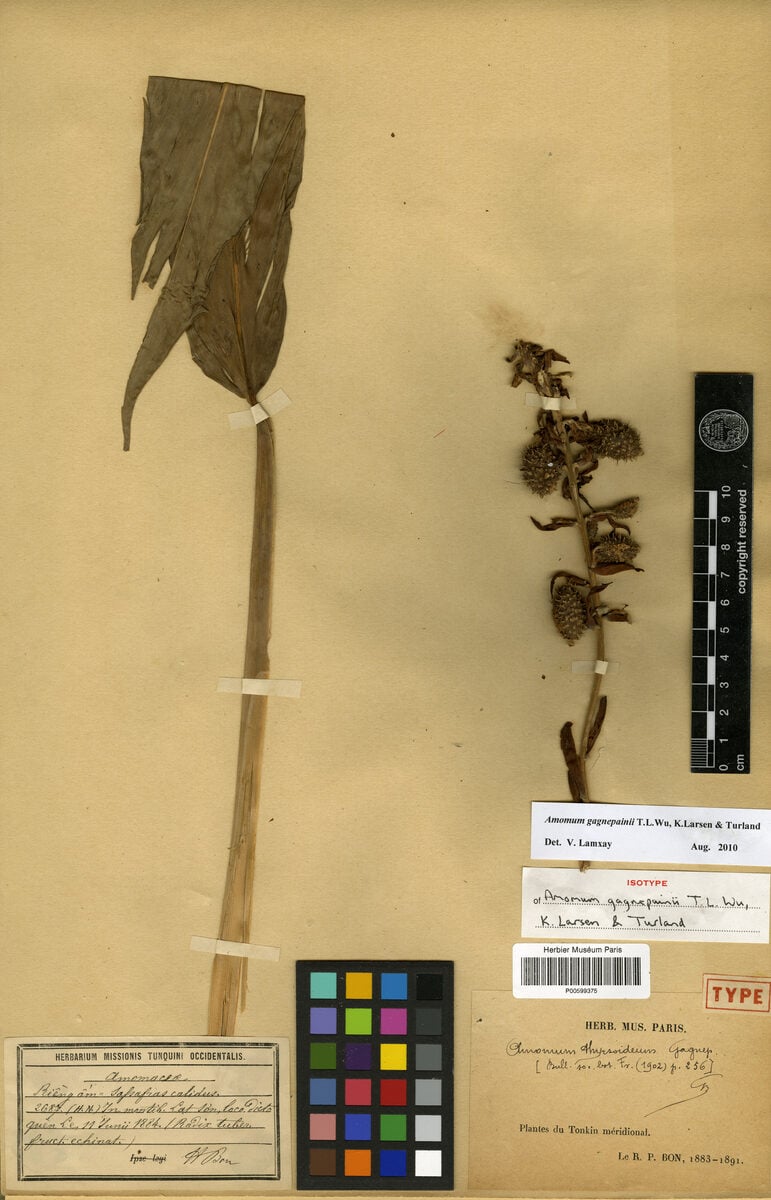
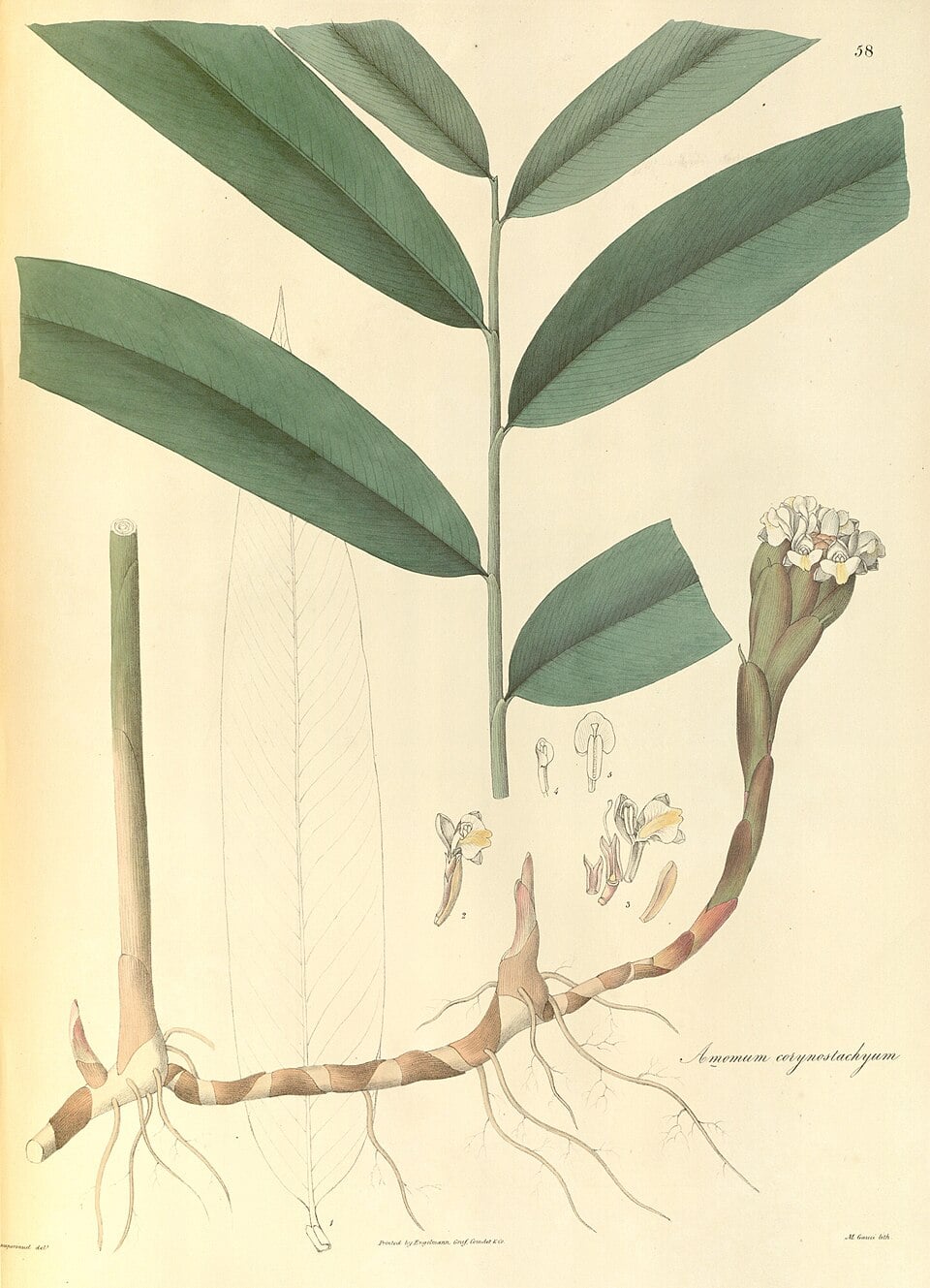
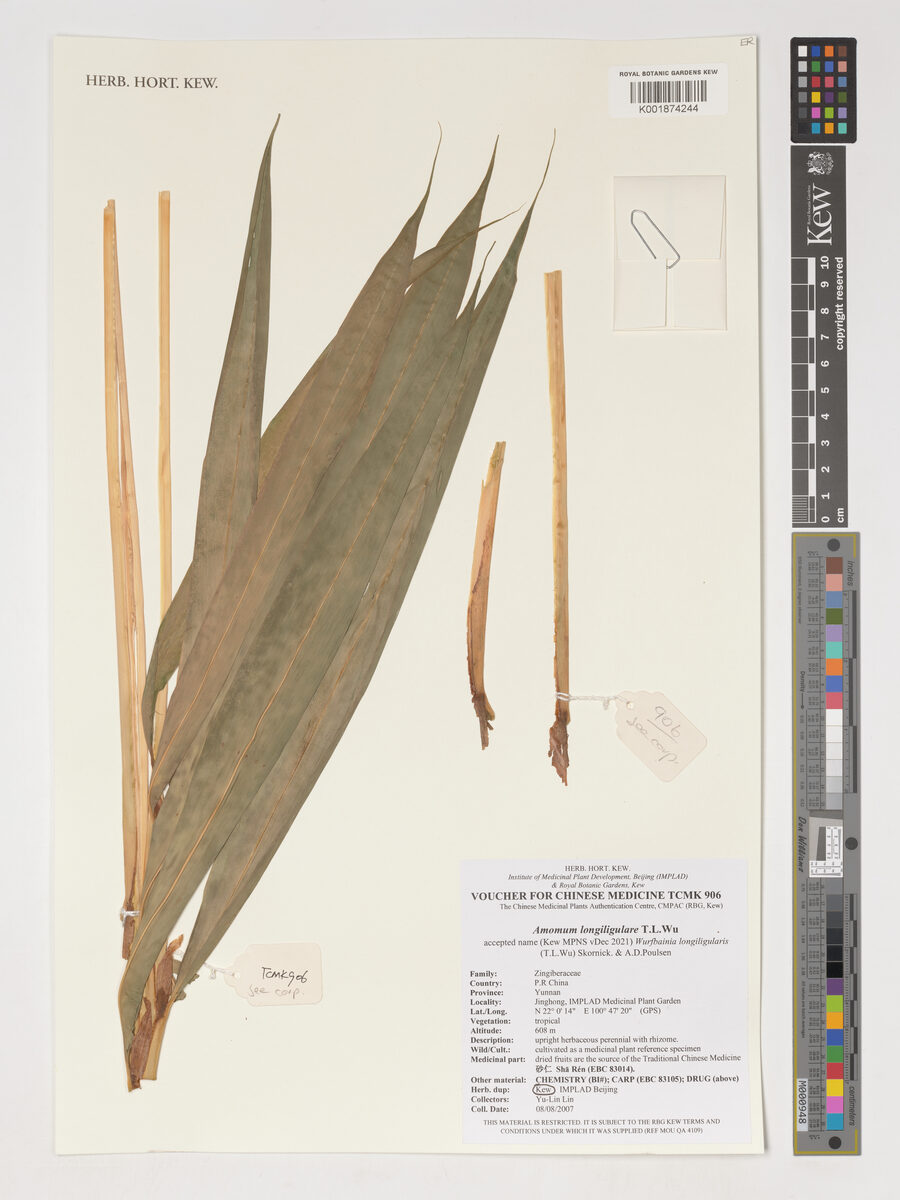
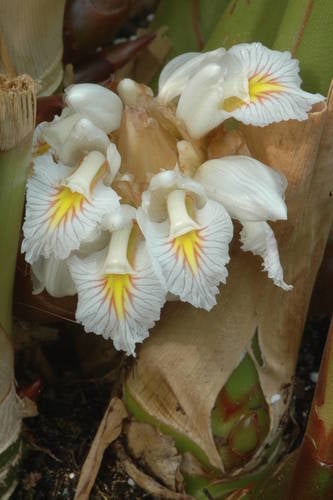
A ginger family herb. It keeps growing from year to year. The stems are leafy and 2-3 m tall. The leaves are narrowly sword shaped and softly hairy underneath. They are 30-60 cm long and 5-10 cm wide. There are several flower panicles up to 60 cm long. These have 2-4 flowers. The fruit is a 3 sided capsule 2.5 cm long.
Edible Uses
The seeds are occasionally used as a spice or to adulterate cardamom.
Traditional Uses
The seeds are occasionally used as a spice or to adulterate cardamom.
This uses section is brief — help expand it
Distribution
It is a tropical plant. It grows in dry evergreen forests.
Where It Grows
Asia, India, Sri Lanka*,
Other Information
It is cultivated.
Synonyms
Also Known As
Elam
References (3)
- Seidemann J., 2005, World Spice Plants. Economic Usage, Botany, Taxonomy. Springer. p 144 (As Elettaria major)
- Wiersema, J. H. & Leon, B., 2013, World Economic Plants. A Standard Reference CRC Press. 2nd Ed. p 268 (As Elettaria major)
- World Checklist of Useful Plant Species 2020. Royal Botanic Gardens, Kew