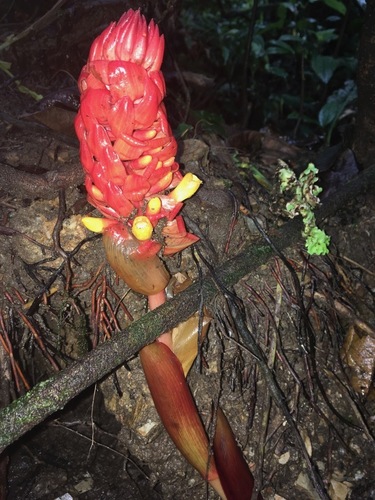
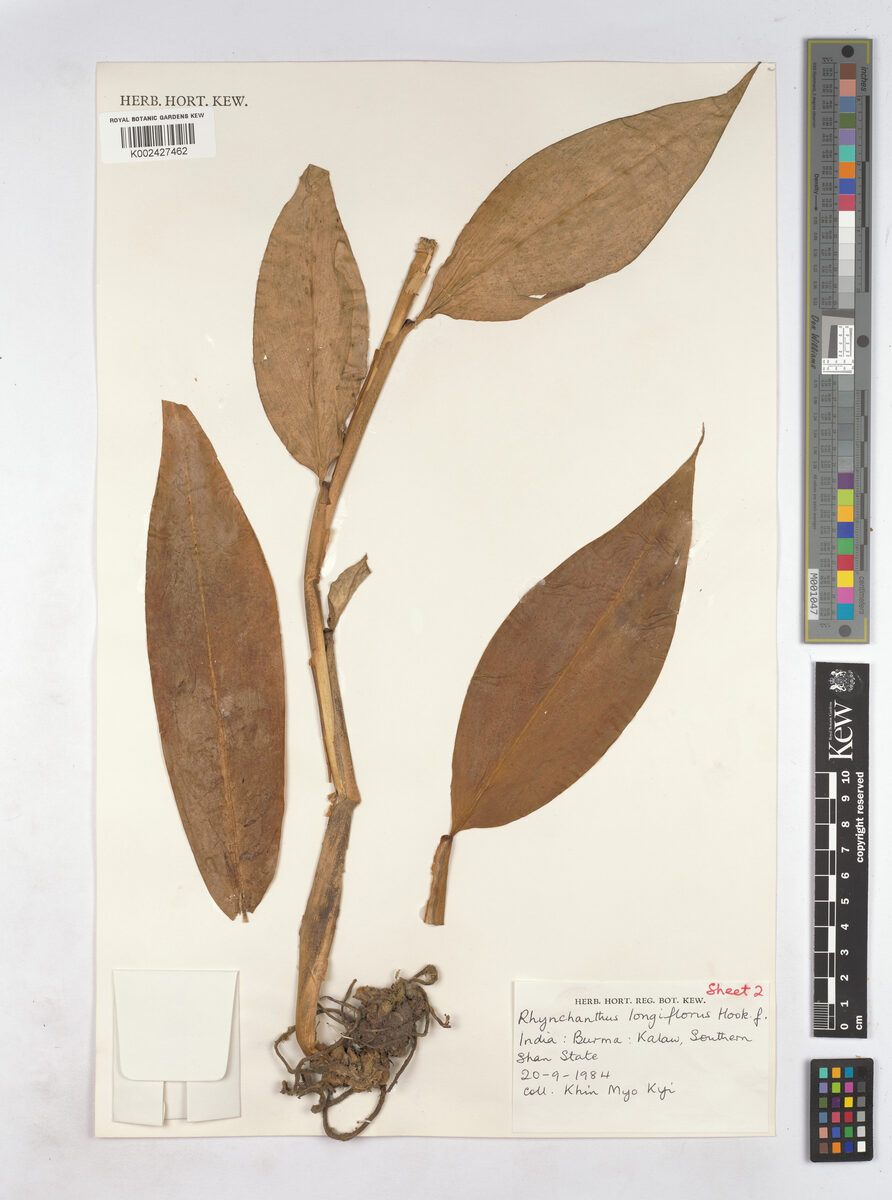
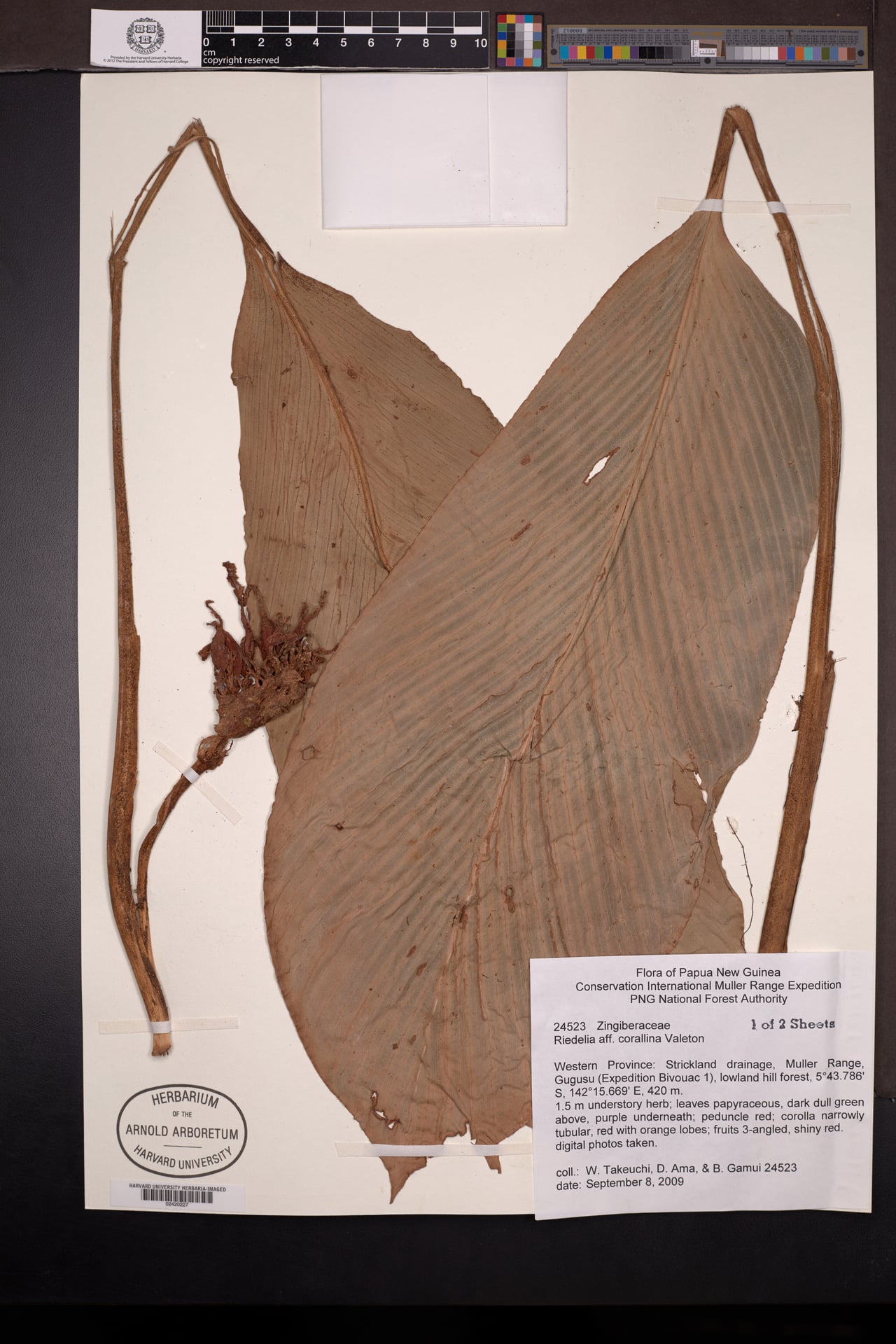
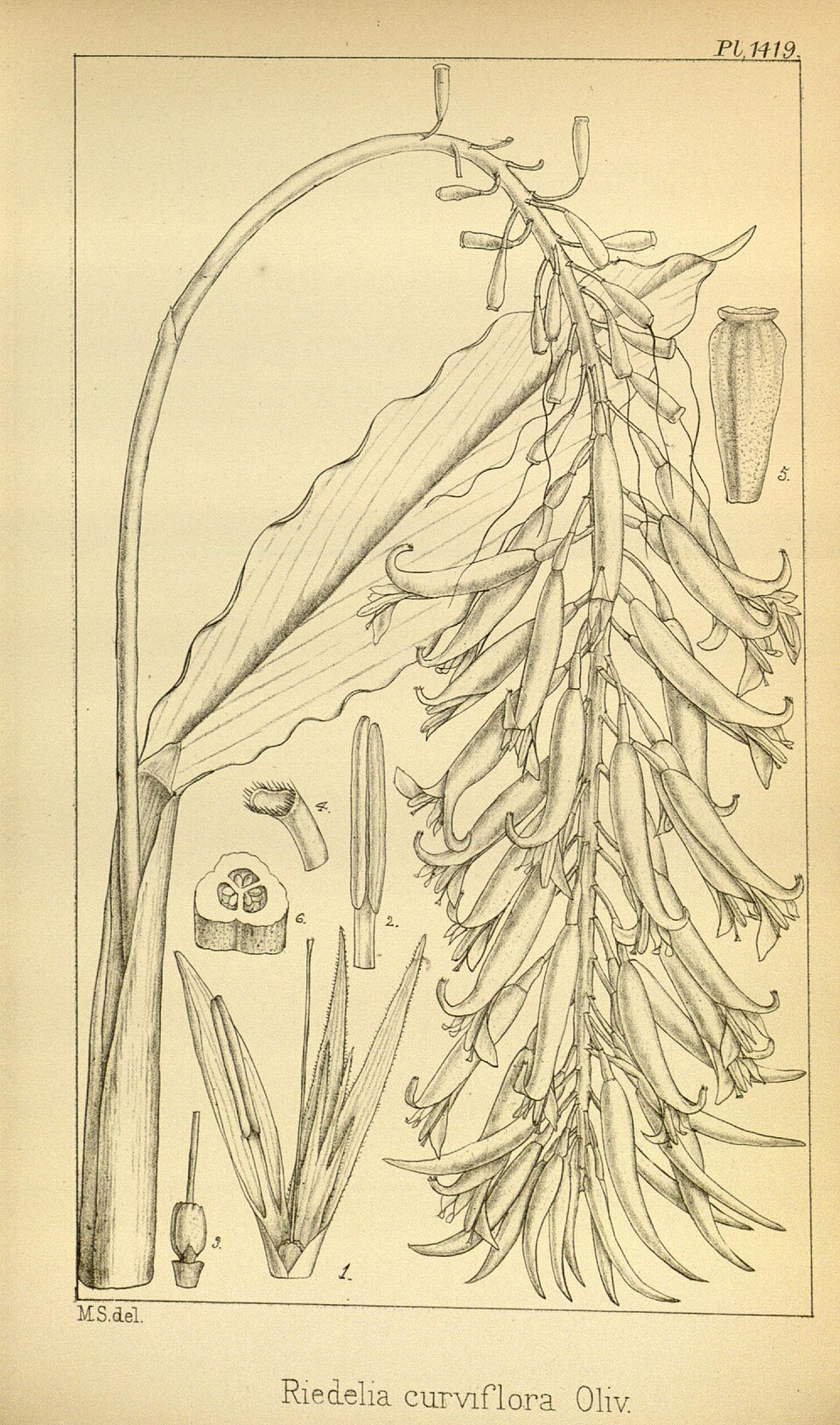
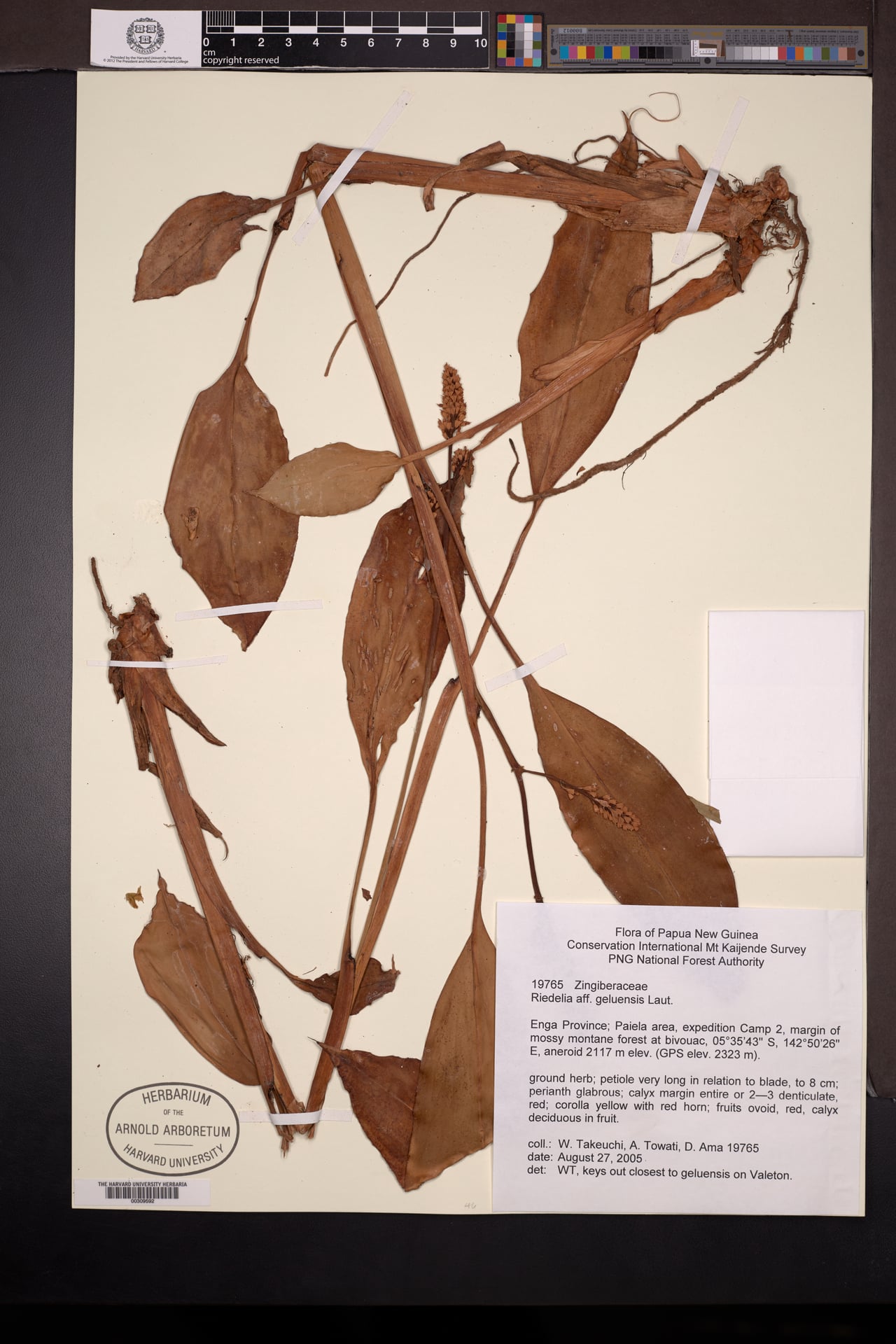
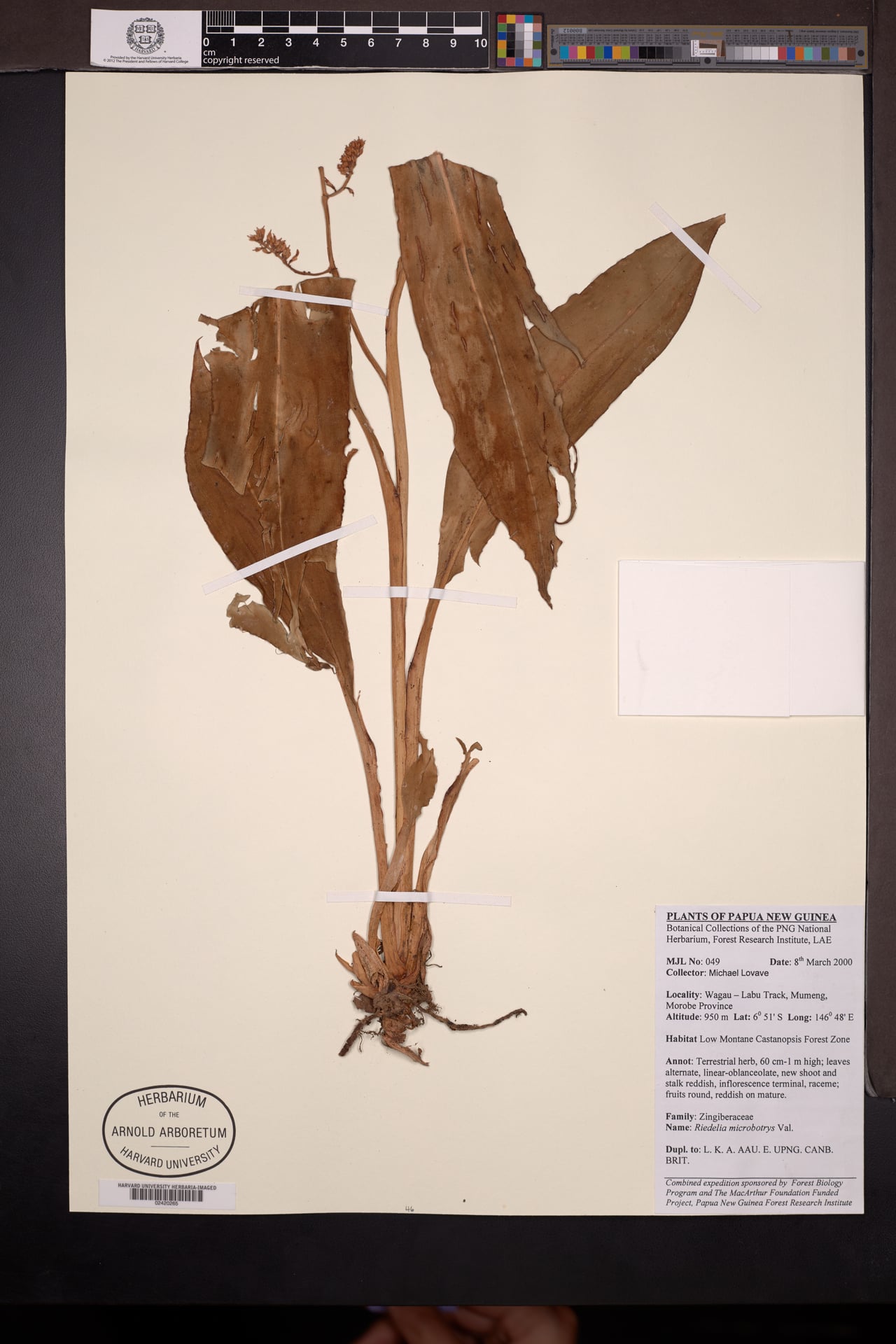
Zingiber montanum
(J. Koenig) Link ex A. Dietr.
Purple ginger
iNaturalist· cc-by-nc
(c) eec, some rights reserved (CC BY-NC), uploaded by eec
iNaturalist· cc-by-nc
(c) Ratchada Yuenyongkeereemat, some rights reserved (CC BY-NC)
Summary
Source: WikipediaZingiber montanum is a species of plant in the family Zingiberaceae, with no subspecies. Native to Indo-China and Malesia, it has become an invasive species in the Caribbean and South America; there are many synonyms including Zingiber cassumunar.
Description
A ginger family herb. The stems can be 2 m tall. The rhizome is thick and spreading. It is pale yellow inside. The leaves are simple and alternate. They are oblong to sword shaped and 18-35 cm long by 4-6 cm wide. The flowers are in spikes at the top of the plant. The flowers are white or pale yellow. They form bunches 20 cm long. The fruit is a round capsule.
Edible Uses
The young flowering shoots are boiled and eaten as a vegetable, and young leaves are cooked and eaten. The rhizomes are used to flavor food and made into pickles.
Traditional Uses
The young flowering shoots are boiled and eaten as a vegetable. The young leaves are cooked and eaten. The rhizomes are used to flavour food. They are also made into pickles.
Medicinal Uses
The root is stimulant, stomachic and tonic. It is used in the treatment of diarrhoea and colic. The root has sometimes been used as a substitute for ginger (Zingiber officinalis).
Known Hazards
The root is sometimes used for making an arrow poison.
Distribution
It is a tropical plant. It grows in muddy soil and lowlands up to 1,300 m above sea level.
Where It Grows
Asia, Bali, Bangladesh, Cambodia, Caribbean, Himalayas, India, Indochina, Indonesia, Laos, Malaysia, Myanmar, Northeastern India, Puerto Rico, SE Asia, Sri Lanka, Thailand, West Indies, Vietnam,
Cultivation
Plants can be grown by division of the rhizome.
Other Uses
The plant tends to be avoided by animals. It is therefore sometimes planted around the edges of rice fields to try and protect them from damage.
Other Information
It is cultivated.
Synonyms
Also Known As
Banada, Banglai, Bangle, Banooda, Bengle, Bolai, Boleh, Bongelai, Bulai, Bungelai, Cassumar ginger, Dlingo bengle, Jangli ada, Kadushunti, Kaphu, Karraallamu, Karrapasupu, Kebeb, Kunit bolai, Kunyit bolai, Lempuyang ungu, Moran ada, Naga hajing, Nisan, Penlekosht, Plai, Vanardraka
References (18)
- Altschul, S.V.R., 1973, Drugs and Foods from Little-known Plants. Notes in Harvard University Herbaria. Harvard Univ. Press. Massachusetts. no. 434 (As Zingiber cassumunar)
- Ambasta, S.P. (Ed.), 2000, The Useful Plants of India. CSIR India. p 701 (As Zingiber cassumunar)
- Arora, R. K., 2014, Diversity in Underutilized Plant Species - An Asia-Pacific Perspective. Bioversity International. p 110 (As Zingiber purpureum)
- Asiat. Res. 11:348. 1810 (As Zingiber cassumunar)
- Barua, U., et al, 2007, Wild edible plants of Majuli island and Darrang districts of Assam. Indian Journal of Traditional Knowledge 6(1) pp 191-194 (As Zingiber cassumunar)
Show all 18 references Hide references
- Burkill, I.H., 1966, A Dictionary of the Economic Products of the Malay Peninsula. Ministry of Agriculture and Cooperatives, Kuala Lumpur, Malaysia. Vol 2 (I-Z) p 2336 (As Zingiber cassumunar)
- Eiadthong, W., et al, 2010, Management of the Emerald Triangle Protected Forests Complex. Botanical Consultant Technical Report. p 52
- Kumar, G.M., & Shiddamallayya, N., 2014, Documentation of Wild Plant Tubers as Food Resources in Hassan District, Karnataka, International Journal of Applied Biology and Pharmaceutical Technology. 5(2) p 92
- Lembaga Biologi Nasional, 1977, Ubi-Ubian, Balai Pustaka, Jakarta. p 16 (As Zingiber cassumunar)
- Lim, T. K., 2015, Edible Medicinal and Non Medicinal Plants. Volume 9, Modified Stems, Roots, Bulbs. Springer p 87
- Lim, T. K., 2016, Edible Medicinal and Non-Medicinal Plants: Volume 12 Modified Stems, Roots p 8
- Medhi, P., Sarma, A and Borthakur, S. K., 2014, Wild edible plants from the Dima Hasao district of Assam, India. Pleione 8(1): 133-148
- Misra, R. C., et al, 2013, Genetic resources of wild tuberous food plants traditionally used in Similipal Biosphere Reserve, Odisha, India. Genetic Resources and Crop Evolution. Vol. 60 No. 2. Springer (As Zingiber purpureum)
- Sujarwo, W., et al, 2016, Traditional knowledge of wild and semi-wild edible plants used in Bali (Indonesia) to maintain biological and cultural diversity. Plant Biosystems, 2016, Vol. 150, No. 5, 971-976 (As Zingiber purpureum)
- Sukarya, D. G., (Ed.) 2013, 3,500 Plant Species of the Botanic Gardens of Indonesia. LIPI p 1145 (As Zingiber purpureum)
- Trimanto, Ginger Species in Besiq Bermai Forest, East Borneo: Inventory and Collection. The 7th International Conference on Global Resource Conservation AIP Conf. Proc. 1844,
- World Checklist of Useful Plant Species 2020. Royal Botanic Gardens, Kew
- Zeven, A. C. & de West, J. M. J., 1982, Dictionary of cultivated plants and their regions of diversity. Wageningen. p 64 (As Zingiber cassumunar)