Hornstedtia scyphifera
(J. Koenig) Steud.
iNaturalist· cc-by
(c) Dick Culbert, some rights reserved (CC BY)
iNaturalist· cc-by-nc
(c) John Howes, some rights reserved (CC BY-NC), uploaded by John Howes
iNaturalist· cc-by-nc
(c) Albert Kang, some rights reserved (CC BY-NC), uploaded by Albert Kang
Summary
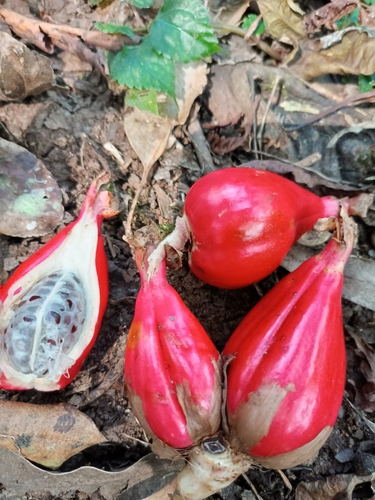
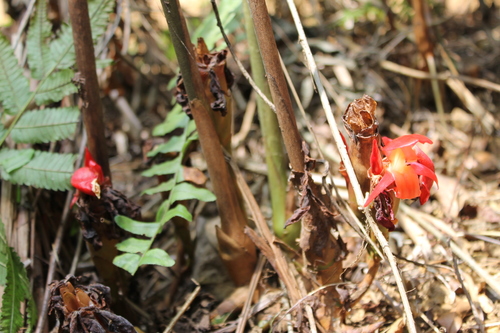
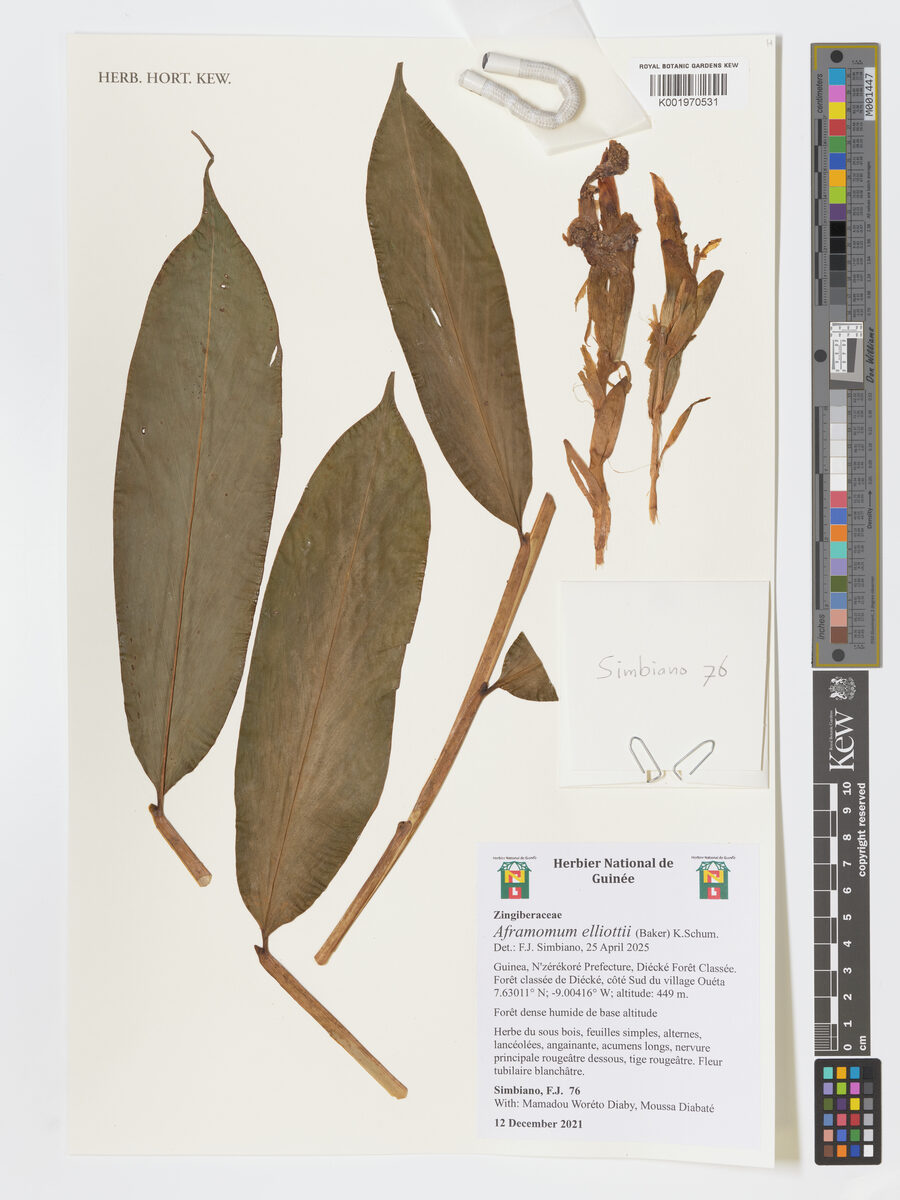
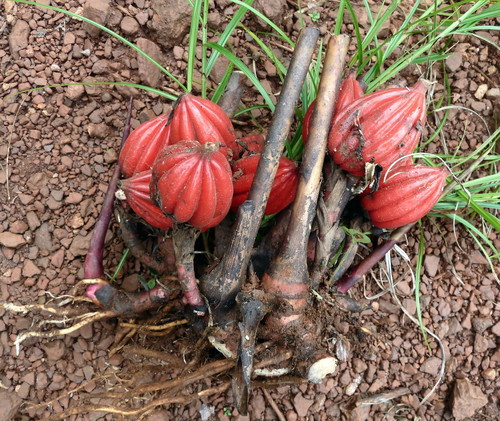
Source: WikipediaHornstedtia scyphifera, commonly called walking ginger, is a flowering plant in the ginger family Zingiberaceae. It is native to the Malay Peninsula, Borneo, Sumatra, and Java. Its growth form is like a tiny banyan, growing horizontally as it grows prop roots approximately 1 m (3 ft 3 in) long down to the ground as the plant lengthens. Three varieties are accepted: H. s. var. scyphifera H. s. var. fusiformis H. s. var. grandis
Description
A ginger family herb or shrub found in tropical regions, producing sweet-sour fruits and white shoots.
This description is brief — help expand it
Edible Uses
The white shoots are cooked as a vegetable for flavour, and the sweet-sour fruits are eaten and sold.
Traditional Uses
The fruit have a sweet sour taste. The white shoots are cooked as a vegetable for flavour.
This uses section is brief — help expand it
Distribution
It is a tropical plant.
Where It Grows
Asia, Indonesia, Malaysia, SE Asia,
Other Information
The fruit are sold.
Synonyms
Also Known As
Senggang, Teladan becuk
References (3)
- Hoare, A., 2003, Food use of the Lundayeh SW Sabah. Borneo Research Council.
- MacKinnon, K., 1981, The Ecology of Kalimantan. p 714
- Siong, K. H., 2003, Indigenous Fruits of Sarawak. Forest Department Sarawak. p 165