Hedychium coccineum
Buch.-Ham. ex J. E. Smith
Red ginger lily
iNaturalist· cc-by-nc
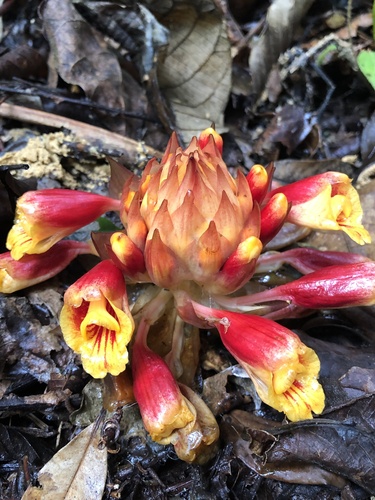
(c) Nina, some rights reserved (CC BY-NC)
iNaturalist· cc-by-nc
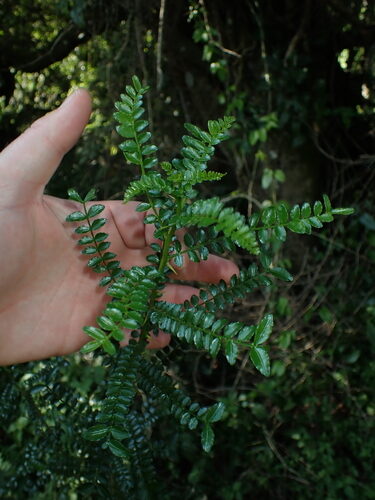
(c) Nina, some rights reserved (CC BY-NC)
iNaturalist· cc-by-nc
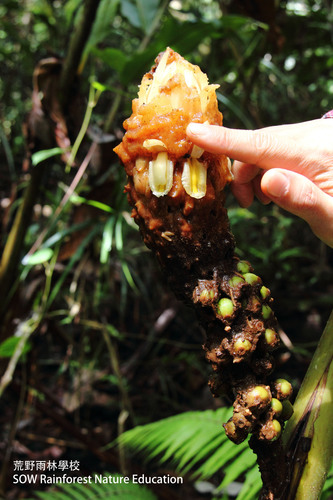
(c) Nina, some rights reserved (CC BY-NC)
Summary
Source: WikipediaHedychium coccineum is a species of flowering plant in the ginger family Zingiberaceae. It is native to southern China (Guangxi, Tibet, Yunnan), the Himalayas, India and Indochina. Common names include orange gingerlily, scarlet gingerlily and orange bottlebrush ginger. This erect herbaceous perennial grows on the edge of forests and in mountain grasslands. It prefers partial sunshine, but can tolerate full sun. The flowers can range in colour from red to orange to almost yellow.
Description
A ginger family herb. It grows 3 m tall. The leaves are narrowly sword shaped. They are dark green above and pale underneath. They often have a purple midrib. The flowers are orange or red.
Edible Uses
Young leaves are eaten fresh as a vegetable. The rhizome is sliced and cooked with other vegetables or made into curry.
Traditional Uses
The young leaves are eaten fresh as a vegetable. The rhizome is sliced into pieces and cooked with other vegetables or made into a curry.
This uses section is brief — help expand it
Distribution
A tropical plant. It suits a moist fertile soil. In XTBG Yunnan. In Queen Sirikit BG.
Where It Grows
Asia, Australia, Bangladesh, Bhutan, Cambodia, China, Hawaii, Himalayas, India, Indochina, Laos, Mauritius, Myanmar, Nepal, Northeastern India, Pacific, Reunion, SE Asia, Sikkim, Slovenia, Sri Lanka, Thailand, Tibet, USA, Vietnam,
Synonyms
Also Known As
Aemmi pekchi, Kaukyin-gyi, Krokor prey, Ma-mi-niu-mu, Rdeči hedihij
References (10)
- Cengel, D. J. & Dany, C., (Eds), 2016, Integrating Forest Biodiversity Resource Management and Sustainable Community Livelihood Development in the Preah Vihear Protected Forest. International Tropical Timber Organization p 125
- Li, S., et al, 2020, Monpa, memory, and change: an ethnobotanical study of plant use in Mêdog County, South-east Tibet, China. Journal of Ethnobiology and Ethnomedicine. (2020) 16:5 p 24
- Misra, R. C., et al, 2013, Genetic resources of wild tuberous food plants traditionally used in Similipal Biosphere Reserve, Odisha, India. Genetic Resources and Crop Evolution. Vol. 60 No. 2. Springer
- Murtem, G. & Chaudhrey, P., 2016, An ethnobotanical note on wild edible plants of Upper Eastern Himalaya, India. Brazilian Journal of Biological Sciences, 2016, v. 3, no. 5, p. 63-81
- Recher, P, 2001, Fruit Spirit Botanical Gardens Plant Index. www.nrg.com.au/~recher/ seedlist.html p 4
Show all 10 references Hide references
- A. Rees, Cycl. 17: Hedychium no. 5. 1811
- Ryan, S., 2008, Dicksonia. Rare Plants Manual. Hyland House. p 104
- Seidemann J., 2005, World Spice Plants. Economic Usage, Botany, Taxonomy. Springer. p 171
- Staples, G.W. and Herbst, D.R., 2005, A tropical Garden Flora. Bishop Museum Press, Honolulu, Hawaii. p 767
- Suksri, S., et al, 2005, Ethnobotany in Bung Khong Long Non-Hunting Area, Northeast Thailand. Kasetsart J., (Nat. Sci) 39: 519-533