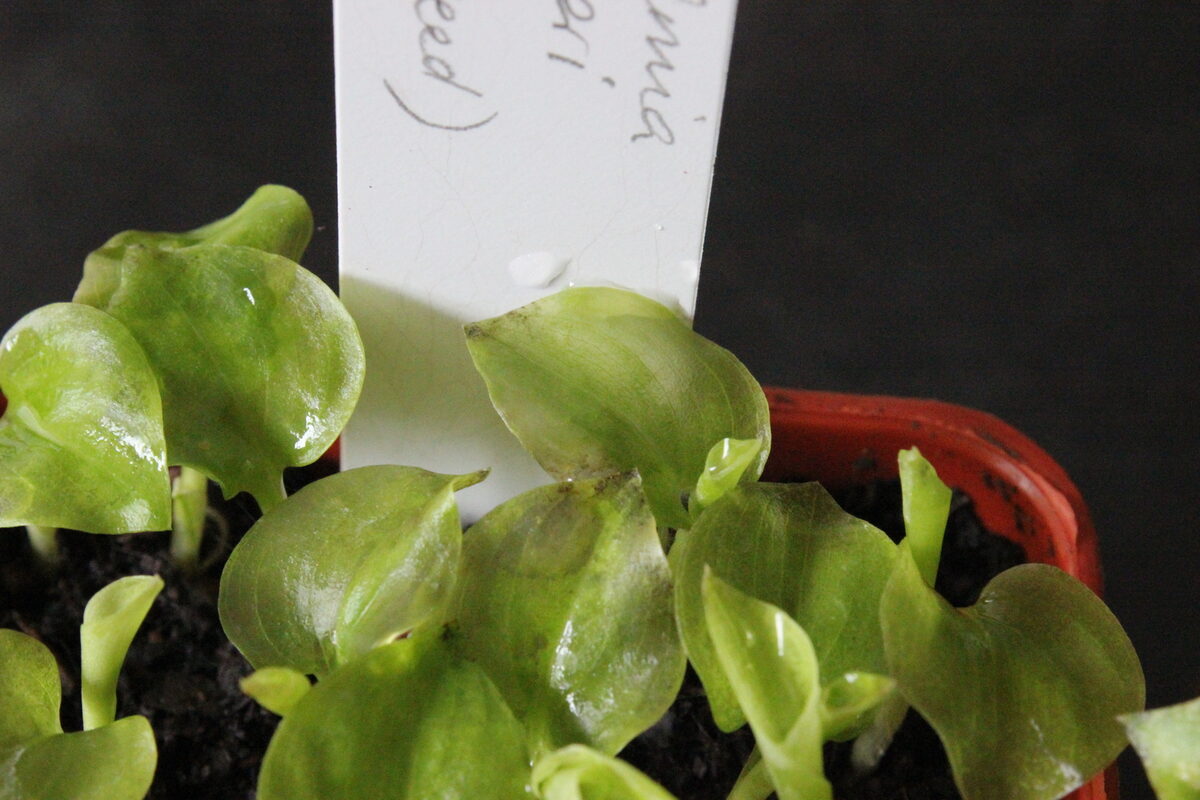
Hedychium coronarium
K. D. Koenig
Butterfly ginger, White ginger lily
iNaturalist· cc0
no rights reserved, uploaded by 葉子
iNaturalist· cc-by-nc
(c) Philip Stephens, some rights reserved (CC BY-NC)
Summary
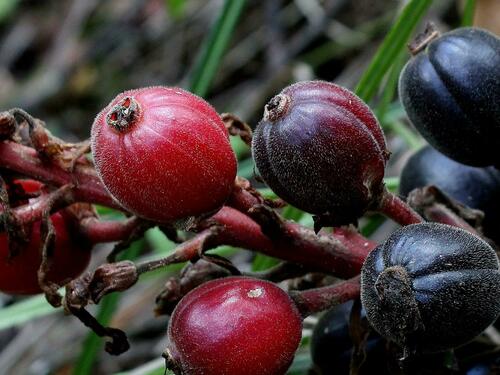
Source: WikipediaHedychium coronarium, the white garland-lily or white ginger lily, is a perennial flowering plant in the ginger family, Zingiberaceae. It is native to the forest understorey of Asia. Other common names include butterfly lily, Khumpui, fragrant garland flower, Indian garland flower, white butterfly ginger lily, and white ginger.
Description
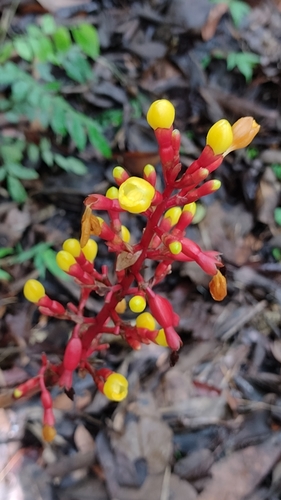
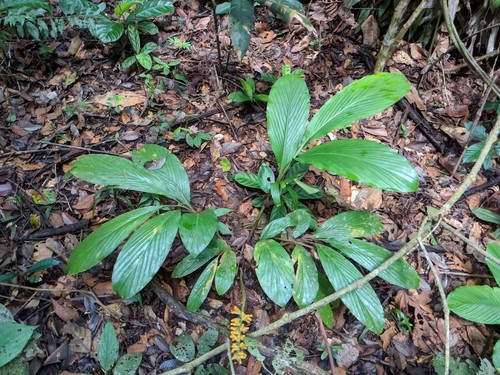
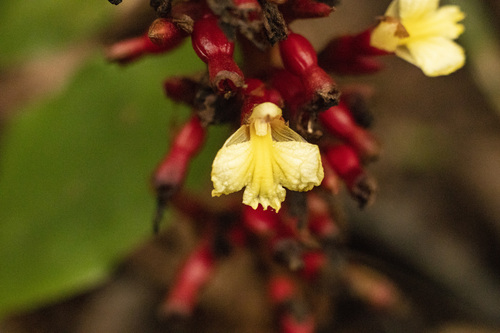
An upright herb in the ginger family. It can be 3 m tall and spread to 1 m across. It has rhizomes under the ground. The leaves do not have stalks. The leaves are long pointed and sword shaped. They can be 20-40 cm long by 4.5-8 cm wide and are mid green in colour. They are downy underneath. The flowers are butterfly like and white. The flowers occur around stalks on the top of the plant. These flower clusters can be 10-20 cm long by 4-8 cm wide. There are 2-3 flowers and they have a sweet smell.
Edible Uses
Young buds and flowers can be eaten or used as a flavouring. The root can be cooked, though it is regarded as a famine food for use when other options are unavailable.
Traditional Uses
The young rhizomes and soft shoots are cooked and eaten as a vegetable. They are blanched and served with chili sauce. The flowers are cooked and eaten as a vegetable. They are usually stewed or stir fried.
Medicinal Uses
The seed is aromatic, carminative, and stomachic. The root is antirheumatic, excitant, and tonic, and the ground rhizome is used as a febrifuge. An essential oil from the roots is carminative and has anthelmintic indications. The plant has also been used as a remedy for foetid nostril.
Distribution
A tropical plant. It suits moist and dry seasonal climates. It needs fertile, humus-rich, well-drained soil. It needs morning sun or bright shade. It grows in forests and is also cultivated in S China. It grows up to 2,500 m above sea level. It is used on the Deccan in India. In Argentina it grows from sea level to 1,200 m above sea level. In Hobart Botanical gardens. It suits hardiness zones 7-12. In Sichuan and Yunnan.
Where It Grows
Africa, Andamans, Argentina, Asia, Australia, Bangladesh, Belize, Bhutan, Bolivia, Brazil, Caribbean, Central America, China*, Colombia, Cook Is., Costa Rica, Dominican Republic, Ecuador, Eswatini, Fiji, French Guiana, Guianas, Guyana, Haiti, Hawaii, Himalayas*, Honduras, India*, Indochina, Indonesia, Jamaica, Korea, Laos, Madagascar, Malaysia, Maldives, Mariana Islands, Marquesas, Mauritius, Mexico, Micronesia, Myanmar, Nauru, Nepal, New Caledonia, New Zealand, North America, Northeastern India, Pacific, Palau, Papua New Guinea, PNG, Paraguay, Philippines, Puerto Rico, Reunion, Rotuma, Sao Tome and Principe, SE Asia, Sierra Leone, Sikkim, Singapore, Solomon Islands, South Africa, South America, Southern Africa, Sri Lanka, St Helena, St Lucia, Suriname, Swaziland, Taiwan, Tasmania, Thailand, Tonga, Trinidad-Tobago, USA, Vanuatu, Venezuela, Vietnam, Wallis & Futuna, West Africa, West Indies,
Cultivation
Requires a rich moist soil and a sunny position. It succeeds in shallow water and can also be grown in a sunny border as a summer sub-tropical bedding plant. Plants are not very hardy, they tolerate temperatures down to about -2°c and can be grown at the foot of a south-facing wall in the milder areas of Britain if given a good mulch in the winter. The flowers have a delicious perfume which is most pronounced towards evening. Plants seem to be immune to the predations of rabbits. The tubers should be only just covered by soil.
Propagation
Sow seed as soon as it is ripe in a warm greenhouse at 18°C. Prick out seedlings into individual pots when large enough to handle and grow on in the greenhouse for at least the first winter. Plant out in late spring after the last expected frosts. Divide clumps as growth begins in spring by digging them up and cutting through with a sharp spade or knife, ensuring each division has a growing shoot. Larger divisions can go directly into permanent positions, but smaller ones are best potted up and grown on in a greenhouse until established, then planted out in summer or the following late spring.
Other Uses
The stems contain 43–48% cellulose and are useful for paper-making. An essential oil obtained from the flowers is valued in high-grade perfumes. The roots yield 1.7% essential oil, which is used medicinally.
Other Information
The rhizomes are sold in markets. The plant has been introduced to Papua New Guinea. It is similar to Gorgor.
Notes
There are about 50 Hedychium species. It is also grown as an ornamental and for medicine. It can be invasive.
Synonyms
Also Known As
A ci a ye, Banay, Bottlebrush ginger, Bunga bet, Butterfly flower, Daihenghao, Dudh kewaraa, Gandasuli, Garland flower, Ginger Lily, Gondasuli, Hun kaeo, Jiang hua, Kamia, Karankaa, Katkatan, Lok-lei, Loklei, Maha-hongse, Mahaahong, Mandasuli, Mir tado akelok, Ngwe-pan, Shekra bu, Sinser, Suli, Takhellei, Tha haan, Thahern, Tunun, White ginger
References (53)
- Alimenticias - FloraSBS
- Ambasta, S.P. (Ed.), 2000, The Useful Plants of India. CSIR India. p 257
- Brickell, C. (Ed.), 1999, The Royal Horticultural Society A-Z Encyclopedia of Garden Plants. Convent Garden Books. p 500
- Burkill, H. M., 1985, The useful plants of west tropical Africa, Vol. 3. Kew.
- Burkill, I.H., 1966, A Dictionary of the Economic Products of the Malay Peninsula. Ministry of Agriculture and Cooperatives, Kuala Lumpur, Malaysia. Vol 1 (A-H) p 1146
Show all 53 references Hide references
- Chen, I., et al, 2008, Antioxidant and Antimicrobial Activities of Zingiberaceae Plants in Taiwan. Plant Foods for Human Nutritition, 63:15-20
- Cundall, P., (ed.), 2004, Gardening Australia: flora: the gardener's bible. ABC Books. p 680
- Devi, O.S., P. Komor & D. Das, 2010, A checklist of traditional edible bio-resources from Ima markets of Imphal Valley, Manipur, India. Journal of Threatened Taxa 2(11): 1291-1296
- Facciola, S., 1998, Cornucopia 2: a Source Book of Edible Plants. Kampong Publications, p 248
- Fu, Yongneng, et al, 2003, Relocating Plants from Swidden Fallows to Gardens in Southwestern China. Economic Botany, 57(3): 389-402
- Hu, Shiu-ying, 2005, Food Plants of China. The Chinese University Press. p 328
- Jacquat, C., 1990, Plants from the Markets of Thailand. D.K. Book House p 117
- Jain et al, 2011, Dietary Use and Conservation Concern of Edible Wetland Plants at Indo-Burma Hotspot: A Case Study from Northeast India. Journal of Ethnobiology and Ethnomedicine 7:29 p 6
- Kew Plants of the World Online
- Konsam, S., et al, 2016, Assessment of wild leafy vegetables traditionally consumed by the ethnic communities of Manipur, northeast India. Journal of Ethnobiology and Ethnomedicine, 12:9
- Kunkel,
- Lamoureux, C.H., 1976, Trailside Plants of Hawaii's National Parks. Hawaii Natural History Association. p 22
- Larsen, K., Ibrahim, H., Khaw, S.H., & Saw, L.G., 1999, Gingers of Peninsula Malaysia and Singapore. Natural History Publications (Borneo). p 50
- Lavelle, M., 2008, Wild Flowers of Australia and Oceania. Southwater. p 109
- Lembaga Biologi Nasional, 1977, Ubi-Ubian, Balai Pustaka, Jakarta. p 28
- Lim, T. K., 2015, Edible Medicinal and Non Medicinal Plants. Volume 9, Modified Stems, Roots, Bulbs. Springer p 45
- Lim, T. K., 2016, Edible Medicinal and Non-Medicinal Plants: Volume 12 Modified Stems, Roots p 7
- Liu, Yi-tao, & Long, Chun-Lin, 2002, Studies on Edible Flowers Consumed by Ethnic Groups in Yunnan. Acta Botanica Yunnanica. 24(1):41-56
- Liu, Yi-tao, & Long, Chun-Lin, 2002, Studies on Edible Flowers Consumed by Ethnic Groups in Yunnan. Acta Botanica Yunnanica. 24(1):41-56 (Also as Hedychium chrysoleucum)
- Llamas, K.A., 2003, Tropical Flowering Plants. Timber Press. p 369
- Luo, B., et al, 2019, Wild edible plants collected by Hani from terraced rice paddy agroecosystem in Honghe Prefecture, Yunnan, China. Journal of Ethnobiology and Ethnomedicine 15:56
- Marinelli, J. (Ed), 2004, Plant. DK. p 456
- Meitei, L. R., et al, 2022, An ethnobotanical study on the wild edible plants used by forest dwellers in Yangoupokpi Lokchao Wildlife Sanctuary, Manipur, India. Ethnobotany Research and Application 23:15
- Misra, R. C., et al, 2013, Genetic resources of wild tuberous food plants traditionally used in Similipal Biosphere Reserve, Odisha, India. Genetic Resources and Crop Evolution. Vol. 60 No. 2. Springer
- Peekel, P.G., 1984, (Translation E.E.Henty), Flora of the Bismarck Archipelago for Naturalists, Division of Botany, Lae, PNG. p 107, 108
- Pfoze, N. L., et al, 2012, Survey and assessment of floral diversity on wild edible plants from Senapati district of Manipur, Northeast India. Journal or Biodiversity and Environmental Sciences. 1(6):50-52
- Priyadi, H., et al, 2010, Five hundred plant species in Gunung Halimun Salak National Park West Java. A checklist including Sundanese names, distribution and use. CIFOR, FFPRI, SLU p 34
- PROSEA handbook Volume 9 Plants yielding non-seed carbohydrates. p 188
- Recher, P, 2001, Fruit Spirit Botanical Gardens Plant Index. www.nrg.com.au/~recher/ seedlist.html p 4
- Retzius, Observ. Bot. 3:73. 1783
- Seidemann J., 2005, World Spice Plants. Economic Usage, Botany, Taxonomy. Springer. p 173
- Singh, P.K., Singh, N.I., and Singh, L.J., 1988, Ethnobotanical Studies on Wild Edible Plants in the Markets of Manipur - 2. J. Econ. Tax. Bot. Vol. 12 No. 1 pp 113-119
- Singh, P.K., Singh, N.I., and Singh, L.J., 1988, Ethnobotanical Studies on Wild Edible Plants in the Markets of Manipur - 2. J. Econ. Tax. Bot. Vol. 12 No. 1 pp 113-119 (Also as Hedychium coronarium var. chrysoleucum)
- Sirirugsa, P., 1999, Thai Zingiberaceae: Species Diversity and their Uses. http://www.iupac.org/symposia/proceedings/phuket 97
- Smith, A.C., 1979, Flora Vitiensis Nova, Lawaii, Kuai, Hawaii, Volume 1 p 197
- Staples, G.W. and Herbst, D.R., 2005, A tropical Garden Flora. Bishop Museum Press, Honolulu, Hawaii. p 765
- Sujanapal, P., & Sankaran, K. V., 2016, Common Plants of Maldives. FAO & Kerala FRI, p 142
- Sukarya, D. G., (Ed.) 2013, 3,500 Plant Species of the Botanic Gardens of Indonesia. LIPI p 1111
- Swaziland's Flora Database http://www.sntc.org.sz/flora
- Tanaka,
- Teron, R. & Borthakur, S. K., 2016, Edible Medicines: An Exploration of Medicinal Plants in Dietary Practices of Karbi Tribal Population of Assam, Northeast India. In Mondal, N. & Sen, J.(Ed.) Nutrition and Health among tribal populations of India. p 157
- WATT,
- World Checklist of Useful Plant Species 2020. Royal Botanic Gardens, Kew
- Wu Delin, Larsen, K., Zingiberaceae. Flora of China.
- Xu, You-Kai, et al, 2004, Wild Vegetable Resources and Market Survey in Xishuangbanna, Southwest China. Economic Botany. 58(4): 647-667.
- Xu, You-Kai, et al, 2004, Wild Vegetable Resources and Market Survey in Xishuangbanna, Southwest China. Economic Botany. 58(4): 647-667. (Also as Hedychium chrysoleucum)
- Yuncker, T.G., 1959, Plants of Tonga, Bernice P. Bishop Museum, Hawaii, Bulletin 220. p 85
- Zuchowski W., 2007, Tropical Plants of Costa Rica. A Zona Tropical Publication, Comstock Publishing. p 157