Omphalea papuana
Pax & K. Hoffm.
Papua nuts
gbif· cc0
President and Fellows of Harvard College
gbif· cc0
President and Fellows of Harvard College
gbif· cc0
President and Fellows of Harvard College
Description
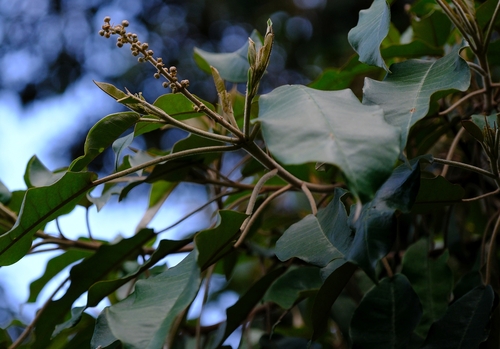
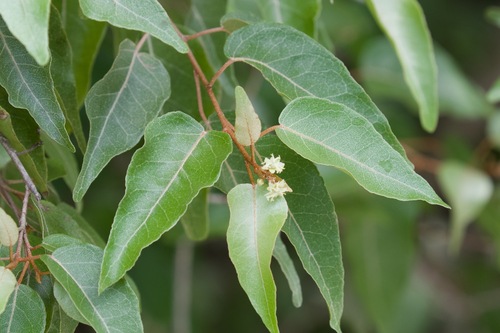
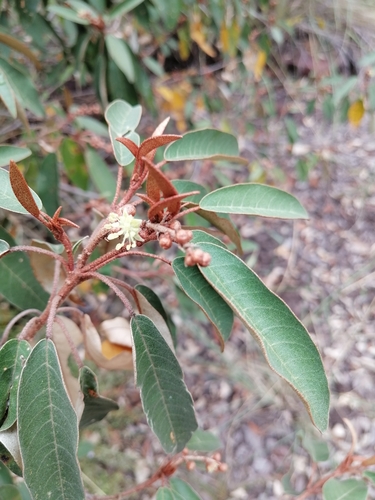
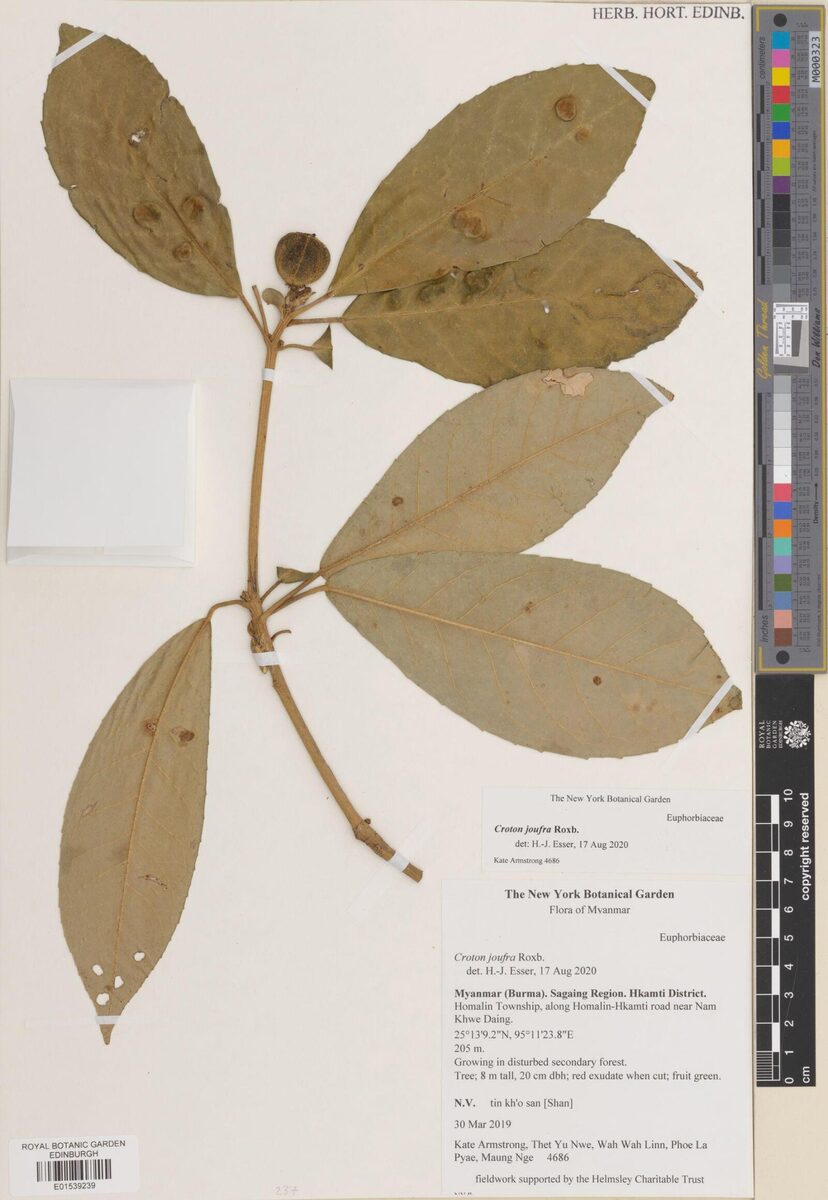
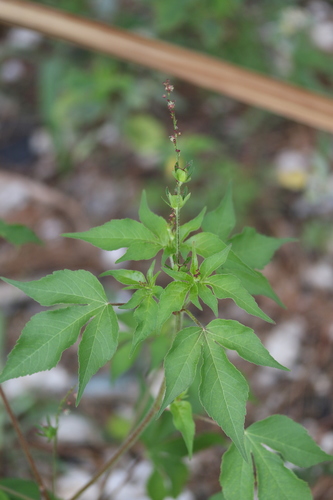
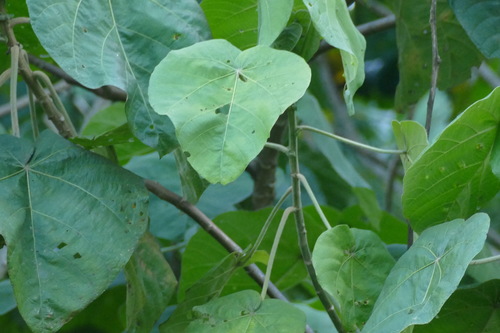
A vine. It can grow 30 m tall. The stem can be 8 cm across. The sap is red. The leaf blades re 13-25 cm long by 9-17 cm wide. The leaf stalk is 7-14 cm long. There are 2 glands near the base of the leaf. It has modified flower parts that act as tendrils. The flowers are in a branched panicle. There are more male flowers than female. The male flowers are 3 mm across and the female flowers are 5-6 mm across. The fruit is about 6 cm across. It is orange and has 3 angles. The seeds are round and 2.5 mm across.
Edible Uses
Seed - cooked. - see notes above on taxonomy. A cluster of fruit is borne on a branch up to 5cm long near the base. The fruit is 6 - 10cm across and fleshy with 3 - 4 lobes. The fruit surface is smooth and yellow when ripe. The seed coat is hard, brown and ridged. The kernel is white. A kernel of a nut weighs about 3 grams.
Known Hazards
Although the family Euphorbiaceae contains a very high percentage of poisonous plants, the seeds of this and several other species in the genus Omphalea are an exception to the rule, with several of them being considered wholesome and being eaten by humans. Some caution should be employed, however, since there are often warnings about how they should be eaten. Some reports, for example, say that the embryo of this species needs to be removed in order to remove a deleterious principal.
Distribution
It is a tropical plant. It grows at low altitudes from sea level to about 50 m above sea level in Cape York in Australia. It grows at higher altitudes in Papua New Guinea. It occurs at Bulolo at 700 m. It grows in rainforest.
Where It Grows
Australia, Indonesia, Pacific, Papua New Guinea, PNG, SE Asia, Solomon Islands,
Cultivation
Plants can be grown from seeds.
Propagation
Seed - Cuttings of firm new growth
Synonyms
Also Known As
Apanga simi, Ompalea papua
References (4)
- Australian Tropical Rainforest plants website. http://keys.trin.org.au
- Henning, B. M., 2014, The Diversity of Conservation: Exploring Narratives, Relationships and Ecosystem Services in Melanesian Market-based Biodiversity Conservation. Ph D dissertation, Uni of Minnesota. p 206
- Sukarya, D. G., (Ed.) 2013, 3,500 Plant Species of the Botanic Gardens of Indonesia. LIPI p 945
- World Checklist of Useful Plant Species 2020. Royal Botanic Gardens, Kew