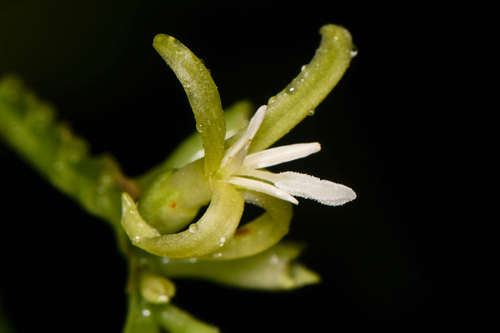
Houstonia caerulea
L.
Bluet, Quaker ladies
iNaturalist· cc-by-nc
(c) bassteeth, some rights reserved (CC BY-NC)
iNaturalist· cc-by-nc
(c) ktsubaki, some rights reserved (CC BY-NC)
iNaturalist· cc-by-nc
(c) Greg Lasley, some rights reserved (CC BY-NC), uploaded by Greg Lasley
Summary
Source: WikipediaHoustonia caerulea, commonly known as azure bluet, Quaker ladies, or bluets, is a perennial species in the family Rubiaceae. It is native to eastern Canada (Ontario to Newfoundland) and the eastern United States (Maine to Wisconsin, south to Florida and Louisiana, with scattered populations in Oklahoma). It is found in a variety of habitats such as cliffs, alpine zones, forests, meadows and shores of rivers or lakes.
Description
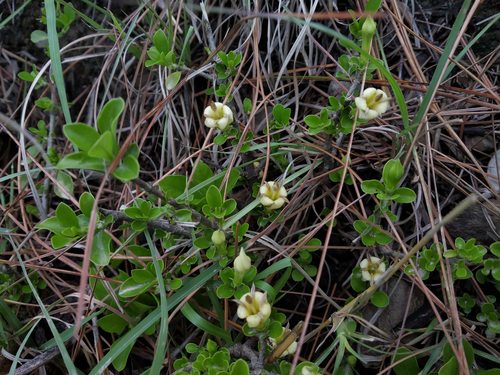
A herb. The leaves are small and opposite. At the base they are in a ring. The stems are 20 cm tall and with one flower per stalk. The flowers have 4 pale blue petals and a yellow centre. The flowers are about 1 cm across
Edible Uses
The leaves and flowers are edible raw. Flowers can be used in salads.
Medicinal Uses
None known.
Distribution
It is a temperate plant. It grows in grassy areas. It is best in moist acidic soils in shady areas. It suits hardiness zone 4.
Where It Grows
Canada, North America, USA,
Cultivation
A low creeping mat of tiny green leaves. Prefers evenly moist soil and acidic conditions. Full Sun or Partial Shade. Soil Type: Normal to Clay. Soil pH: Neutral to Acid.
Propagation
Propagate by seed or division. Divide the rootball directly. For seed, direct sow as soon as the ground can be worked in spring. Collect seedheads or pods when flowers fade and allow to dry before collecting seed.
Other Uses
Useful as a groundcover. The plant attracts bees, butterflies, and birds. Suitable for alpine and rock gardens, containers, edging, waterside planting, wild flower and woodland settings.
Synonyms
Also Known As
Azure bluet, Quaker ladies, little bluet
References (1)
- Jackes, D. A., Edible Forest Gardens