Meyna tetraphylla
(Schweinf. ex Hiern) Robyns
gbif· cc-by
Royal Botanic Gardens, Kew
gbif· cc-by
Royal Botanic Gardens, Kew
gbif· cc-by-nc-sa
MBG
Description
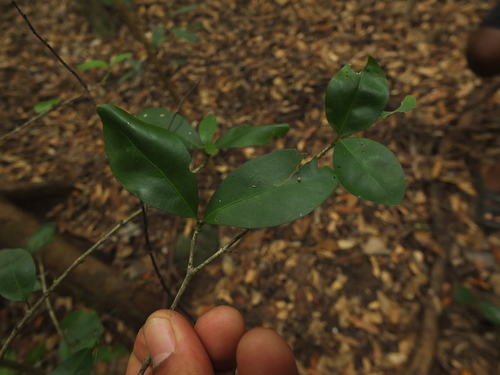
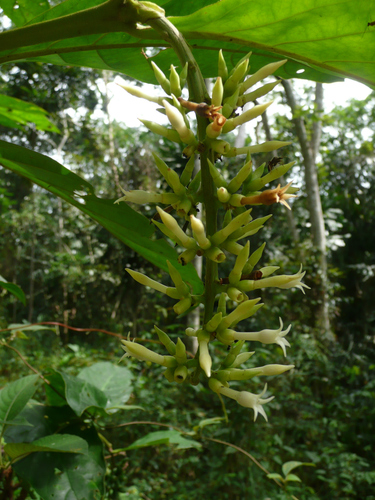
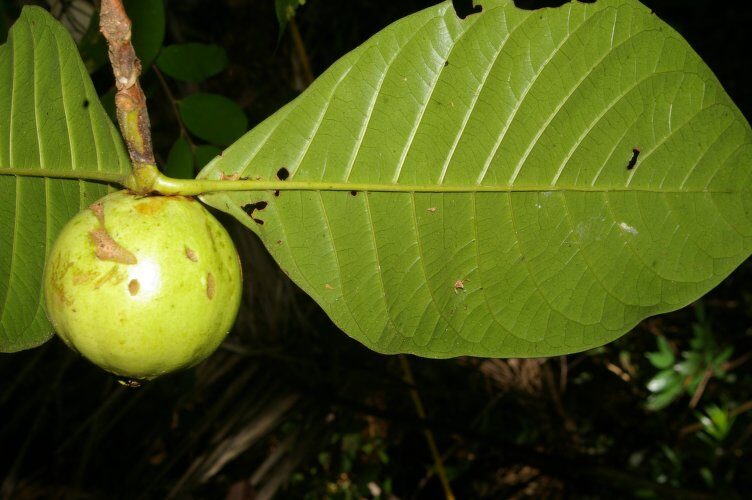
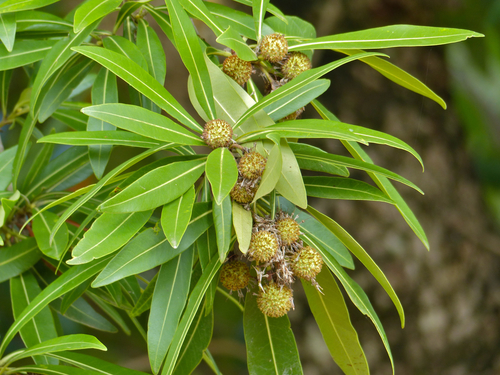
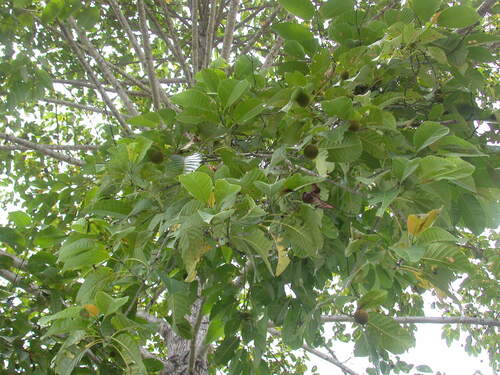
A spiny shrub. It grows 2-4 m high. The branches curve upwards and the crown is narrow. It can be a creeper. The bark is grey-brown. There are pairs of spines where the leaves are attached. The leaves are yellow-green and slightly shiny. The flowers are in clusters in the axils of leaves. They are cream or green. The fruit is an almost round five angled berry. It is 2 cm across. There are 2 subspecies. Subspecies comorensis is more common and tetraphylla occurs in northern Kenya
Edible Uses
The sweet fruit are eaten and are popular as food.
Traditional Uses
The fruit are sweet and are eaten.
This uses section is brief — help expand it
Distribution
It is a tropical plant. In Kenya it grows from sea level to 1,100 m altitude. It grows in bushland and along watercourses in dry country. It grows on rocky and sandy soils.
Where It Grows
Africa, Comoros, East Africa, Ethiopia, Kenya, Somalia, South Sudan,
Other Information
The fruit are popular.
Synonyms
Also Known As
Kakamoa, Kitootoo, Kitotoo, Kitolousuu, Kuec, Mukurungu, Onakii, Qaaleda
References (11)
- Assefa, A. & Abebe, T., 2010, Wild Edible Trees and Shrubs in the Semi-arid Lowlands of Southern Ethiopia. Journal of Science and Development 1 (1) 2010
- East African Herbarium records, 1981,
- Duguma, H. T., 2020, Wild Edible Plant Nutritional Contribution and Consumer Perception in Ethiopia. Hindawi International Journal of Food Science Volume 2020, Article ID 2958623, 16 pages
- Kidane, B., et al, 2014, Ethnobotany of Wild and Semi-wild Edible Fruit Species used by Maale and Ari Ethnic Communities in South Ethiopia. Ethnobotany Research and Applications. Vol. 12, 1546-3465-12-455
- Maundu, P. et al, 1999, Traditional Food Plants of Kenya. National Museum of Kenya. 288p
Show all 11 references Hide references
- Mutie, F. G., 2020, Conservation of Wild Food Plants and Their Potential for Combatting Food Insecurity in Kenya as Exemplified by the Drylands of Kitui County. Plants 2020, 9, 1017
- Mutie, F. M., et al, 2023, Important Medicinal and Food Taxa (Orders and Families) in Kenya, Based on Three Quantitative Approaches. Plants 2023, 12, 1145
- Peters, C. R., O'Brien, E. M., and Drummond, R.B., 1992, Edible Wild plants of Sub-saharan Africa. Kew. p 171
- Shumsky, S., et al, 2014, Institutional factors affecting wild edible plant (WEP) harvest and consumption in semi-arid Kenya. Land Use Policy 38(2014) 48-69
- von Katja Rembold, 2011, Conservation status of the vascular plants in East African rain forests. Dissertation Universitat Koblenz-Landau p 173
- World Checklist of Useful Plant Species 2020. Royal Botanic Gardens, Kew