Alstonia scholaris
(L.) R. Br.
Dita bark, Scholar tree
iNaturalist· cc-by-nc
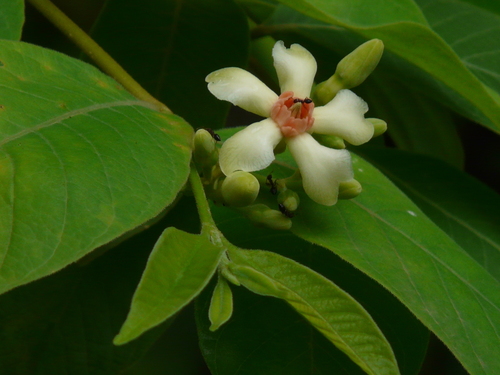
(c) scribbles, some rights reserved (CC BY-NC)
iNaturalist· cc-by-sa
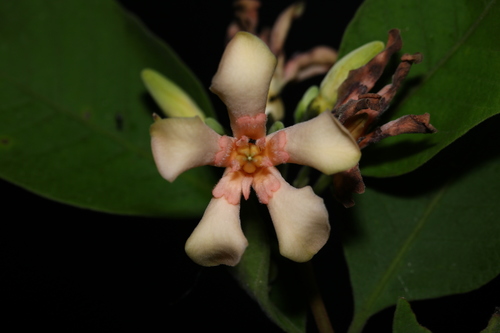
(c) Ong Jyh Seng, some rights reserved (CC BY-SA), uploaded by Ong Jyh Seng
iNaturalist· cc-by
(c) Cheongweei Gan, some rights reserved (CC BY)
Summary
Source: WikipediaAlstonia scholaris, commonly called blackboard tree, scholar tree, milkwood or devil's tree in English, is an evergreen tree in the oleander and frangipani family Apocynaceae. Its natural range is from Pakistan to China, and south to northern Australia. It is a toxic plant, but is used traditionally for myriad diseases and complaints. It is called 'Saptaparna' in India and is the sacred tree of the 2nd Jain tirthankar Ajitnatha. It was first described by Linnaeus in 1767, who gave it the name Echites scholaris.
Description
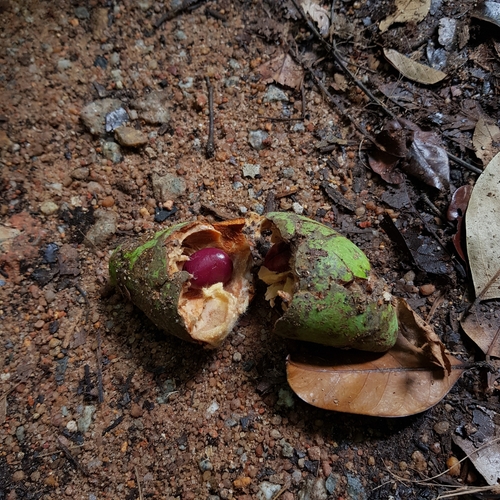
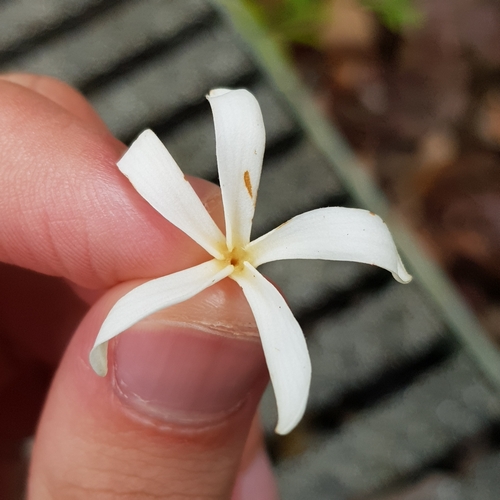
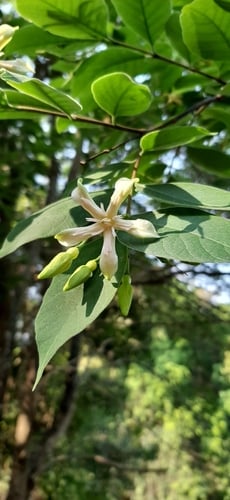
A tall tree. It grows 40 m tall. It has buttresses. The bark is brown and cracked. The leaves are spaced along the branches and are in rings. The leaves are entire and oval. They are dark green and blue-green underneath. The flowers are in the axils of leaves near the ends of branches. The flowers have a sweet scent. The fruit follicles are 30 cm long. The fruit are yellow to green and not fleshy. The seeds are about 5 mm long. They are rounded at both ends.
Edible Uses
The bark is used as a spice and to flavor liqueurs. The latex is used for chewing gum. Leaves, fruit, and sap are also edible.
Traditional Uses
The bark is used as a spice and to flavour liqueurs. The latex is used for chewing gum.
This uses section is brief — help expand it
Medicinal Uses
The wood of Alstonia scholaris has been recommended for the manufacture of pencils, as it is suitable in nature and the tree grows rapidly and is easy to cultivate. In Sri Lanka its light wood was used for coffins. The wood close to the root is very light and of white colour, and in Borneo was used for net floats, household utensils, trenchers, corks, etc. In Theravada Buddhism, the first Buddha is said to have used A. scholaris as the tree for achieving enlightenment. The 1889 book The Useful Native Plants of Australia states that "the powerfully bitter bark of this tree is used by the natives of India in bowel complaints (Treasury of Botany). It has proved a valuable remedy in chronic diarrhoea and the advanced stages of dysentery. It has also been found effectual in restoring the tone of the stomach and of the system generally in debility after fevers and other exhausting diseases (Pharmacopoeia of India). It is described in the Pharmacopoeia of India as an astringent tonic, anthelmintic, and antiperiodic. It is held in the highest repute in the Phillippine Islands [sic]." Despite its widespread traditional use as an 'antiperiodic' (a medicine which was supposed to cure the effects of malaria), it was found to have little to very weak activity against the cause of the disease, Plasmodium falciparum. It had no effect against Giardia intestinalis, and weak effect against Entamoeba histolytica, which both cause diarrhoea.
Known Hazards
This is a toxic plant. At high doses, an extract of the plant exhibited marked damage to all the major organs of the body in both rats and mice. The toxicity appears to depend on the plant organ studied, as well as the season it is harvested, with the bark collected in the monsoon season being the least toxic, and bark in the summer the most. Intraperitoneal administration is much more toxic than oral. Rats were more susceptible to the poison than mice, and pure-bred mice strains were more susceptible than crossbred. The toxic effects may be due to the alkaloid echitamine in the bark.
Distribution
It is a subtropical plant. It grows in the wet zone. It grows in coastal areas in Papua New Guinea. In southern China it grows between 200-1,000 m above sea level. In XTBG Yunnan.
Where It Grows
Asia, Australia, Bangladesh, Bhutan, Bougainville, Cambodia, China, Egypt, Himalayas, India, Indochina, Indonesia, Laos, Malaysia, Myanmar, Nepal, North Africa, Northeastern India, Pacific, Pakistan, Papua New Guinea, PNG, Philippines, SE Asia, Sikkim, Solomon Islands, Sri Lanka, Taiwan, Thailand, Timor-Leste, Vietnam,
Cultivation
Plants can be grown by seeds or cuttings.
Propagation
Seed - best sown in a sunny position. The germination rate of fresh seeds is high, nearly 100%, with sprouting commencing after 12 days and continuing for about 3 months. Seeds can be stored in closed tins for 2 months, maintaining a germination rate of 90%. The seeds are difficult to collect because the fruits open while still on the tree. A. Scholaris has been grafted. Cleft grafting and inverted T-grafting have been found to be most appropriate.
Other Uses
The bark yields a fibre. A yellow dye obtained from the bark is used on cotton fabrics. The flowers yield an essential oil. The heartwood is cream to pale yellow; it is not distinct from the wide band of sapwood. The texture is fairly fine but variable; the grain is even, sometimes twisted or curly; the wood often has a strong, faintly sweetish odour and a bitter taste. The wood is light in weight, soft, it is not very durable, with one report saying it is not attacked by insects, whilst another says it is liable to termites, pinhole and marine borers, and the sapwood is highly susceptible to lyctid borers. It is very liable to blue stain, so needs to be seasoned quickly. The wood is very easy to work, but cross sections can only be smoothed with an exceedmgly sharp tool. This tree is the most important source of pulai timber. It is used for light construction, ceilings, pattern making, corestock, plywood, carving and mouldings. The wood is also used for making coffins in Sri Lanka and school blackboards in Myanmar. It is regarded as suitable for pulp and paper production. The tree has been recommended as a fuelwood species for the patana lands of Sri Lanka. The charcoal is used as gun powder.
Synonyms
Also Known As
Ai-hanek, Andaragan, Bintihung, Blackboard tree, Chatim, Chattiwan, Dalipawen, Dirita, Dita, Herina, Kambuu, Katung, Letpan-ga, Lettok, Manakat, Plantan, Pohan pulai papan tulis, Pollay, Po-leh, Pulai lilin, Purbuk-kung, Rite, Ruk aththana, Saptparna, Sattaban, Taung-mayo, Taung meok, Tin pet, White cheesewood, Zej kaus nyawv
References (16)
- Carig, Elizabeth T., 2020, Guidebook on Native Trees within the Quirino Forest Landscape. Plaridel, Bulacan, St. Andrew Publishing House. p 50
- Conn, B. & Damas, K.. Guide to trees of Papua New Guinea. http:/www.pngplants.org/PNGtrees
- Calvert, G., 2010, The Burdekin Delta Tree Guide. Lower Burdekin Landcare Association., Inc., Ayr p 33
- Foreman, D. B., 1971, A checklist of the Vascular Plants of Bougainville with Descriptions of some Common Forest Trees. Botany Bulletin No. 5. Department of Botany. p 68
- Kebler, P. J. A., & Kidiyasa, 1994, Trees of the Balikpapan-Samarinda area of East Kalimantan, Indonesia. The Tropenbos Foundation, Wageningen, The Netherlands. p 40
Show all 16 references Hide references
- Kumar, S. A., Manus, D. & Mallika, M., 2018, Impact of non-timber forest products on Forest and in Livelihood Economy of the People of Adjoining Areas of Jalpaiguri Forest Division, West Bengal, India. Int. J. of Life Sciences, 2018; 6 (2):365-385
- Sarma, H., et al, 2010, Updated Estimates of Wild Edible and Threatened Plants of Assam: A Meta-analysis. International Journal of Botany 6(4): 414-423
- Savita, et al, 2006, Studies on wild edible plants of ethnic people in east Sikkim. Asian J. of Bio Sci. (2006) Vol. 1 No. 2 : 117-125
- Seidemann J., 2005, World Spice Plants. Economic Usage, Botany, Taxonomy. Springer. p 32
- Slik, F., www.asianplant.net
- Teneso, J. & Salvador, M., Apocynaceae (Dogbane Family) College of Science, Polytechnic University of the Philippines.
- Trimanto, & Hapsari L., 2016, Botanical survey in thirteen montane forests of Bawean Island Nature Reserve, East Java Indonesia: Conservation status, bioprospecting and potential tourism. Biodiversitas 17: 832-846.
- Van Sam, H. et al, 2004, Trees of Laos and Vietnam: A Field Guide to 100 Economically or Ecologically Important Species. Blumea 29 (2004) 201-349
- Whitney, C. W., et al, 2014, Conservation and Ethnobotanical Knowledge of a Hmong Community in Long Lan, Luang Prabang, Lao People’s Democratic Republic. Ethnobotany Research and Applications 12:643-658
- World Checklist of Useful Plant Species 2020. Royal Botanic Gardens, Kew
- www.worldagroforestrycentre.org/treedb/