Raphionacme procumbens
Schltr.
Creeping raphio
iNaturalist· cc-by-sa
(c) Andrew Hankey, some rights reserved (CC BY-SA)
iNaturalist· cc-by-sa
(c) Andrew Hankey, some rights reserved (CC BY-SA)
iNaturalist· cc-by-sa
(c) Andrew Hankey, some rights reserved (CC BY-SA)
Description
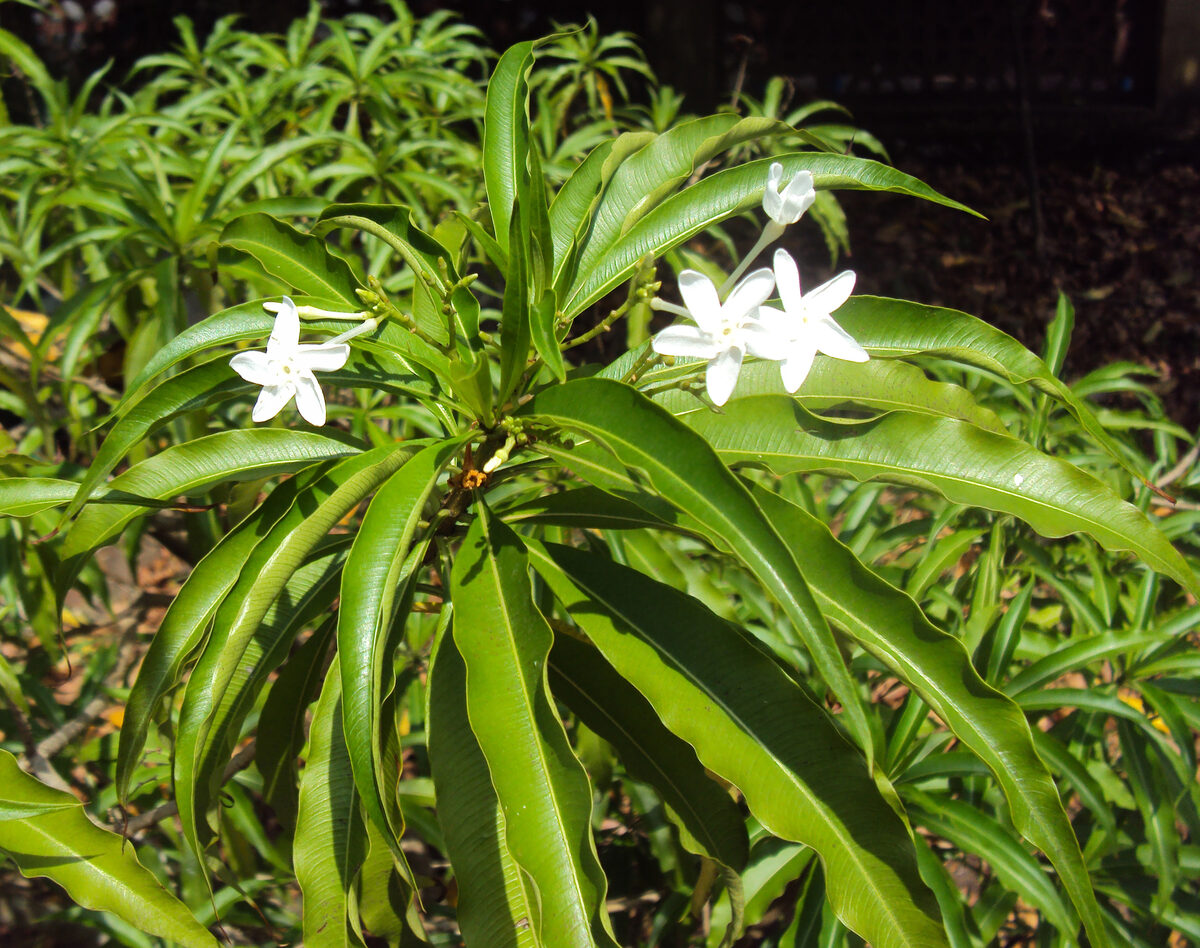
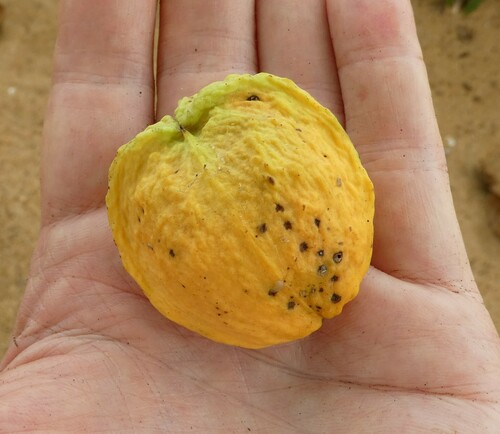
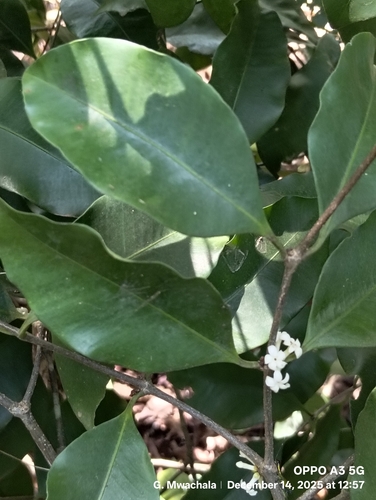
A herb. It keeps growing from year to year. It has a flattened round tuber. This can be 15 cm across. The stems are 40 cm long and lie along the ground. They are velvety and brown. The leaves are opposite and narrowly oval. They are 3-6 cm long and leathery. They are dark green and velvety above. They are pale green and more velvety underneath. The flowers occur as many together in rounded heads. The lobes are oval or triangle shaped and 4 mm long by 2 mm wide. They are velvety. They are dark red or violet at the base. The fruit is a single follicle that hangs down. It is oval and 4 cm long. It ends in a point.
Edible Uses
The fruit are eaten as a snack.
Traditional Uses
The fruit are eaten as a snack.
This uses section is brief — help expand it
Distribution
It is a tropical plant. It grows in grassland and open woodland. In Zimbabwe it grows between 350-1,900 m above sea level.
Where It Grows
Africa, East Africa, Eswatini, Mozambique, South Africa, Southern Africa, Swaziland, Zimbabwe,
Notes
Also put in the family Asclepiadaceae.
Also Known As
Imfuce
References (4)
- Long, C., 2005, Swaziland's Flora - siSwati names and Uses http://www.sntc.org.sz/flora/
- Ogle & Grivetti, 1985,
- Peters, C. R., O'Brien, E. M., and Drummond, R.B., 1992, Edible Wild plants of Sub-saharan Africa. Kew. p 66
- Ruiters-Welcome, A. K., 2019, Food plants of southern Africa. Ph.D. thesis. Univ. of Johannesburg p 27