Raphionacme galpinii
Schltr.
Galpin's raphio
iNaturalist· cc-by-nc
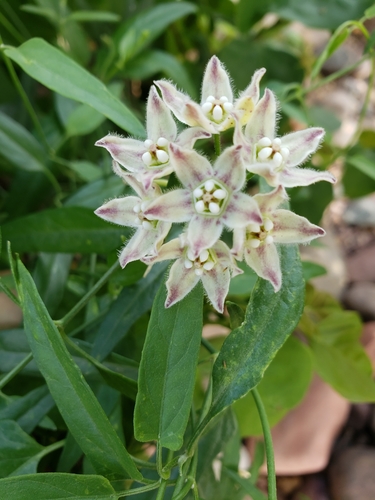
(c) Kate Braun, some rights reserved (CC BY-NC), uploaded by Kate Braun
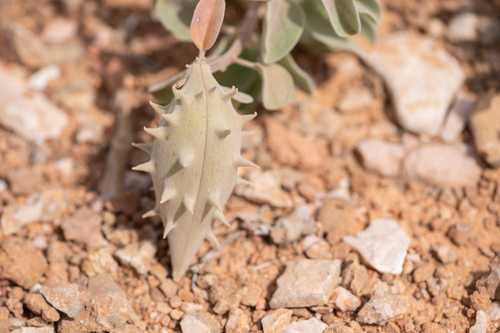
iNaturalist· cc-by-nc
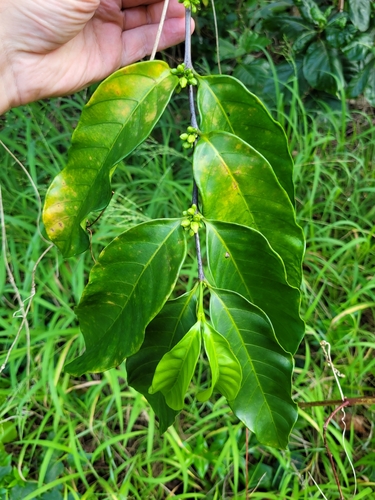
(c) Casper van Zyl, some rights reserved (CC BY-NC), uploaded by Casper van Zyl
iNaturalist· cc-by-nc
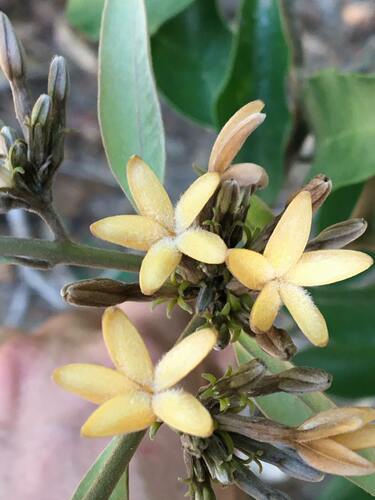
(c) Kate Braun, some rights reserved (CC BY-NC), uploaded by Kate Braun
Description
A herb that keeps growing from year to year. It spreads 60 cm across. The stems can be a 1 m tall. It has a large tuberous root 50 cm across. The leaves vary from narrow to broad. They are 2.5-16 cm long by 5-30 mm wide. They are more pale green underneath and can be hairy.
Edible Uses
The fruit are eaten as a snack. The roots and leaves are also edible portions.
Traditional Uses
The fruit are eaten as a snack.
This uses section is brief — help expand it
Medicinal Uses
No medicinal uses documented in available data.
Known Hazards
No hazards documented in available data.
Distribution
It is a subtropical plant.
Where It Grows
Africa, Eswatini, South Africa, Southern Africa, Swaziland,
Notes
Also put in the family Asclepiadaceae.
Synonyms
Also Known As
Lubhuku, Madema, Tshugoa
References (7)
- Fox, F. W. & Young, M. E. N., 1982, Food from the Veld. Delta Books. p 292 (As Raphionacme elata)
- Long, C., 2005, Swaziland's Flora - siSwati names and Uses http://www.sntc.org.sz/flora/
- Ogle & Grivetti, 1985, (Also as Raphionacme elata)
- Peters, C. R., O'Brien, E. M., and Drummond, R.B., 1992, Edible Wild plants of Sub-saharan Africa. Kew. p 66 (Also as Raphionacme elata)
- Ruiters-Welcome, A. K., 2019, Food plants of southern Africa. Ph.D. thesis. Univ. of Johannesburg p 27
Show all 7 references Hide references
- Shackleton, S. E., et al, 1998, Use and Trading of Wild Edible Herbs in the Central Lowveld Savanna Region, South Africa. Economic Botany, Vol. 52, No. 3, pp. 251-259
- Welcome, A. K. & Van Wyk, B.-E., 2019, An inventory and analysis of the food plants of southern Africa. South African Journal of Botany 122 (2019) 136–179