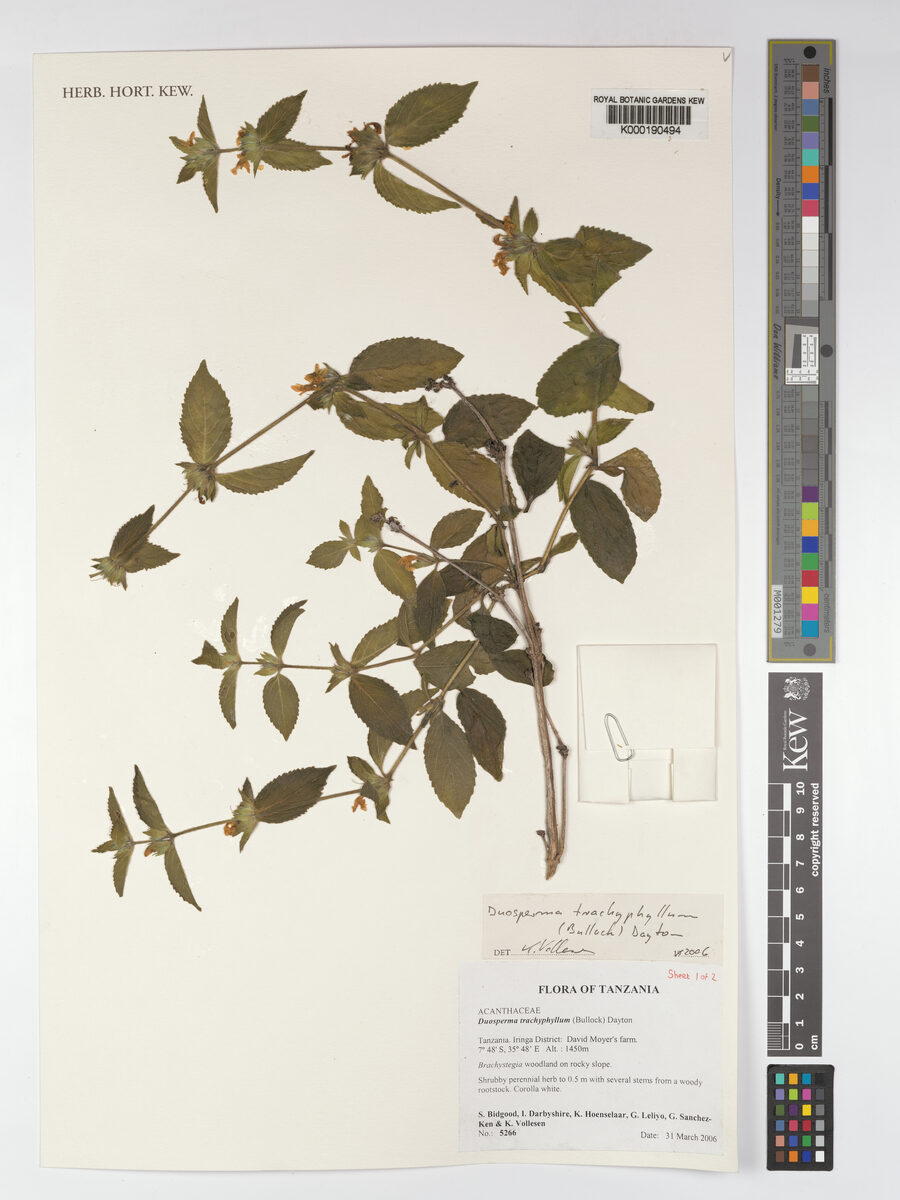
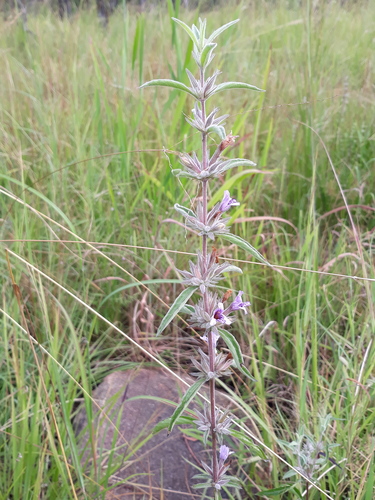
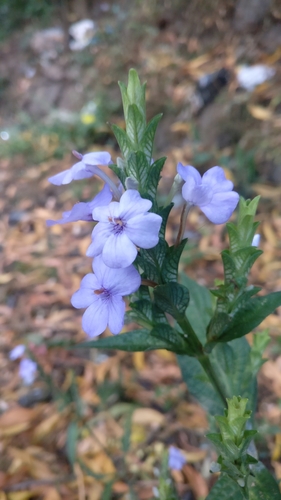
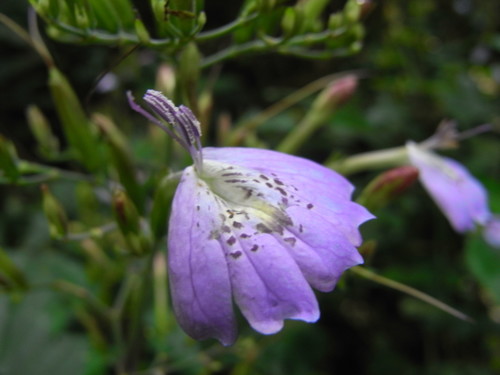
Phlogacanthus tubiflorus
Nees
gbif· cc-by
Royal Botanic Gardens, Kew
gbif· cc-by
Royal Botanic Gardens, Kew
gbif· cc-by
Royal Botanic Gardens, Kew
Description
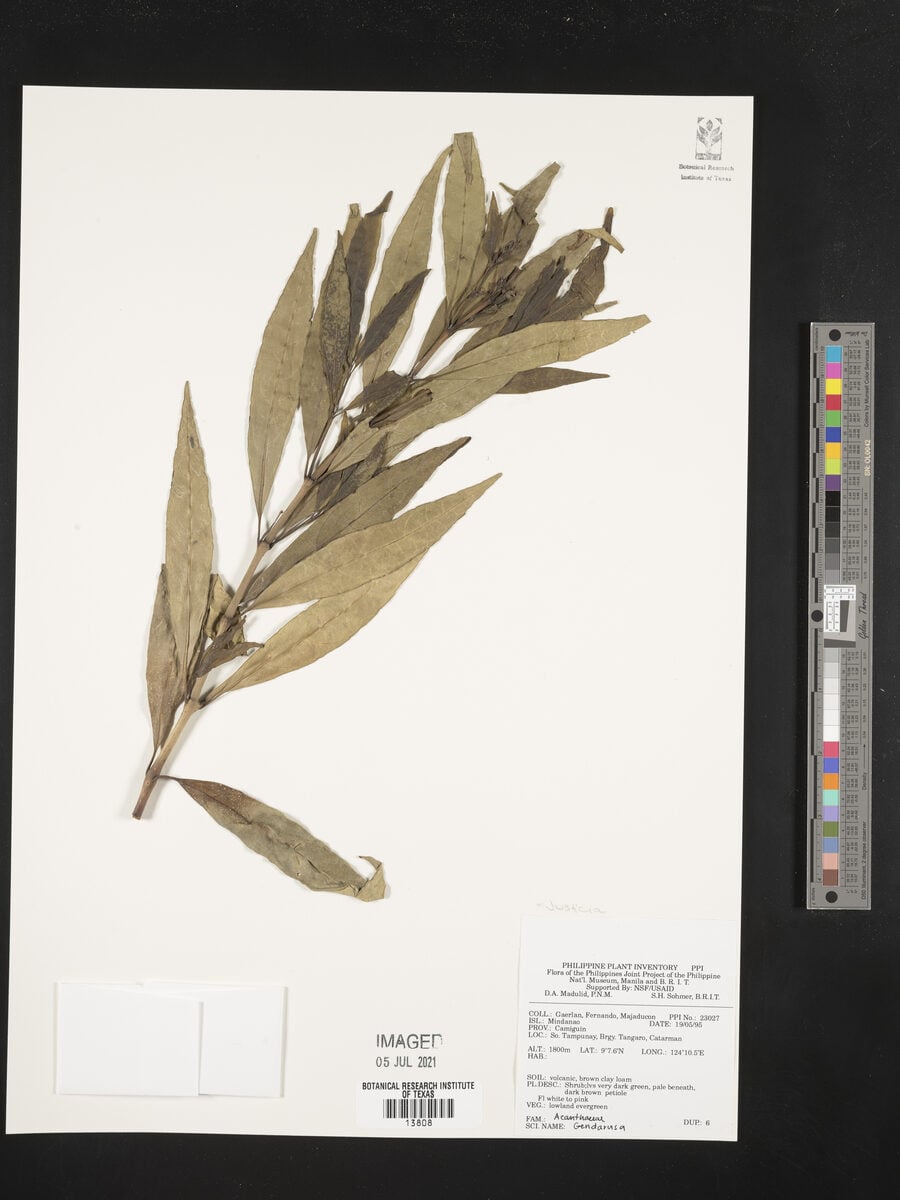
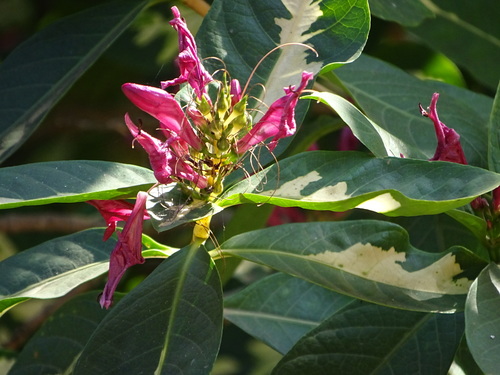
A small shrub. It grows 304 m tall. The leaves are 25 cm long by 8-14 cm wide. They are wavy along the edge. They are hairy underneath. The flower groups are 5-20 cm across. They are yellow to red. The fruit are capsules with 12 seeds.
Edible Uses
The flowers are cooked with meat or fried as a vegetable. The leaves and flowers are both edible portions.
Traditional Uses
The flowers are cooked with meat. The flowers are also fried as a vegetable.
This uses section is brief — help expand it
Medicinal Uses
The plant is used in medicine.
Distribution
It is a subtropical plant.
Where It Grows
Asia, India, Myanmar, Northeastern India, SE Asia,
Cultivation
Plants can be grown from seeds.
Other Information
Flowers are sold in local markets.
Notes
It is used in medicine.
Synonyms
Also Known As
Alubabui, Aluso, Basak patta, Bhataitita, Jok-anke-et, Kabrotudong miow, Lada-pa-byin, Linda-amauk, Nimsopechok, Pichok lok, Som rongtek, Tita phool, Va-te-zu
References (11)
- Angami, A., et al, 2006, Status and potential of wild edible plants of Arunachal Pradesh. Indian Journal of Traditional Knowledge 5(4) October 2006, pp 541-550
- Dutta, B., et al, 2016, Diversity and Ethnobotany of the Genus Phlogacanthus Nees in Assam, India. Int. J. Life. Sci. Scienti. Res., 2(4):472-477
- Ethnobotany of Karbis. Chapter 4 in p 99
- Kar, A., & Borthakur, S. K., 2008, Wild vegetables of Karbi - Anglong district, Assam, Natural Product Radiance, Vol. 7(5), pp 448-460
- Kar, A., et al, 2013, Wild Edible Plant Resources used by the Mizos of Mizoram, India. Kathmandu University Journal of Science, Engineering and Technology. Vol. 9, No. 1, July, 2013, 106-126
Show all 11 references Hide references
- Medhi, P. & Borthakur, S. K., 2012, Phytoresources from North Cachur Hills of Assam -3: Edible plants sold at Hflong market. Indian Journal or Natural Products and Resources. 3(1) pp 84-109
- Medhi, P. & Borthakur, S. K., 2013, Wild edible plants sold by the Zeme Nagas at the makeshift market of Mahur, Dima Hasao district of Assam. Pleione 7(1): 84 - 93. 2013
- Medhi, P., Sarma, A and Borthakur, S. K., 2014, Wild edible plants from the Dima Hasao district of Assam, India. Pleione 8(1): 133-148
- Sarma, H., et al, 2010, Updated Estimates of Wild Edible and Threatened Plants of Assam: A Meta-analysis. International Journal of Botany 6(4): 414-423
- Srivastava, R. C., 2010, Traditional knowledge of Nyishi (Daffla) tribe of Arunachal Pradesh. Indian Journal of Traditional Knowledge. 9(1):26-37
- Teron, R. & Borthakur, S. K., 2016, Edible Medicines: An Exploration of Medicinal Plants in Dietary Practices of Karbi Tribal Population of Assam, Northeast India. In Mondal, N. & Sen, J.(Ed.) Nutrition and Health among tribal populations of India. p 148