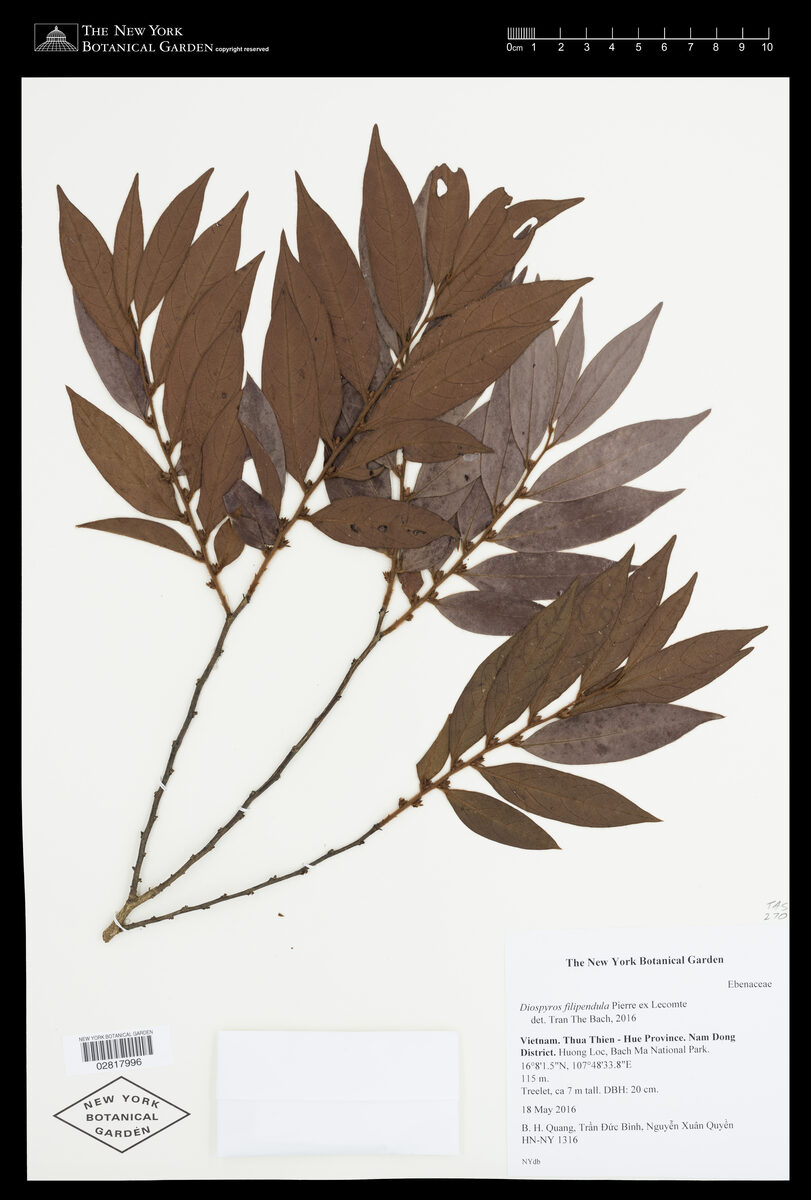
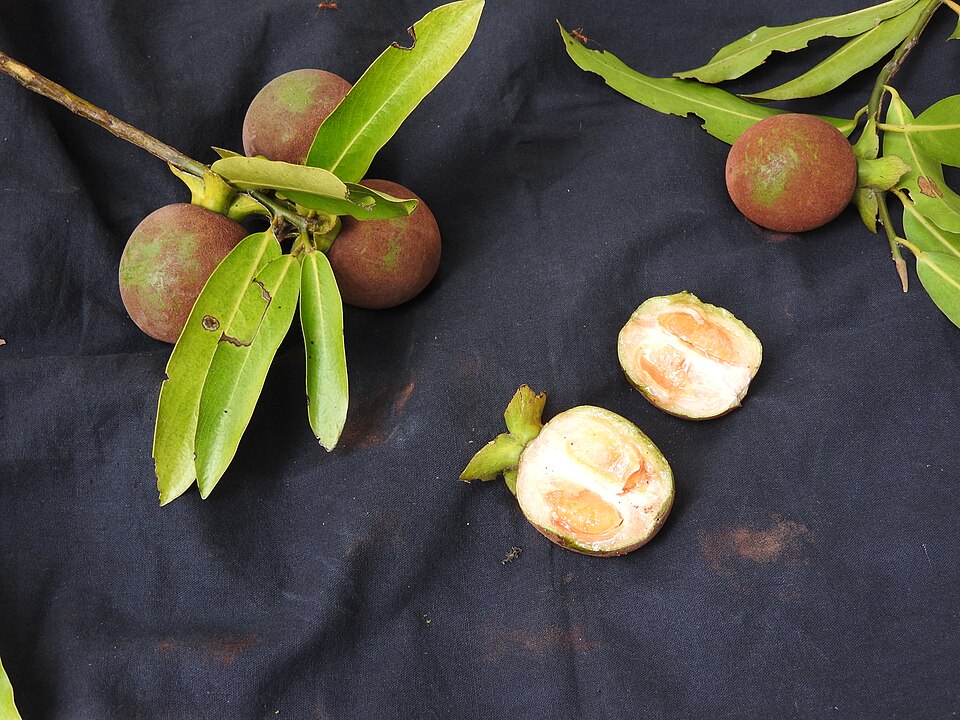
Diospyros abyssinica
(Hiern) F. White
Giant diospyros
iNaturalist· cc-by-nc-sa
(c) Marco Schmidt, some rights reserved (CC BY-NC-SA), uploaded by Marco Schmidt
iNaturalist· cc-by-nc-sa
(c) Marco Schmidt, some rights reserved (CC BY-NC-SA)
Summary
Source: WikipediaDiospyros abyssinica is a tree species in the family Ebenaceae. It is native to Sub-Saharan Africa and is also known as giant diospyros, or Kôforonto and Baforonto in local languages spoken in parts of Mali. blidzo, blitcho, gblit∫o, blonyat∫o or gblεt∫o in some Ghanaian languages
Description
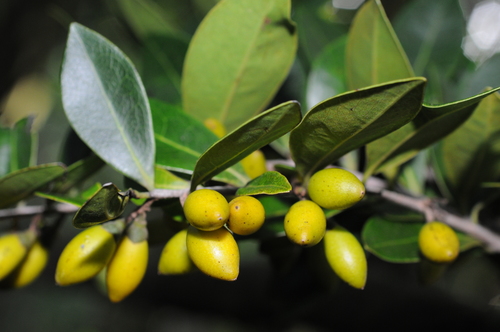
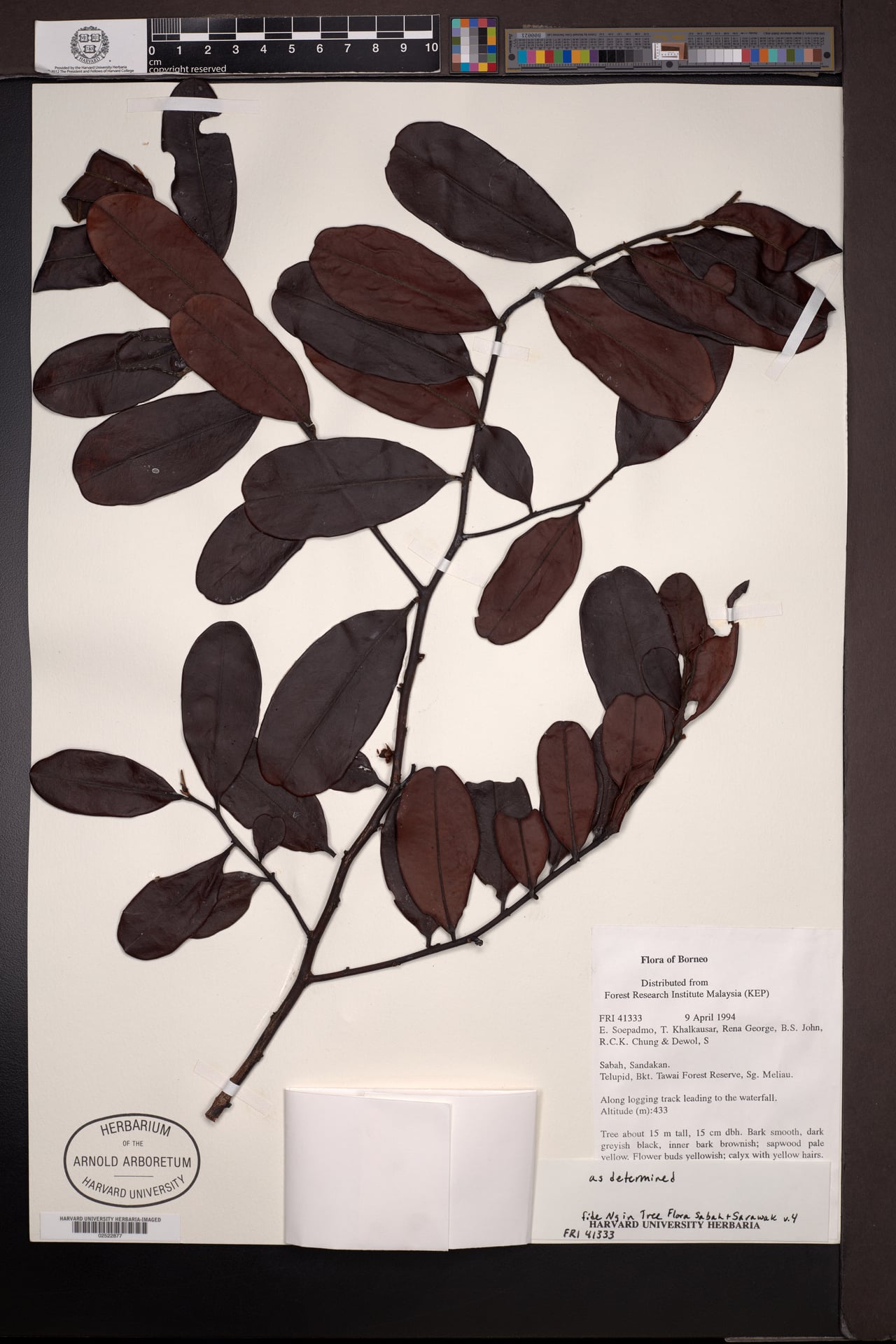
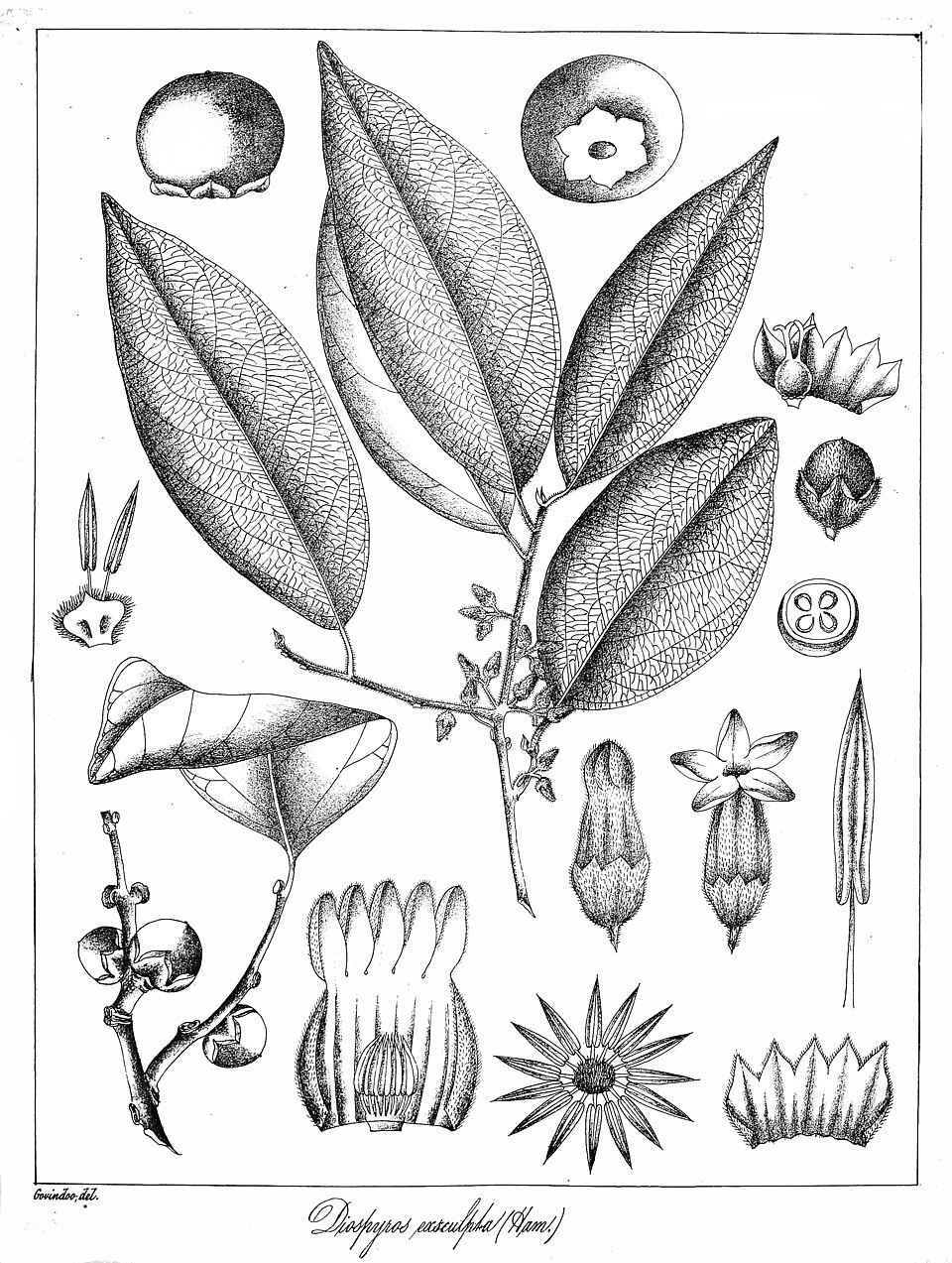
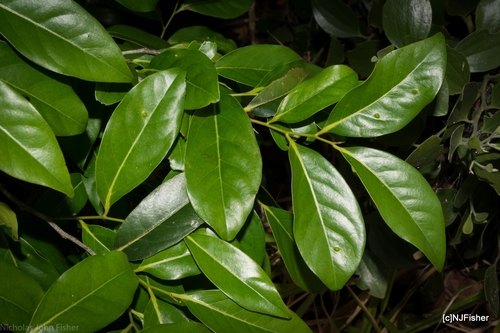
A large tree. It grows 35 m tall. It keeps its leaves throughout the year. The crown has short branches. The bark is dark grey with fine cracks. The leaves are alternate and narrowly oval. They are 7-12 cm long by 3-4 cm wide. They are shiny dark green. The edges are often wavy. Young leaves are red. The flowers are small and grow in the axils of leaves. They can occur singly or in small clusters. They are creamy white to yellow. They have a scent. The fruit is round and fleshy. It is held in a lobed cup. It is yellowish green and turns blue to black when ripe. It is 1.4 cm long by 1 cm wide. There is usually one seed that is 9 mm long by 6 mm wide.
Edible Uses
The fruit are eaten fresh.
Traditional Uses
The fruit are eaten fresh.
This uses section is brief — help expand it
Medicinal Uses
The fruit are consumed by birds and various mammals, and are an important part of the diet of primates and fruitbats. Records of human consumption is lacking, but the sweet mesocarp under the tough epicarp might likely also be consumed by the local population, as in other African Diospyros species. Besides the varied use of its hard and moderately heavy wood, which is lacking the dark colour and high durability of other Diospyros species, D. abyssinica is said to have medical properties. Few studies of the traditional use of D. abyssinica have however been done. The tree is considered to be a traditional medicine by the Malian people of Sikasso region, and is used for treatments of various diseases. The Dioïla cercle uses the decoction of leaves against malaria, and wound healing, while the roots are used against dysentery. The extraction of the root bark is attractive to scavengers and some 15 lipoxygenase inhibitors have been found. The attraction is caused by phenolic smell of bergenin and flavanol that the plant releases. It also releases betulinic acid and lupeol from the stem bark. All of those compounds are used as anti-inflammatory, and are protecting plants from protozoan parasites. The plants are also effective against blood platelet aggregation and murine tumors.
Distribution
It is a tropical plant. It grows in evergreen forests. It is recorded between 200-2,500 m above sea level and in areas with an annual rainfall between 650-2050 mm. In drier areas it is usually near streams or on termite mounds that retain moisture.
Where It Grows
Africa, Angola, Burkina Faso, East Africa, Eritrea, Ethiopia, Gabon, Ghana, Guinea, Guinée, Kenya, Mali, Mozambique, Nigeria, Sudan, Tanzania, Uganda, West Africa, Zambia, Zimbabwe,
Cultivation
Plants are grown from seed. Seeds are slow to germinate. Trees can be pruned or cut back and allowed to re-grow.
Propagation
Seed - it has a very short viability and so should be sown as soon as possible. The flesh should be removed since this contains germination inhibitors. Sow the seed in a shady position in a nursery seedbed. The sowing media for ebony uses soil and fine sand at the ratio 3:1. The seed is planted horizontally or vertically with the radicle end down, with a sowing depth of 1 - 1½ times the thickness of seed. Distance between the seeds is 3 - 5cm. Seeds are very sensitive to desiccation during germination and early growth, so must be regularly watered at this time. Normally the seed will germinate after one week. In one trial, fresh seed, sown one day after collection, showed 85% germination rate within 17 - 65 days. As a rule fresh seeds have a high percentage of fertility. The seedlings develop long taproots at an early stage, often before any appreciable elongation of the shoot takes place. The growth of the seedling is decidedly slow .
Other Uses
The heartwood is whitish yellow to pale grey-brown, often with irregular black streaks or entirely black in the centre; it is not distinctly demarcated from the wide, whitish to yellowish sapwood. The texture is usually fine, usually straight-grained, sometimes interlocked; the freshly cut wood has an unpleasant aroma. The wood is hard and tough, difficult to plane and not durable. It is used particularly for making implements and tool handles, it is also used for heavy flooring, poles, interior trim, mine props, furniture, cabinet making, masts of dhows, musical instruments, ladders, toys, novelties, pestles, mortars, golf club heads, sticks, carving and turnery. The wood is also in demand for loom shuttles in weaving sisal cloth. The wood is used for fuel and to make charcoal. The tree is considered to be a pioneer specie in its native range, and is particularly characteristic in the early stages of forest succession. However, it can also persist in old forest and may even regenerate there under shady conditions.
Production
It Zimbabwe it flowers from October to January.
Other Information
A minor food.
Synonyms
Also Known As
Baforonto, Blidzo, Blitcho, Dul'o, Koforonto, Mdaa-mwitu, Mueluili, Serkin
References (8)
- Addis, G., et al, 2013, The Role of Wild and Semi-wild Edible Plants in Household Food Sovereignty in Hamer and Konso Communities, South Ethiopia. Ethnobotany Research & Applications. 11:251-271
- Balemie, K., & Kebebew, F., 2006, Ethnobotanical study of wild edible plants in Derashe and Kucha Districts, South Ethiopia. Journal of Ethnobiology and Ethnomedicine.
- Duguma, H. T., 2020, Wild Edible Plant Nutritional Contribution and Consumer Perception in Ethiopia. Hindawi International Journal of Food Science Volume 2020, Article ID 2958623, 16 pages
- Kebebew, M. & Leta, G., 2016, Wild Edible Plant Bio-diversity and Utilization System in Nech Sar National Park, Ethiopia. International Journal of Bio-resource and Stress Management 2016, 7(4):885-896
- Lulekal, E., et al, 2011, Wild edible plants in Ethiopia: a review on their potential to combat food insecurity. Afrika Focus - Vol. 24, No 2. pp 71-121
Show all 8 references Hide references
- Ojelel, S., et al, 2019, Wild edible plants used by communities in and around selected forest reserves of Teso-Karamoja region, Uganda. Journal of Ethnobiology and Ethnomedicine (2019) 15:3
- Tebkew, M. et al, 2014, Underutilized wild edible plants in the Chilga District, northwestern Ethiopia: focus on wild woody plants. Agriculture & Food Security 3:12
- Tebkew, M., et al, 2018, Uses of wild edible plants in Quara district, northwest Ethiopia: implication for forest management. Agriculture and Food Security (2018) 7:12