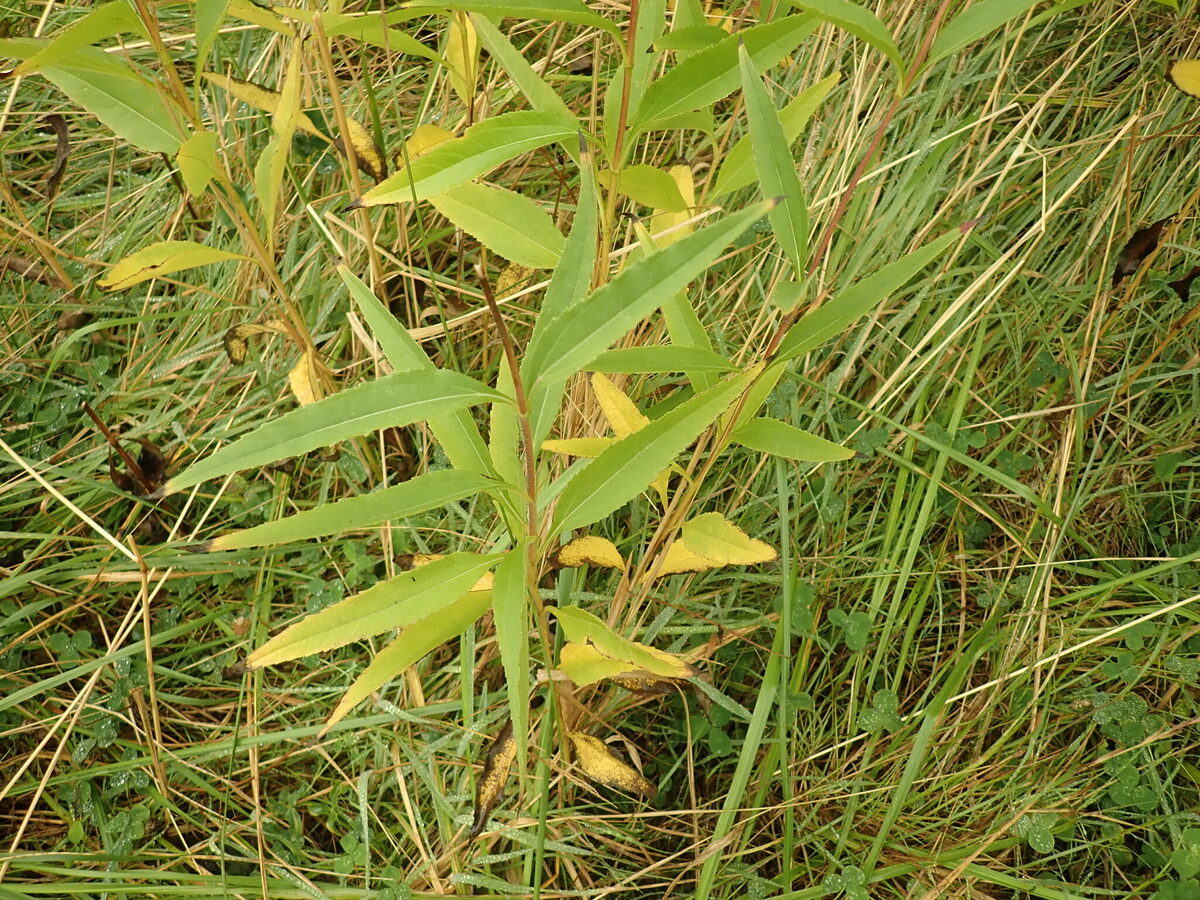
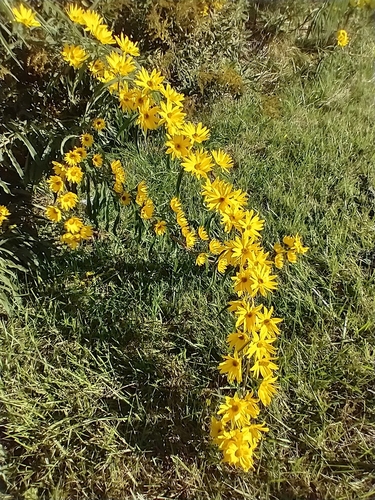
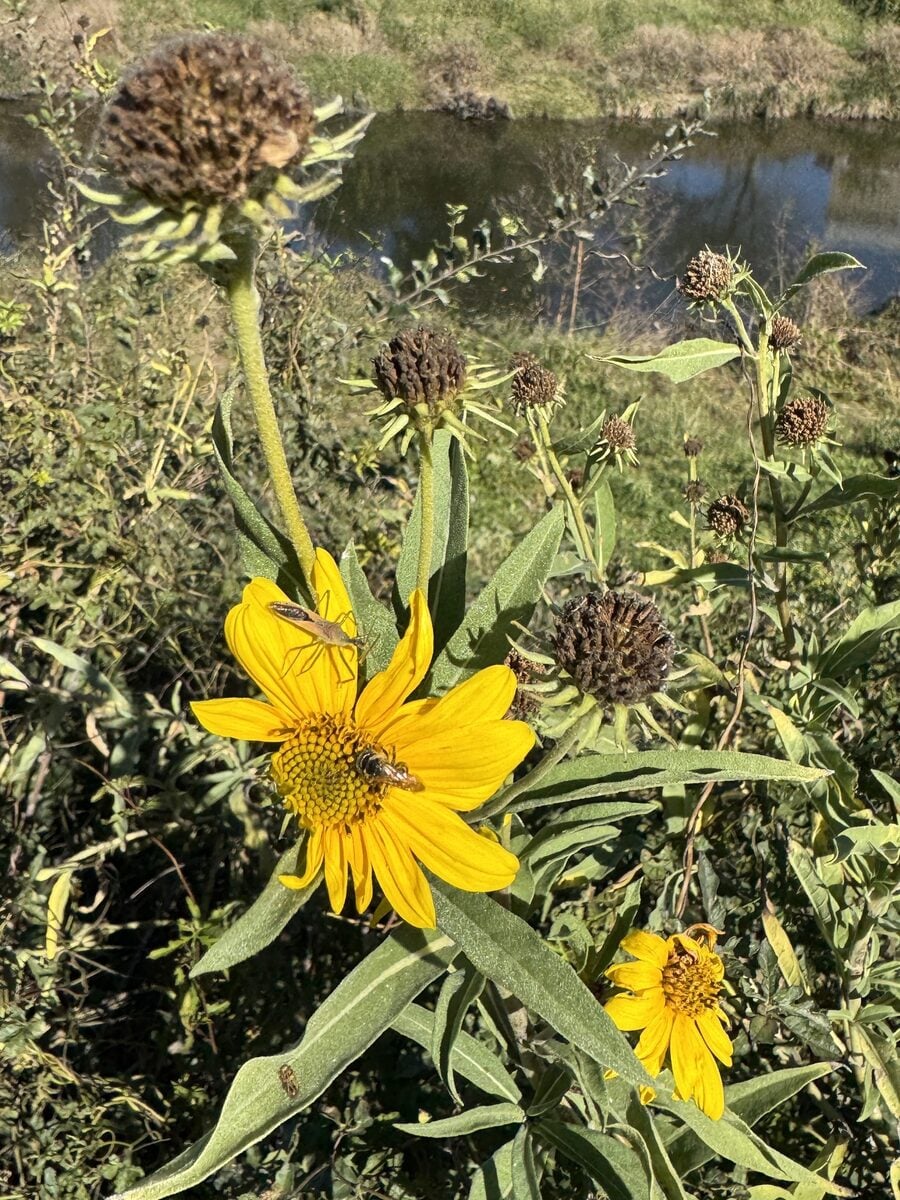
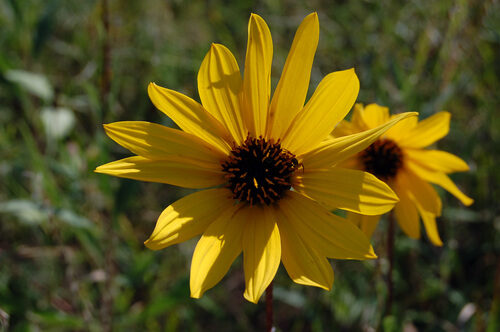
Ericameria nauseosa
(Pallas ex Pursh) G. L. Nesom & Baird
Rubber rabbitbrush
iNaturalist· cc-by-nc
(c) Logan Wilbur, some rights reserved (CC BY-NC)
iNaturalist· cc-by-nc
(c) Pete & Gretchen Pederson, some rights reserved (CC BY-NC), uploaded by Pete & Gretchen Pederson
Summary
Source: WikipediaEricameria nauseosa (formerly Chrysothamnus nauseosus), commonly known as chamisa, rubber rabbitbrush, and gray rabbitbrush, is a shrub in the sunflower family (Aster) found in the arid regions of western North America. Two subspecies have been described, consimilis (the green form with 8 varieties) and nauseosa (the gray form with 14 varieties).
Description
An evergreen shrub growing 2 m tall with equal spread at a medium rate, hardy to UK zone 7. Insect-pollinated and noted for attracting wildlife. Tolerates light sandy, medium loamy, and heavy clay soils, including those with poor fertility and high alkalinity. Requires full sun and adapts to both drought and variable moisture.
Edible Uses
A gum obtained from the root is used for chewing. The plant can also be used to make a tea.
Medicinal Uses
A decoction of the twigs has been used to treat toothaches, coughs, and chest pains. An infusion of the flowering stems has been used for colds and TB. An infusion of the leaves and stems has been used internally for colds, diarrhoea, and stomach cramps, and applied externally as a wash for sores and skin eruptions, particularly smallpox. The plant shows slight bactericidal activity. In small doses, extracts briefly lowered blood pressure in rabbits; in large doses, the drop in blood pressure was pronounced and accompanied by circulatory and respiratory failure.
Distribution
It is a temperate plant.
Where It Grows
North America, USA,
Propagation
No specific information is available for this species. It is suggested to sow seed in spring in a greenhouse, barely covering it. Prick seedlings into individual pots once large enough to handle and grow them on under glass for at least their first winter. Plant out in late spring or early summer after the last expected frosts. Cuttings of half-ripe wood can be taken in midsummer and rooted in sand in a frame.
Other Uses
The plant is a source of latex used in making rubber, though no commercially viable extraction method currently exists. It has been identified as one of the more promising western North American species for biocrude production — the cyclohexane extract was found to be 15.1% and the ethanol extract 20.8%, with an estimated energy value of 13.2 kBTU/lb in the extractables, a biomass yield of approximately 4.5 MT/ha or 12.5 barrels, at a per-barrel cost of $50.00 or $13.10 per million BTU. The leaves have been used as sanitary towels, particularly after childbirth. A green dye is obtained from the bark and a yellow-gold dye from the flowers. The growing plant repels insects. The cottony fruiting heads are used as stuffing for pillows and similar items. Together with associated species such as big sage and western wheat grass, rubber rabbitbrush is an important food source for browsing wildlife on winter ranges. It is also grown as an ornamental xeriscaping shrub.
Synonyms
Also Known As
Sigupi
References (3)
- Couture, M. D., 1978, Recent and Contemporary Foraging Practices of the Harney Valley Paiute. Thesis, Portland State University (As Chrysothamnus nauseosus)
- Coutre, M. D., et al, 1986, Foraging Behaviour of a Contemporary Northern Great Basin Population. Journal of California and Great Bason Anthropology Vol. 8(2) pp 150-160 (As Chrysothamnus nauseosus)
- USDA plants