Alocasia acuminata
Schott.
iNaturalist· cc-by-nc
(с) lordworm_cryptopsy, некоторые права защищены (CC BY-NC)
Description
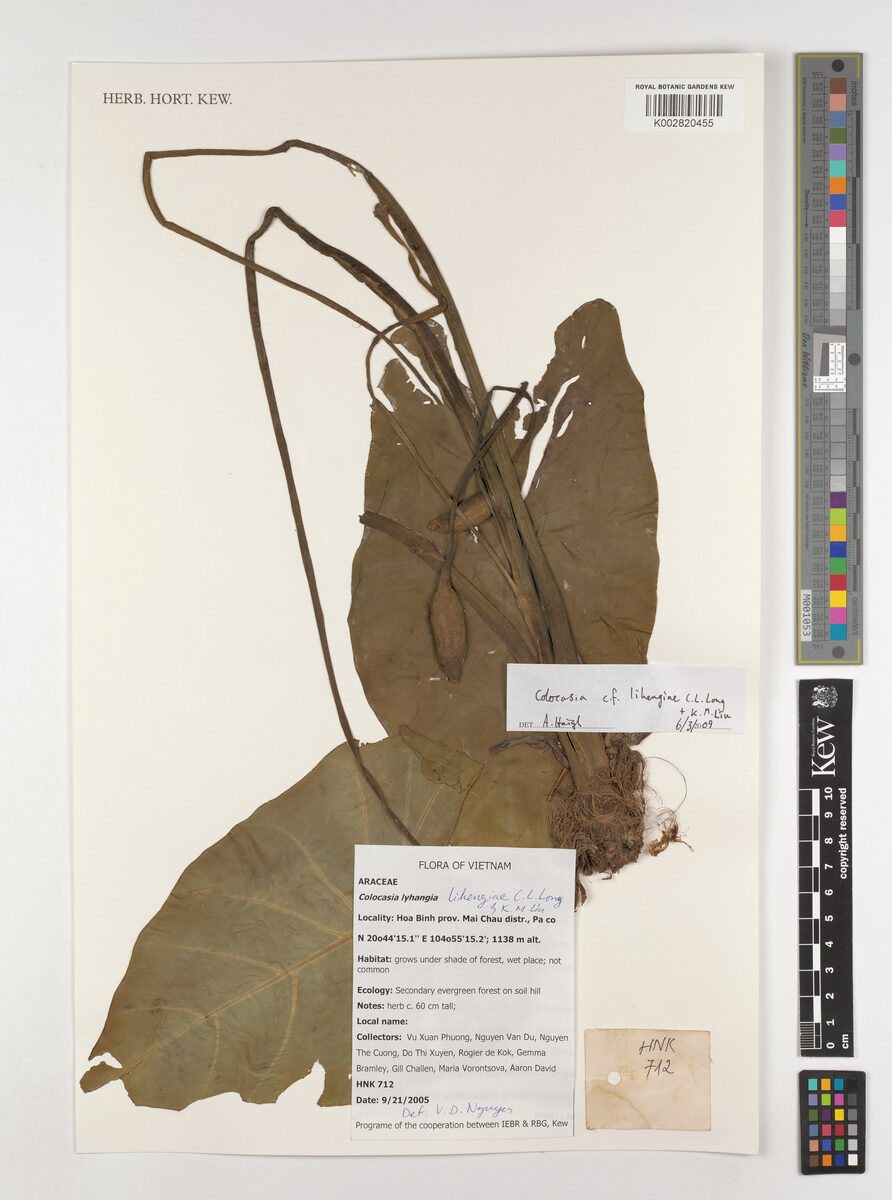
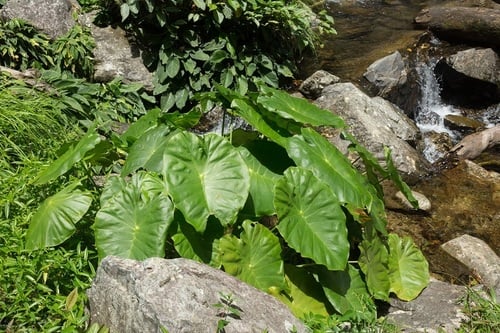
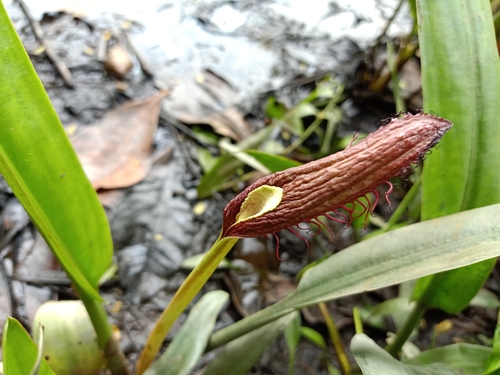
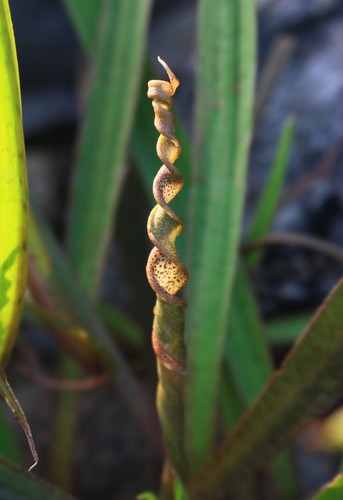
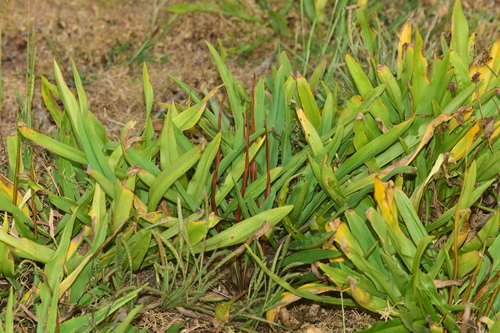
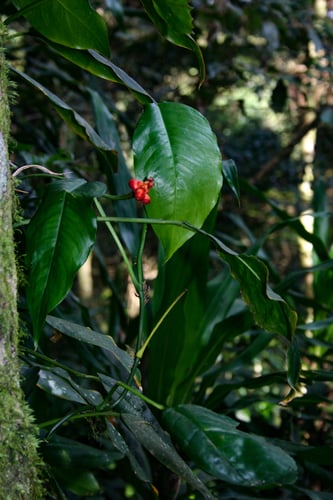
A herb. It keeps growing from year to year. It grows 75 cm tall. It forms tubers. It does not have an aerial stem. The stem usualyl lies along the ground and is 8-75 cm long by 2-6 cm wide. The leaves have a stalk that joins the blade away from the edge. The leaves are oval and taper to the tip. They are 15-60 cm long by 8-20 cm wide. The leaf stalk is long. It sheaths the base. The flowers are a yellow spadix inside a yellow spathe The fruit are round and ornage-red.
Edible Uses
The young shoots, tender leaves, and corms are cooked and eaten. The leaf stalks are cooked and eaten in curries. Harvested plants can be stored for about one week.
Traditional Uses
The young shoots, tender leaves and the corms are cooked and eaten. The harvested plants can be stored for about one week. The leaf stalks are cooked and eaten in curries.
Distribution
It is a tropical and subtropical plant. It grows in damp places. It can grow in deep shade in wet forests. In southern China it grows between 600-1,800 m above sea level. In Yunnan.
Where It Grows
Asia, Bangladesh, China, Himalayas, India, Indochina, Laos, Myanmar, Nepal, Northeastern India, SE Asia, Thailand, Vietnam,
Also Known As
Ange, Kochu, Thaso, Thaso gwswm
References (7)
- Baro, D., Baruah, S. and Borthukar, S. K. 2015, Documentation on wild vegetables of Baksa district, BTAD (Assam). Scholars Research Library. Archives of Applied Science Research, 2015, 7 (9):19-27
- Dutta, U., 2012, Wild Vegetables collected by the local communities from the Churang reserve if BTDm Assam. International Journal of Science and Advanced Technology. Vol. 2(4) p 119
- Lim, T. K., 2015, Edible Medicinal and Non Medicinal Plants. Volume 9, Modified Stems, Roots, Bulbs. Springer p 6
- Narzary, H., et al, 2013, Wild Edible Vegetables Consumed by Bodo tribe of Kokrajhar District (Assam), North-East India. Archives of Applied Science Research, 5(5): 182-190
- Pagag, K. & Borthakur, S. K., 2012, Wild edible wetland plants from Lakhimpur district of Assam, India. Pleione 6(2): 322 - 327. 2012.
Show all 7 references Hide references
- Patiri, B. & Borah, A., 2007, Wild Edible Plants of Assam. Geethaki Publishers. p 154
- Sarma, H., et al, 2010, Updated Estimates of Wild Edible and Threatened Plants of Assam: A Meta-analysis. International Journal of Botany 6(4): 414-423