Arisaema leschenaultii
Blume
Cobra lily
iNaturalist· cc-by
(c) Siddarth Machado, some rights reserved (CC BY), uploaded by Siddarth Machado
iNaturalist· cc-by
(c) Siddarth Machado, some rights reserved (CC BY), uploaded by Siddarth Machado
iNaturalist· cc-by
(c) Siddarth Machado, some rights reserved (CC BY), uploaded by Siddarth Machado
Description
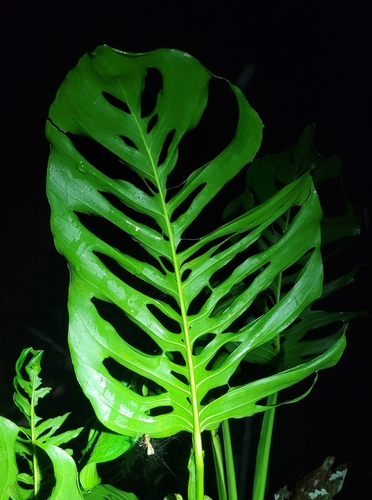
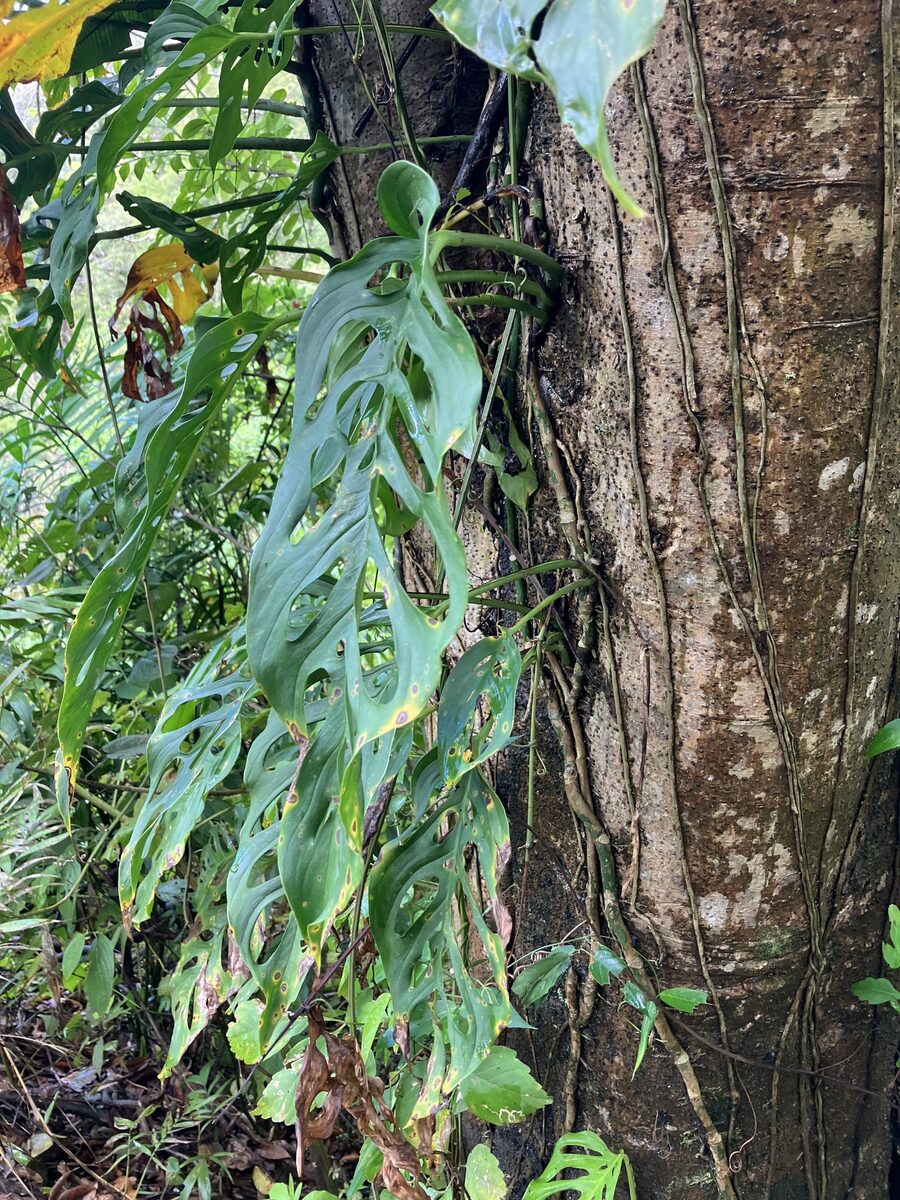
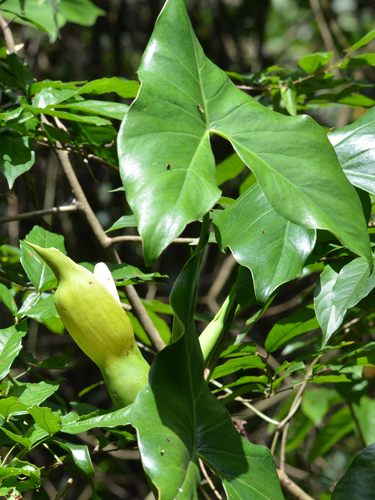
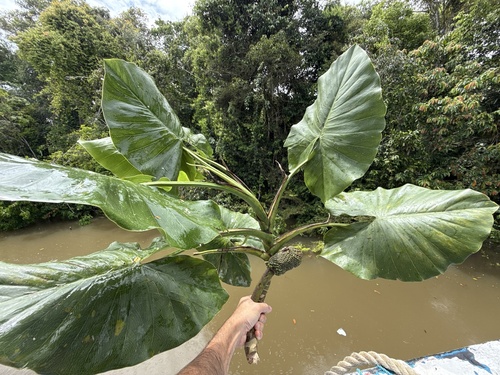
A climber. It has a fattened corm at the base. This is 1-6 cm across. The leaves have 7-12 leaflets that are 15-25 cm long by 5-7 cm wide. They are sword shaped and taper to the tip. There is a vein along the edge. The leaf stalk is 70 cm long and 1-3 cm thick. There is a spathe that wraps around the flower. This is 10-22 cm long The spadix or stalk with the flowers is 11-15 cm long. The female flowers are in the lower section.
Edible Uses
The tuberous roots are boiled and eaten whole, or roasted, pounded, soaked in ash water for 3 days, washed, and eaten with salt and chillies.
Traditional Uses
The tuberous roots are boiled and eaten. They are roasted and pounded and soaked in ash water for 3 days then washed and eaten with salt and chillies.
Medicinal Uses
The plant has antioxidant activity and contains alkaloids with medicinal applications.
Distribution
It is a tropical and subtropical plant. It grows on the edges of evergreen forests and in grasslands.
Where It Grows
Asia, India, Northeastern India,
Notes
It has antioxidant activity and alkaloids and therefore medicinal uses.
Synonyms
Also Known As
Dhei, Paambukkodi, Pambucholam, Telhawng, Telong
References (4)
- Gangte, H. E., et al, 2013, Wild Edible Plants used by the Zou Tribe in Manipur, India. International Journal of Scientific and Research Publications, Volume 3, Issue 5
- Guite, C., 2016, A study of wild edible plants associated with the Paite tribe of Manipur, India, International Journal of Current Research. Vol. 8, Issue, 11, pp. 40927-40932
- Lalfakzuala, R., 2007, Ethnobotanical usages of plants in western Mizoram. Indian Journal of Traditional Knowledge. Vol 6(3) pp 480-493
- Samydurai, P., et al, 2012, Wild habits of Kolli Hills being staple food of inhabitant tribes of eastern Ghats, Tamil Nadu, India. Indian Journal of Natural Products and Resources. 3(3) September 2012 pp 432-437