Elaeagnus caudata
Schl. ex Moniyana
iNaturalist· cc-by-nc
(c) Phuentsho, some rights reserved (CC BY-NC), uploaded by Phuentsho
wikimedia· cc-by-sa
Wikimedia Commons - Roger prat
Description
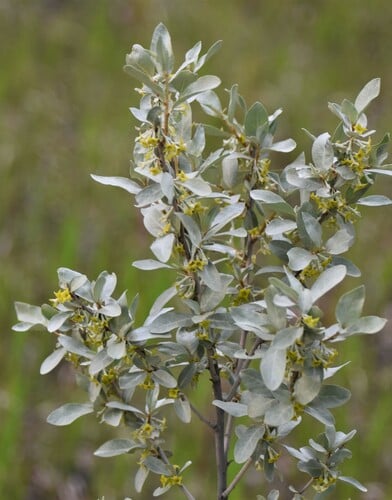
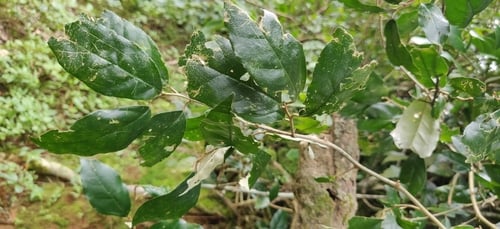
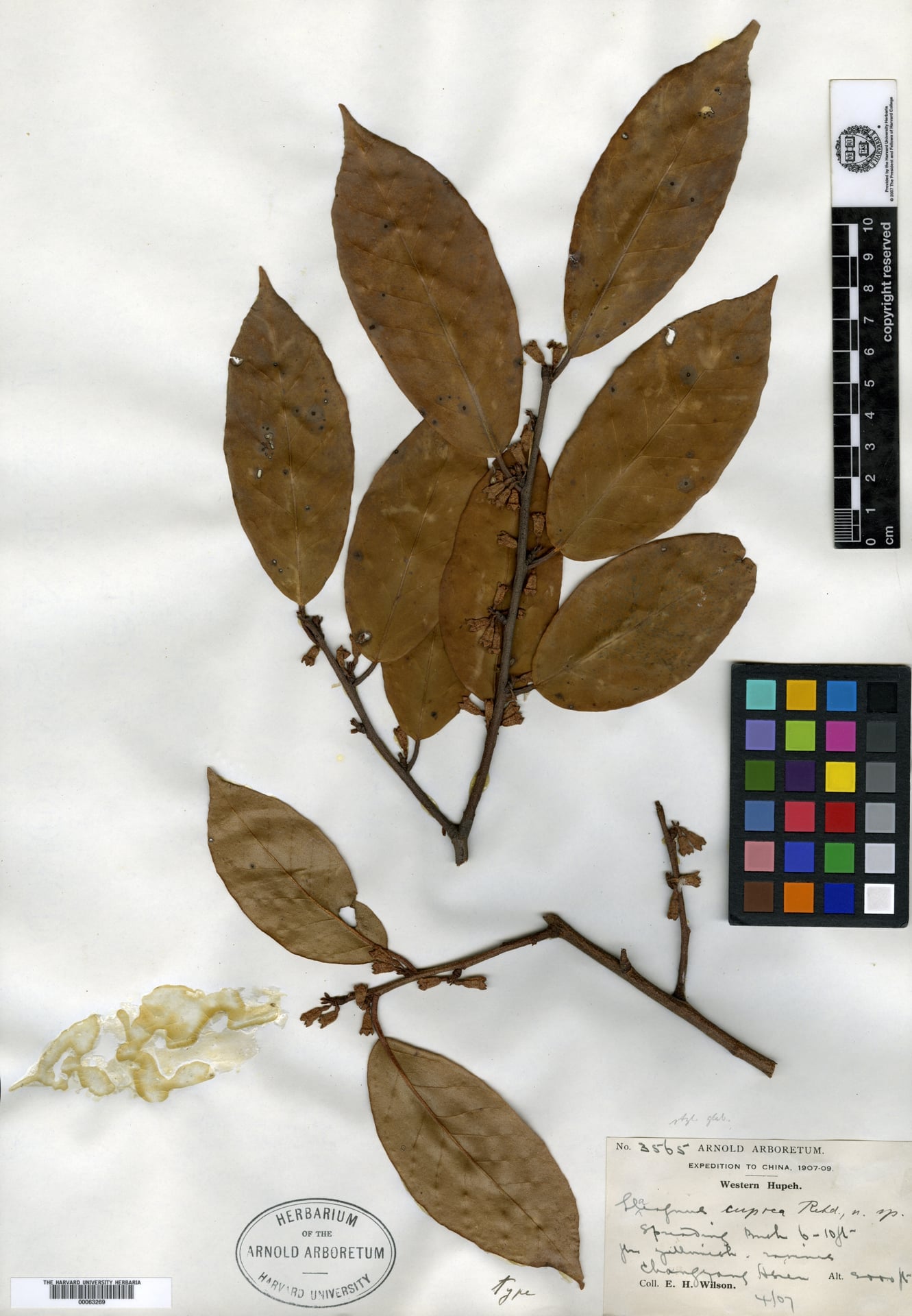
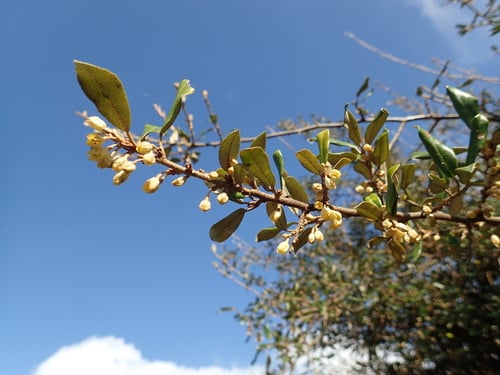
A large woody shrub. It keeps it leaves throughout the year and it has spines. The leaves are alternate and vary in shape. They are oval and smooth. There are silvery or rusty scales underneath. The flowers have a scent and also have scales. The fruit is about 2-3 cm long and has ribs. The fruit are red or yellow when ripe.
Edible Uses
The ripe fruit are eaten raw or used for pickles.
Traditional Uses
The ripe fruit are eaten. They are also used for pickles.
This uses section is brief — help expand it
Distribution
It is a subtropical plant. It grows in evergreen forest.
Where It Grows
Asia, India, Northeastern India,
Synonyms
Also Known As
Beerai, Bon jora, Esing, Mirika tenga, Sar-zuk-pui, Sarzuk, Sarzukung, Selengni, Solengi arikong
References (6)
- Ethnobotany of Karbis. Chapter 4 in p 104
- Guite, C., 2016, A study of wild edible plants associated with the Paite tribe of Manipur, India, International Journal of Current Research. Vol. 8, Issue, 11, pp. 40927-40932
- Kar, A., et al, 2013, Wild Edible Plant Resources used by the Mizos of Mizoram, India. Kathmandu University Journal of Science, Engineering and Technology. Vol. 9, No. 1, July, 2013, 106-126
- Lalfakzuala, R., 2007, Ethnobotanical usages of plants in western Mizoram. Indian Journal of Traditional Knowledge. Vol 6(3) pp 480-493
- Patiri, B. & Borah, A., 2007, Wild Edible Plants of Assam. Geethaki Publishers. p 121
Show all 6 references Hide references
- Teron, R. & Borthakur, S. K., 2016, Edible Medicines: An Exploration of Medicinal Plants in Dietary Practices of Karbi Tribal Population of Assam, Northeast India. In Mondal, N. & Sen, J.(Ed.) Nutrition and Health among tribal populations of India. p 151