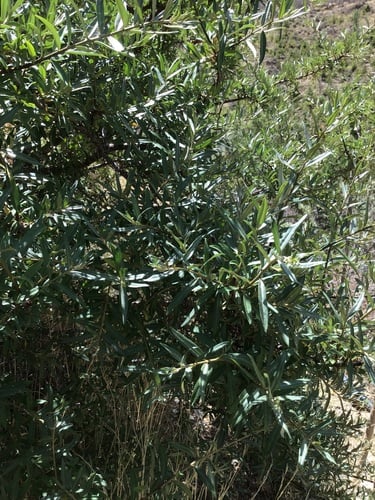
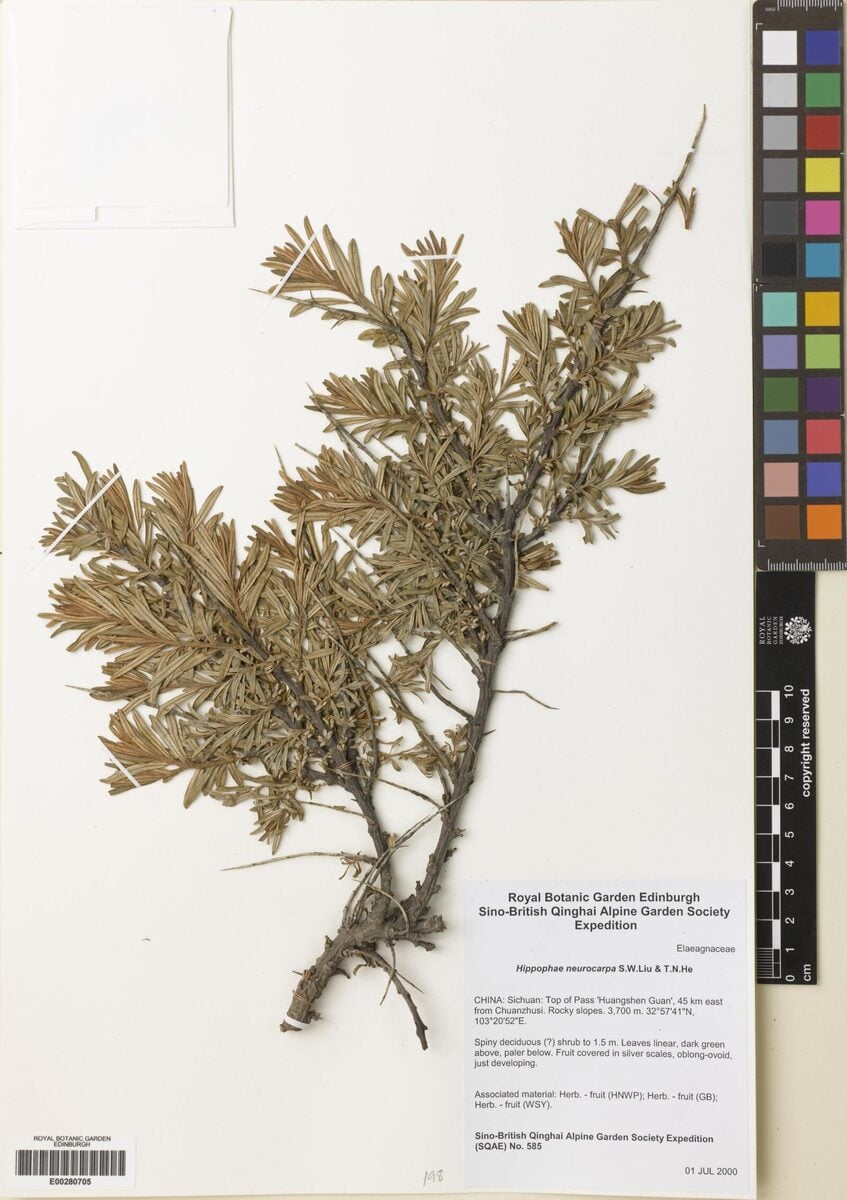
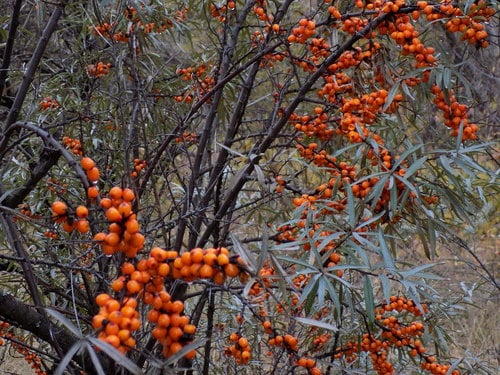
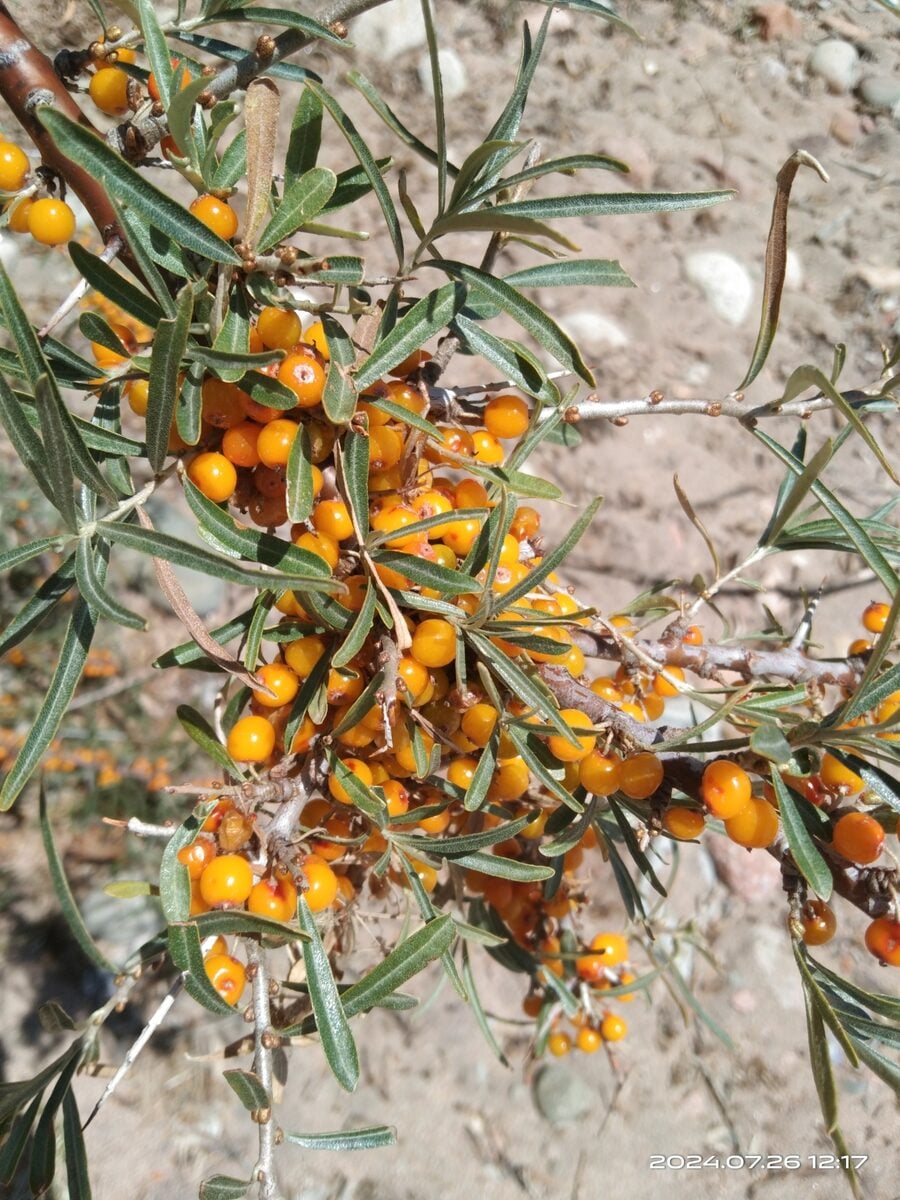
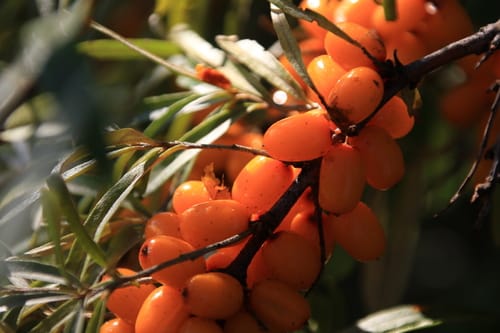
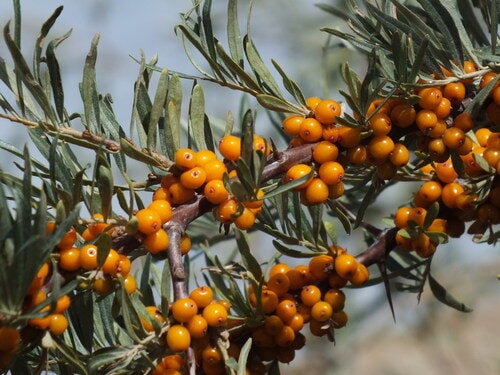
Hippophae tibetana
Schltdl.
Tibetan Sea Buckthorn
iNaturalist· cc-by-nc
(c) Suresh Ghimire, some rights reserved (CC BY-NC), uploaded by Suresh Ghimire
Description
Hippophae tibetana is a deciduous Tree growing to 15 m (49ft 3in) at a fast rate. See above for USDA hardiness. It is hardy to UK zone 8. It is in flower in April, and the seeds ripen from September to October. The species is dioecious (individual flowers are either male or female, but only one sex is to be found on any one plant so both male and female plants must be grown if seed is required). and is pollinated by Wind. The plant is not self-fertile. It can fix Nitrogen. It is noted for attracting wildlife. Suitable for: light (sandy), medium (loamy) and heavy (clay) soils and can grow in nutritionally poor soil. Suitable pH: mildly acid, neutral and basic (mildly alkaline) soils. It cannot grow in the shade. It prefers dry moist or wet soil. The plant can tolerates strong winds but not maritime exposure.
Edible Uses
Fruit - raw or cooked. Very rich in vitamin C, but too acid when raw for most peoples tastes. The flavour is somewhat lemon-like. The fruits of some species and cultivars (not specified) contain up to 9.2% oil. Used for preserves. The fruit becomes less acid after a frost or if cooked. This species has the largest fruits of the genus, 100 fruits weighing around 40g.
Medicinal Uses
Antitussive Blood purifier Cancer Cardiac Eczema Expectorant Poultice Vitamin CThe tender branches and leaves contain bio-active substances which are used to produce an oil that is quite distinct from the oil produced from the fruit. This oil is used as an ointment for treating burns. A high-quality medicinal oil is made from the fruit and used in the treatment of cardiac disorders, it is also said to be particularly effective when applied to the skin to heal burns, eczema and radiation injury, and is taken internally in the treatment of stomach and intestinal diseases. The fruit is used in Tibetan medicine, it is said to have a sour taste and a neutralizing and sharpening potency. Antitussive, blood purifier and expectorant, it is used in the treatment of disorders of the lungs, inflammation of the pulmonary tract, difficulty in expelling phlegm and coagulation and clotting of the blood. The fruit is a very rich source of vitamins and minerals, especially in vitamins A, C and E, flavanoids and other bio-active compounds. It is also a fairly good source of essential fatty acids, which is fairly unusual for a fruit. It is being investigated as a food that is capable of reducing the incidence of cancer and also as a means of halting or reversing the growth of cancers.
Distribution
E. Asia - Himalayas.
Where It Grows
China North-Central, East Himalaya, Nepal, Qinghai, Tibet
Cultivation
Succeeds in most soils if they are not too dry. Grows well by water. A fast-growing and very wind-resistant tree, an excellent pioneer species. This species is not hardy in the colder areas of the country, it tolerates temperatures down to about -10°c. Members of this genus are attracting considerable interest from breeding institutes for their nutrient-rich fruits that can promote the general health of the body (see edible and medicinal uses below). The deeply cleft bark favours the growth of epiphytes. Plants in this genus are notably resistant to honey fungus. This species has a symbiotic relationship with certain soil bacteria, these bacteria form nodules on the roots and fix atmospheric nitrogen. Some of this nitrogen is utilized by the growing plant but some can also be used by other plants growing nearby. Dioecious. Male and female plants must be grown if seed is required. The berries are typically harvested in late summer to early autumn depending on the specific species and local climate. Sea Buckthorn generally flowers in spring depending on the species and environmental conditions. Sea Buckthorn is a moderately fast-growing plant, typically reaching maturity in 3 to 5 years. It can grow to heights of 1 to 3 meters (3 to 10 feet) and can be quite hardy in various soil conditions, thriving in sandy and poor soils.
Propagation
Seed - sow spring in a sunny position in a cold frame. Germination is usually quick and good although 3 months cold stratification may improve the germination rate. Alternatively the seed can be sown in a cold frame as soon as it is ripe in the autumn. Prick out the seedlings into individual pots when they are large enough to handle and grow on in a greenhouse for their first winter. Plant out in late spring into their permanent positions. Male seedlings, in spring, have very prominent axillary buds whilst females are clear and smooth at this time. Cuttings of half-ripe wood, June/July in a frame. Difficult. This is the easiest method of vegetative propagation. Cuttings of mature wood in autumn. Difficult. The cuttings should be taken at the end of autumn or very early in the spring before the buds burst. Store them in sand and peat until April, cut into 7 - 9cm lengths and plant them in a plastic tent with bottom heat. Rooting should take place within 2 months and they can be put in their permanent positions in the autumn. Division of suckers in the winter. They can be planted out direct into their permanent positions and usually establish well and quickly. Layering in autumn.
Other Uses
Cosmetic Fuel Agroforestry uses: Sea Buckthorn is beneficial in agroforestry as it is a nitrogen-fixing plant that improves soil fertility. It can be used for erosion control, as a windbreak, and for ground cover. The berries are also valuable for their nutritional properties and can be harvested for juice, oil, and other products. The wood is used for fuel. A red cosmetic is obtained from the ripe fruit.