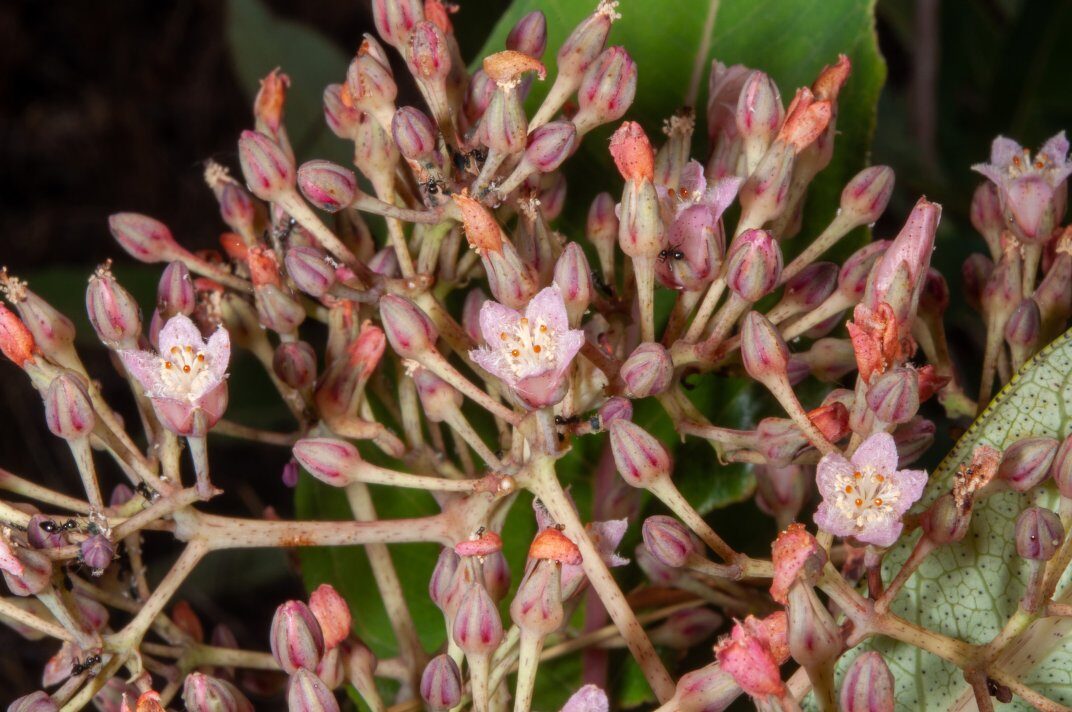
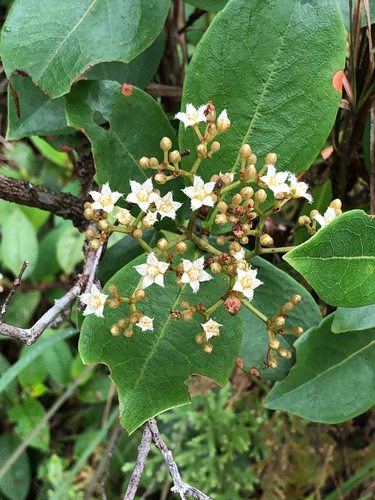
Hypericum japonicum
Thunb. ex Murray
iNaturalist· cc0
no rights reserved, uploaded by 葉子
iNaturalist· cc-by-nc
(c) Hsiao-chun Huang, some rights reserved (CC BY-NC)
Summary
Source: WikipediaHypericum japonicum, known as matted St. John's-wort, is an annual herbaceous flowering plant in the St. John's wort family Hypericaceae, in Hypericum sect. Trigynobrathys.
Description
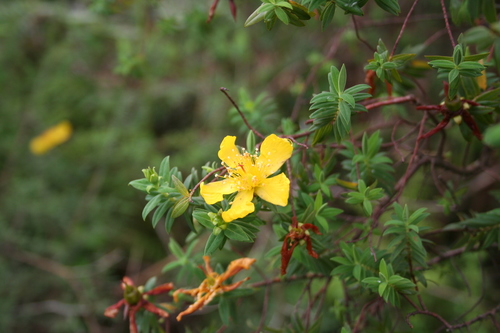
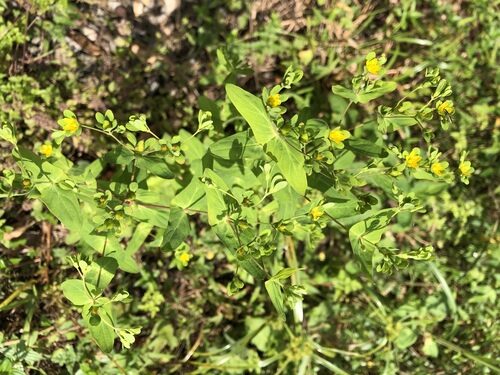
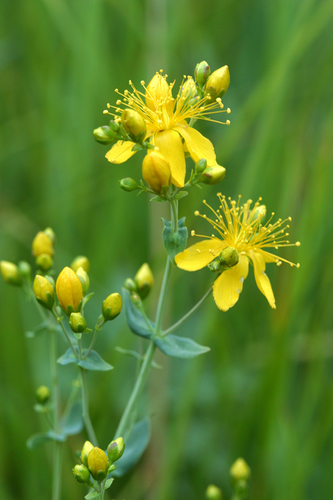
An annual herb. It grows about 25 cm high and is small and branched. The leaves are shaped like a cross and are smooth and oval without leaf stalks. The flowers are golden yellow.
Edible Uses
None known.
Traditional Uses
The leaves are used in mixed vegetables. The harvested leaves can be stored for 7 days.
This uses section is brief — help expand it
Medicinal Uses
The plant is alterative, antiphlogistic, astringent, depurative, febrifuge, and vulnerary, and is prepared as a water decoction. It is used to treat asthma, dysentery, acute hepatitis, pain in the liver region, appendicitis, boils, and abscesses, and has also been used as a styptic. The plant has additionally shown antitumour activity.
Known Hazards
The plant is suspected of causing photo-sensitization. Feeding trials to livestock in New Zealand have shown that it is non-toxic.
Distribution
It is a temperate plant. It grows in open paddy fields and on the edges of forests. It grows from sea level to 3,000 m above sea level. In Sichuan and Yunnan.
Where It Grows
Africa, Asia, Australia, Bhutan, Cambodia, China, Himalayas, India, Indochina, Indonesia, Japan, Korea, Laos, Madagascar, Malaysia, Myanmar, Nepal, New Zealand, Northeastern India, Pacific, Philippines, SE Asia, Sri Lanka, Taiwan, Tasmania, Thailand, Vietnam,
Cultivation
Easily grown in any reasonably good well-drained but moisture retentive soil. Succeeds in sun or semi-shade but flowers better in a sunny position. This species is found in the wild in wet soils. A very variable species.
Propagation
Seed - sow in spring in a cold frame. Prick seedlings into individual pots when large enough to handle and plant out in late spring. An outdoor sowing in April may also be worth trying.
Other Uses
None known.
Other Information
It is sold in local markets in China.
Notes
Also put in the family Clusiaceae.
Synonyms
Also Known As
Ban nhat, Betoerana, Di er cao, Sonaphuli
References (7)
- Baker, M. L. & de Salas, M. F., 2012, A Census of the Vascular Plants of Tasmania. (On line)
- Baro, D., Baruah, S. and Borthukar, S. K. 2015, Documentation on wild vegetables of Baksa district, BTAD (Assam). Scholars Research Library. Archives of Applied Science Research, 2015, 7 (9):19-27
- Dutta, U., 2012, Wild Vegetables collected by the local communities from the Churang reserve of BTD, Assam. International Journal of Science and Advanced Technology. Vol. 2(4) p 121
- Li, D. et al, 2017, Ethnobotanical survey of herbal tea plants from the traditional markets in Chaoshan, China. Journal of Ethnopharmacology. 205 (2017) 195-206
- Narzary, H., et al, 2013, Wild Edible Vegetables Consumed by Bodo tribe of Kokrajhar District (Assam), North-East India. Archives of Applied Science Research, 5(5): 182-190
Show all 7 references Hide references
- Patiri, B. & Borah, A., 2007, Wild Edible Plants of Assam. Geethaki Publishers. p 9
- Sarma, H., et al, 2010, Updated Estimates of Wild Edible and Threatened Plants of Assam: A Meta-analysis. International Journal of Botany 6(4): 414-423