Hypericum revolutum
Vahl.
Curry bush
iNaturalist· cc-by-nc-sa
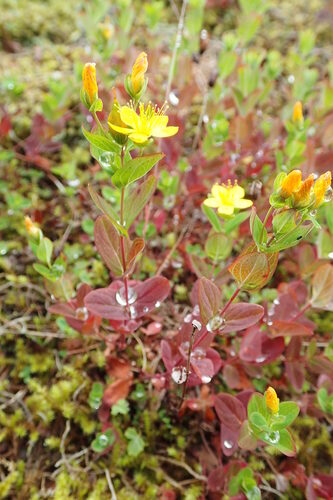
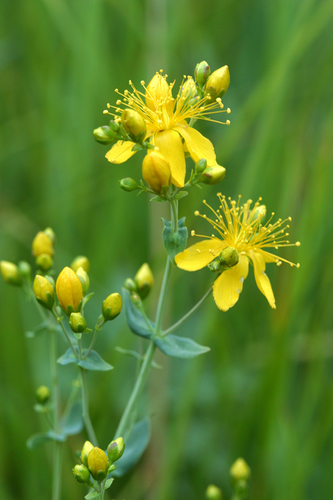
(c) Marco Schmidt, some rights reserved (CC BY-NC-SA), uploaded by Marco Schmidt
iNaturalist· cc-by-nc
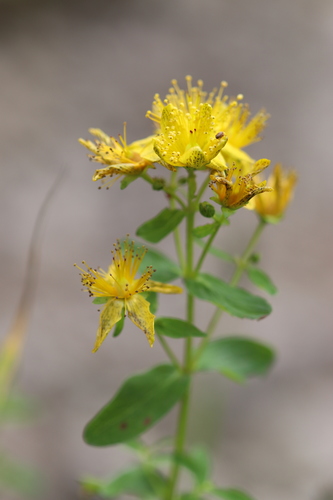
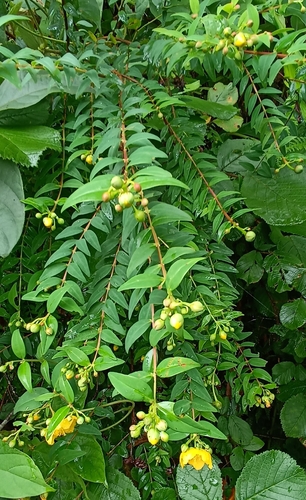
(c) Nigel Forshaw, some rights reserved (CC BY-NC)
iNaturalist· cc-by-nc
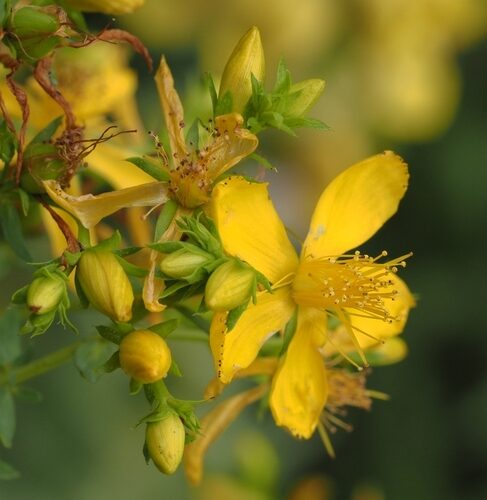
(c) Nigel Forshaw, some rights reserved (CC BY-NC)
Summary
Source: WikipediaHypericum revolutum is a shrub or small tree in the genus Hypericum native to Arabia and Africa. It is evergreen, with leaves opposite, closely spaced and crowded at the ends of branches, c. 20 × 5 mm, green to slightly glaucous, sessile, clasping at the base. Single bright yellow flowers form at the ends of branches, up to 5 cm in diameter, blooming from June to November. Fruit is a reddish-brown capsule, up to 13 × 10 mm. Hypericum revolutum is characteristic of the Afromontane vegetation, found from 1400 – 2593 meters elevation, and ranging from southwest Arabia through the Afromontane zones of eastern Africa to the Cape; it is also found in the Cameroon Highlands and Bioko, and on Madagascar, the Comoro Islands, and Réunion. It grows along streams in montane grassland and forest fringes.
Description
A shrub or small tree of the Hypericaceae family growing 4-6 m tall (occasionally up to 15 m), with opposite leaves crowded near branch tips and bright yellow flowers 5 cm across at the ends of branches. The fruit is a red-brown capsule.
Edible Uses
The leaves are used as a condiment or spice, often referred to as curry bush.
Traditional Uses
The leaves are used as a condiment or spice.
This uses section is brief — help expand it
Where It Grows
Leaves - flavouring,
Other Information
Hypericaceae
Notes
A shrub or small tree. It grows 4-6 m high. It can grow up to 15 m high. The leaves are opposite ad crowded near the ends of branches. They are 20 mm long by 5 mm wide. They are green and do not have stalks but clasp the stems at the base. The flowers are at the ends of the branches and occur singly. They are bright yellow and 5 cm across. The fruit is a red-brown capsule. They are 13 mm long by 10 mm across.
Synonyms
Also Known As
Felantrandraka, Ruhurukuru, Runvum, Sicati, Umusamanzuki
References (5)
- Chapman, J. D. & Chapman, H. M., 2001, The Forest Flora of Taraba and Andamawa States, Nigeria. WWF & University of Canterbury. p 175
- Molla, A., Ethiopian Plant Names. http://www.ethiopic.com/aplants.htm
- Seidemann J., 2005, World Spice Plants. Economic Usage, Botany, Taxonomy. Springer. p 181
- White, F., Dowsett-Lemaire, F. and Chapman, J. D., 2001, Evergreen Forest Flora of Malawi. Kew. p 285
- www.zimbabweflora.co.zw 2011