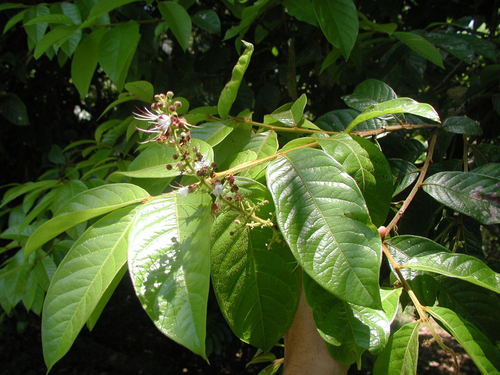
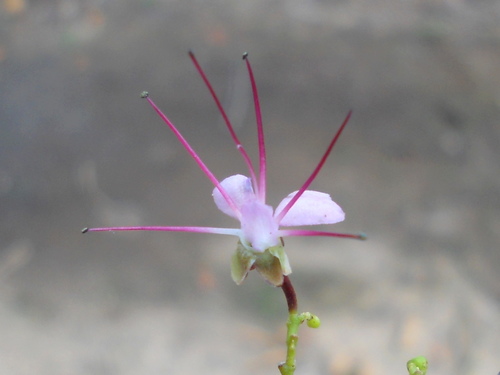
Licania macrophylla
Benth.
Large leaf licania
iNaturalist· cc-by-nc
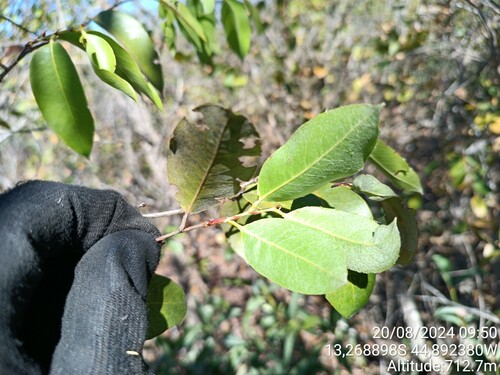
(c) David Zipper, some rights reserved (CC BY-NC)
iNaturalist· cc-by-nc
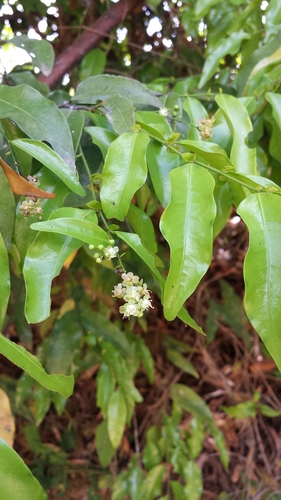
(c) Guillaume Léotard, some rights reserved (CC BY-NC)
iNaturalist· cc-by-nc
(c) Guillaume Léotard, some rights reserved (CC BY-NC)
Description
A tropical tree in the Chrysobalanaceae family, known as Large leaf licania, that produces edible fruit.
This description is brief — help expand it
Edible Uses
The fruit is eaten.
Medicinal Uses
The bark is used in a decoction to treat amoebic dysentery. The macerated aril is used in a decoction to treat dysentery. The seed oil contains licanic acid.
Distribution
It is a tropical plant.
Where It Grows
Brazil, Guiana, Guianas, South America, Suriname, Venezuela,
Other Uses
The heartwood is generally a yellowish brown to brown or dark brown, sometimes with a reddish tinge; it is clearly demarcated from the tan-coloured sapwood. The grain is straight; texture close and fine; without characteristic odour or taste; growth layers are not evident. The wood is very dense, hard, very heavy, strong, not very durable in the soil but very resistant to marine borers. Most species contain an abundance of silica. The wood is difficult to work owing to the high silica content and hardness. The combination of these factors causes a rapid dulling of cutting edges. When sharp cutting edges are maintained, the wood can be machined to a smooth surface in planing, boring, sawing, and other operations. The high marine borer resistance of the wood indicates that the highest use for these timbers is for piling and marine construction in waters infested with marine borers. The difficulty in working these timbers except with an axe or adze, as well as their high density and only moderate resistance to decay, suggests that their most suitable secondary use would be in heavy construction above ground. The wood is used for fuel and also for making charcoal.
Also Known As
Alauna, Anaola, Anauera, Anaula, Anaura, Ana-wyra, Macucu-terra, Marishiballi, Pintadinha, Pomploemoese, Poupoumoussou, Sponshoedoe, Sponshout
References (3)
- Grandtner, M. M. & Chevrette, J., 2013, Dictionary of Trees, Volume 2: South America: Nomenclature, Taxonomy and Ecology. Academic Press p 352
- Kermath, B. M., et al, 2014, Food Plants in the Americas: A survey of the domesticated, cultivated and wild plants used for Human food in North, Central and South America and the Caribbean. On line draft. p 487
- Martin, F. W., et al, 1987, Perennial Edible Fruits of the Tropics. USDA Handbook 642 p 92