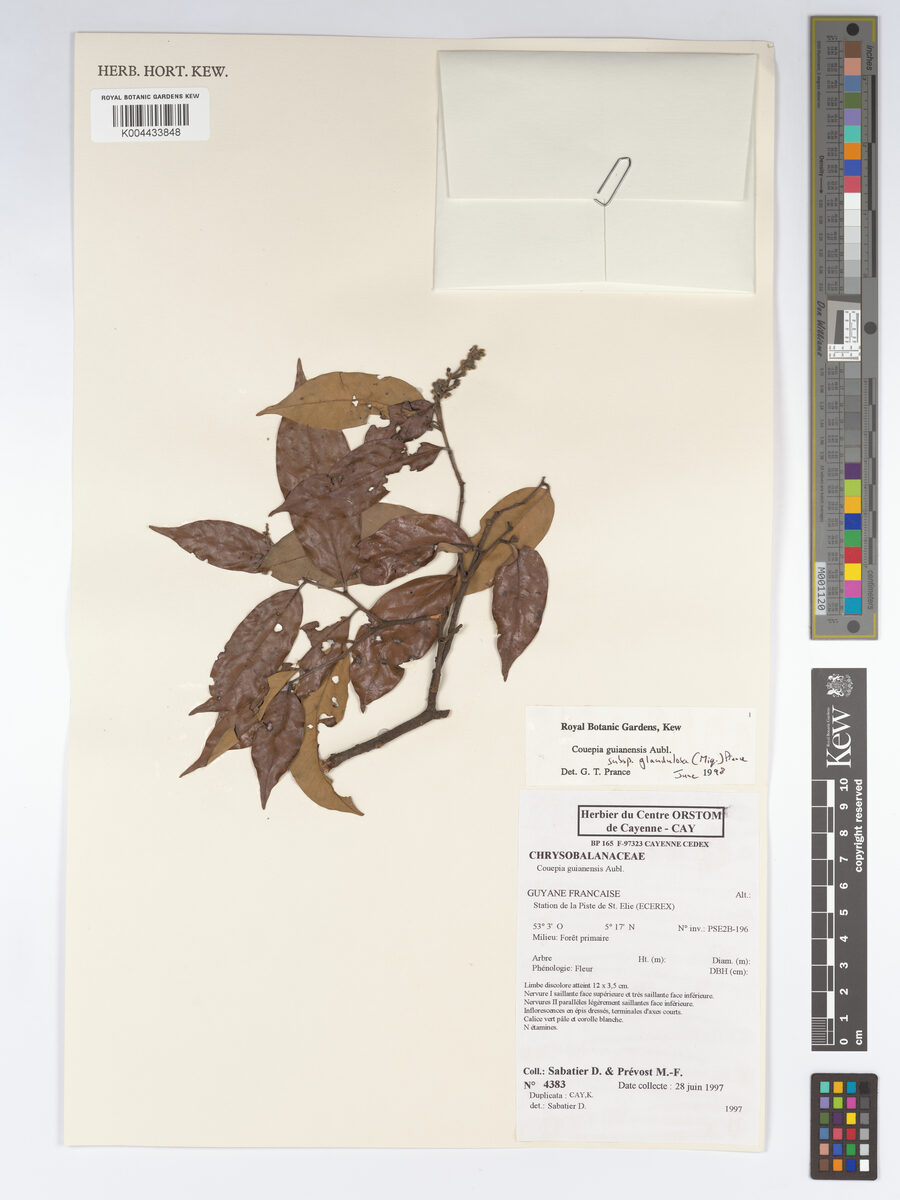
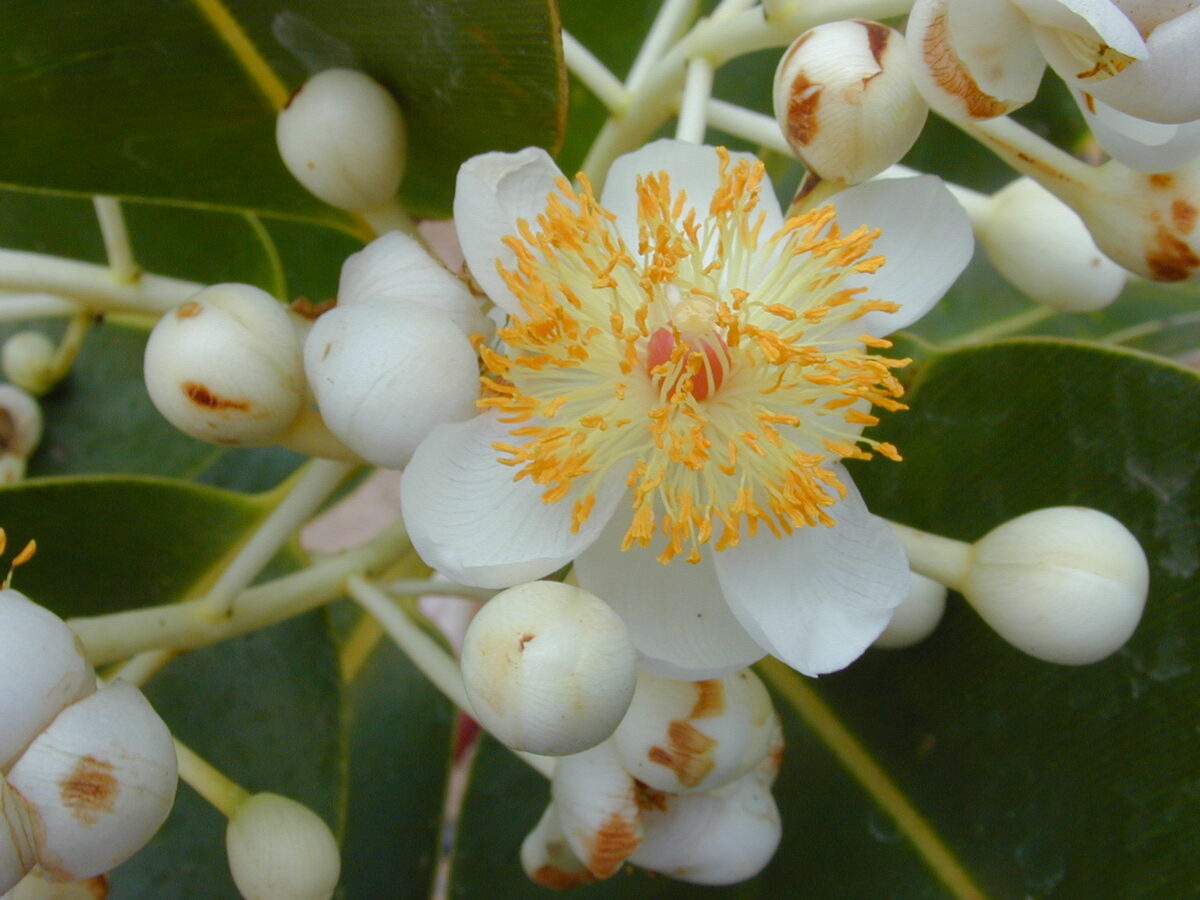
Parinari congensis
F. Didr.
Sand apple
iNaturalist· cc-by-nc
(c) ASSEDE Eméline S.P., some rights reserved (CC BY-NC), uploaded by ASSEDE Eméline S.P.
iNaturalist· cc-by-nc
(c) ASSEDE Eméline S.P., some rights reserved (CC BY-NC)
Description
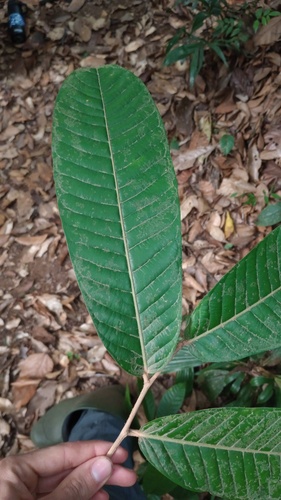
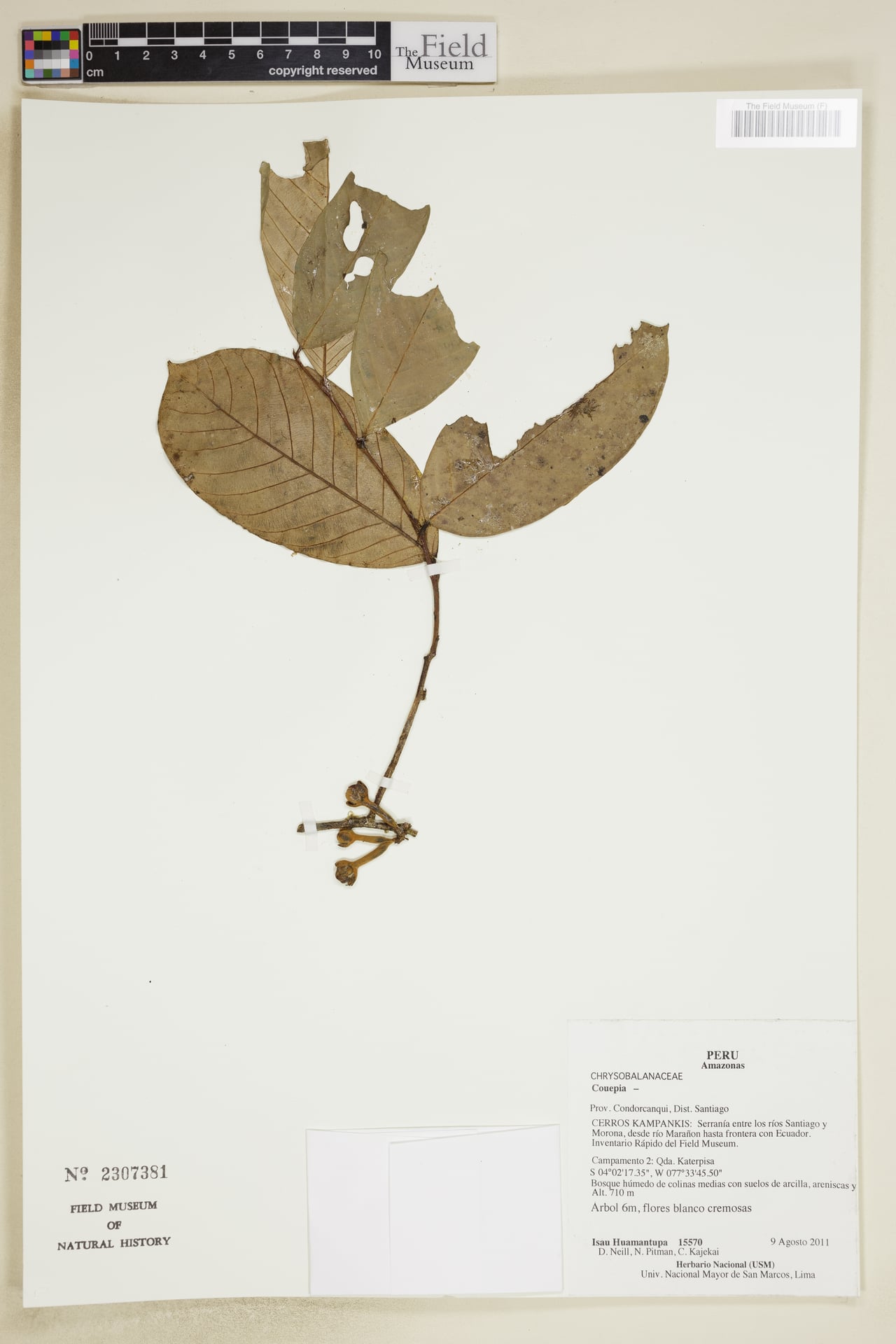
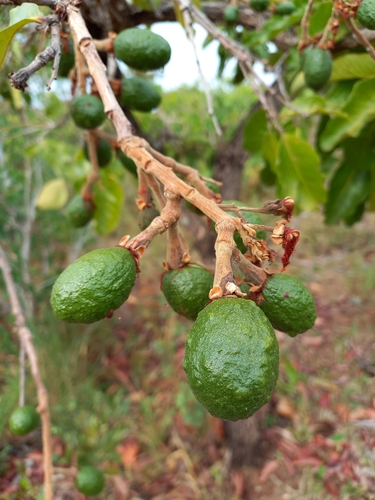
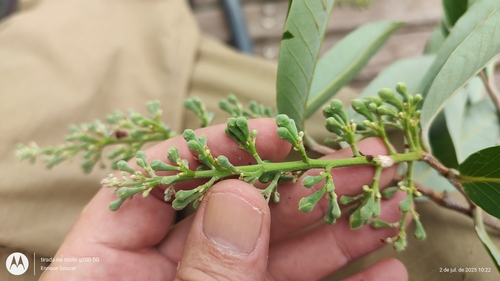
A tree. It grows to 30 m high. The trunk is 80 cm across. The trunk us irregular and twisted. The leaves are dark green on the upper surface. They have reddish-golden hairs underneath. They are heart shaped at the base. The fruit is oval and fleshy. It is about 4 cm long.
Edible Uses
The fruit is eaten raw.
Traditional Uses
The fruit are eaten raw.
This uses section is brief — help expand it
Medicinal Uses
The bark is purgative. It is used in the treatment of conditions such as dysentery and leprosy.
Distribution
A tropical plant. It grows on the riverbanks near forests of the savannah in West Africa. It can be in seasonally flooded forests.
Where It Grows
Africa, Benin, Burkina Faso, Cameroon, Central Africa, Central African Republic, CAR, Congo DR, Congo R, Côte d'Ivoire, Equatorial-Guinea, Ghana, Guinea, Guinée, Guinea-Bissau, Ivory Coast, Mali, Nigeria, Sierra Leone, Togo, West Africa,
Other Uses
The orange-brown wood is hard and said to be resistant to termites. It is used in traditional buildings as hut posts, rafters and poles.
Other Information
It is fairly commonly used in West Africa.
Notes
There are about 50 Parinari species. They grow in the tropics.
Synonyms
Also Known As
Adabut, Kotosoma, Monse, Pekire, Tulingi
References (10)
- Abbiw, D.K., 1990, Useful Plants of Ghana. West African uses of wild and cultivated plants. Intermediate Technology Publications and the Royal Botanic Gardens, Kew. p 48
- Ambe, G., 2001, Les fruits sauvages comestibles des savanes guinéennes de Côte-d’Ivoire : état de la connaissance par une population locale, les Malinké. Biotechnol. Agron. Soc. Environ. 5(1), 43-48
- Atato, A., et al, 2010, Diversity of Edible Wild Fruit Tree Species of Togo. Global Science Books.
- Burkill, H. M., 1985, The useful plants of west tropical Africa, Vol. 1. Kew.
- Diop, A. l., et al, 2021, Cultural importance of wild edible plants in three sympatric communities: Agni, Akyé and Gwa in the Department of Alépé (Southeast of Côte d’Ivoire). Ethnobotany Research and Applications 22:35. p 6
Show all 10 references Hide references
- Jardin, C., 1970, List of Foods Used In Africa, FAO Nutrition Information Document Series No 2.p 152
- Nkeoua, G. & Boundzanga, G. C., 1999, Donnees sur les produits forestieres non ligneux en Republique du Congo. FAO. p 33
- Prance, G. T. & Sothers, C., 2003, Species Plantarum - Flora of the World. Chrysobalanaceae. p 219
- Vivien, J., & Faure, J.J., 1996, Fruitiers Sauvages d'Afrique. Especes du Cameroun. CTA p 115
- World Checklist of Useful Plant Species 2020. Royal Botanic Gardens, Kew