Callirhoe digitata
Nutt.
Finger poppy mallow
iNaturalist· cc-by
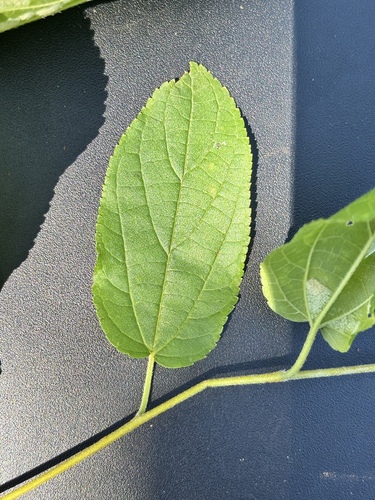
(c) Nathan Aaron, some rights reserved (CC BY), uploaded by Nathan Aaron
iNaturalist· cc-by-nc
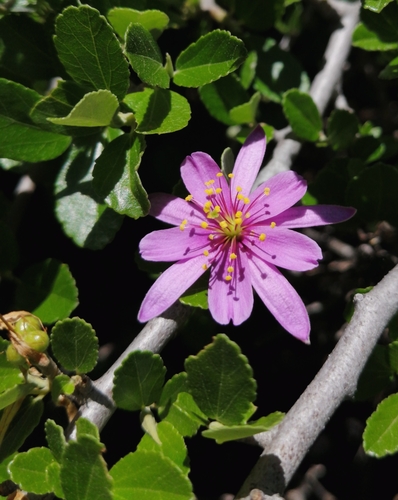
(c) Samantha Heller, some rights reserved (CC BY-NC), uploaded by Samantha Heller
iNaturalist· cc-by-nc
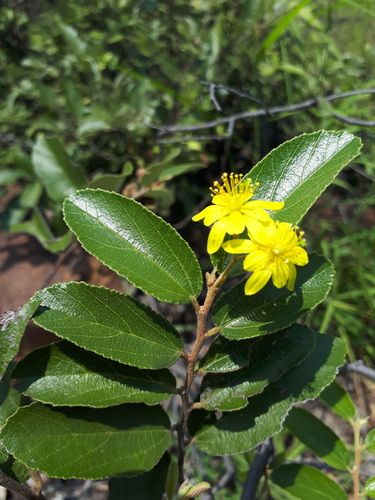
(c) Nate Weston, some rights reserved (CC BY-NC), uploaded by Nate Weston
Summary
Source: WikipediaCallirhoe digitata, the fringed poppy mallow or standing wine cup, is a species of flowering plant in the family Malvaceae, native to the U.S. states of Kansas, Oklahoma, Missouri, Arkansas, and Alabama, and introduced to Illinois. A perennial with magenta flowers, in the wild it prefers to grow in sunny areas with drier, more alkaline soils. Recommended for both formal and informal plantings, it is hardy in USDA zones 5 through 8, and once established it is drought resistant.
Description
A small herb. It is a deep rooted plant and keeps growing from year to year. It grows 20-50 cm high. The stems are grey-green. The leaves are alternate. The leaves at the base have leaf stalks about as long as the leaf. The leaves have deep lobes. There are few leaves on the upper part of the stem. The flowers have 5 petals and are cup shaped at first. They are red and 2.5-5 cm across. The stamens and pistil form a cone like structure at the centre of the flower.
Edible Uses
Edible Parts: Root Edible Uses: Root - cooked. A pleasant taste.
Medicinal Uses
None known
Distribution
It is a tropical plant.
Where It Grows
Central America, Mexico, North America, USA,
Cultivation
Prefers a light rich sandy loam and a sunny position. This species is hardy to about -15c. Plants resent root disturbance and should be planted into their final positions as soon as possible. Slugs are strongly attracted to this plant and can destroy even established plants by eating out all the young shoots in spring.
Propagation
Seed - sow outdoors or in a cold frame. Plants resent root disturbance so the seed is best sown in situ in April, though the slugs will have a field day if you do not protect the plants. If seed is in short supply then sow it in pots in a cold frame, putting a few seeds in each pot, and plant the pots out in early summer once the plants have put on at least 15cm of growth. Germination usually takes place within 1 - 6 months at 15°c. Cuttings of young basal shoots in a frame in sand. Harvest the shoots when they are about 10cm long with plenty of underground stem. Pot them up into individual pots and keep them in light shade in a cold frame or greenhouse until they are rooting well. Plant them out in the summer. Division. With care since the plant resents root disturbance. We have found that it is best not to disturb this plant and so do not try to divide it, relying instead on taking basal cuttings since these do not disturb the main clump.
Other Uses
None known Special Uses
Notes
There are 9 Callirhoe species.
Also Known As
Fringed poppy mallow, Wine cup
References (6)
- Beckstrom-Sternberg, Stephen M., and James A. Duke. "The Foodplant Database." http://probe.nalusda.gov:8300/cgi-bin/browse/foodplantdb.(ACEDB version 4.0 - data version July 1994)
- Bircher, A. G. & Bircher, W. H., 2000, Encyclopedia of Fruit Trees and Edible Flowering Plants in Egypt and the Subtropics. AUC Press. p 74
- Kermath, B. M., et al, 2014, Food Plants in the Americas: A survey of the domesticated, cultivated and wild plants used for Human food in North, Central and South America and the Caribbean. On line draft. p 163
- Loughmiller, C & L., 1985, Texas Wildflowers. A Field Guide. University of Texas, Austin. p 160
- Plants for a Future database, The Field, Penpol, Lostwithiel, Cornwall, PL22 0NG, UK. http://www.scs.leeds.ac.uk/pfaf/
Show all 6 references Hide references
- Tozer, F., 2007, The Uses of Wild Plants. Green Man Publishing. p 50