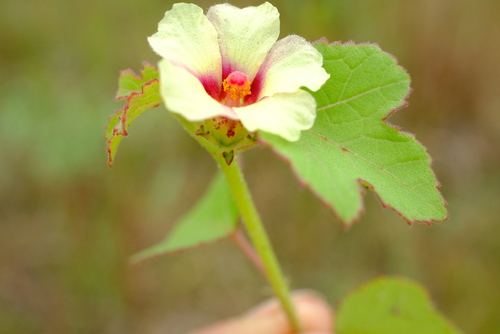
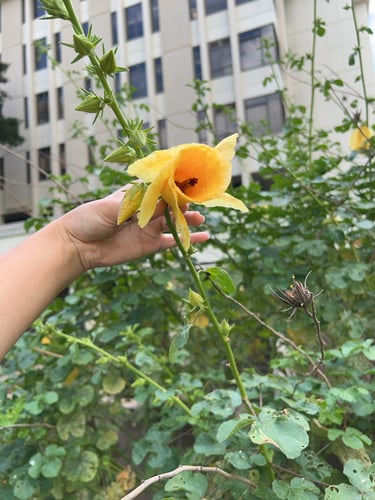
Carpodiptera africana
Mast.
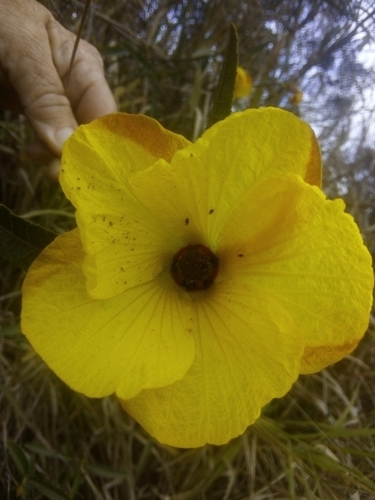
iNaturalist· cc-by-nc
(c) frasergear, some rights reserved (CC BY-NC)
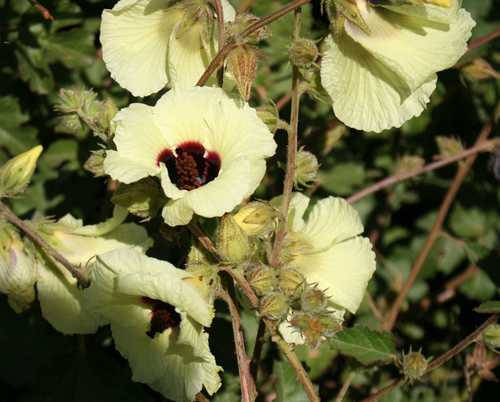
iNaturalist· cc-by-nc
(c) Christophe Savon, some rights reserved (CC BY-NC)
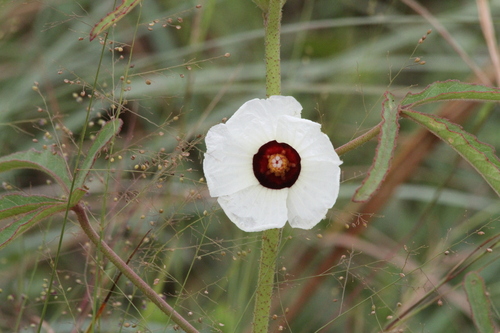
iNaturalist· cc-by-nc
(c) Ehoarn Bidault, some rights reserved (CC BY-NC)
Description
A shrub or tree. It is often 1-5 m tall but can be 12 m tall. The young bark is smooth and silvery grey but becomes darker and cracked. The leaves are alternate. They are large and oval. They are 5-25 cm long. When young they have star shaped hairs. The base of the leaf is rounded. The leaf stalk is 1-2 cm long. The veins underneath the leaf are raised. The flowers are small and whit or pink. They have a scent. They occur in large dense bunches. They are in the axils of leaves. The fruit is pale but becomes a dull brown as it ripens. They are papery winged capsules. The wings are unequal and spread sideways up to 5 cm. They have soft hairs. The capsule breaks open to release the seed.
Edible Uses
The leaves are washed, cut, and cooked as a vegetable. The fruit and leaves are edible portions. It is used as a famine food.
Traditional Uses
The leaves are used as a vegetable. They are washed, cut and cooked.
This uses section is brief — help expand it
Medicinal Uses
None mentioned.
Distribution
It is a tropical plant. It grows in coastal areas. It is in grassland and dry forest. It is often on coral limestone. It grows from sea level to 100 m above sea level.
Where It Grows
Africa, East Africa, Kenya, Mozambique, South Africa, Southern Africa, Tanzania,
Cultivation
The tree coppices well. The flowers are usually dioecious. Both male and female forms of the plant need to be grown if seed is required.
Other Uses
A fibre is obtained from the bark. The wood bends easily. It is used in construction and for poles, bows, tool handles and spoons. The wood is used for fuel.
Production
The leaves are collected during the rainy season.
Other Information
It is a famine food.
Notes
These have also been in the Tiliaceae.
Synonyms
Also Known As
Cocoeho, Ecalago, Mfesti, Mkikoma, Mkongolo, Mkongoro, Mlanga, Mmilambutuka, Mnanga, Mungolo, Mwangamaima, Ungolo, Vanicalia
References (5)
- East African Herbarium records, 1981,
- Grubben, G. J. H. and Denton, O. A. (eds), 2004, Plant Resources of Tropical Africa 2. Vegetables. PROTA, Wageningen, Netherlands. p 560 (As Berrya africana)
- Peters, C. R., O'Brien, E. M., and Drummond, R.B., 1992, Edible Wild plants of Sub-saharan Africa. Kew. p 190
- Ruffo, C. K., Birnie, A. & Tengnas, B., 2002, Edible Wild Plants of Tanzania. RELMA p 188
- World Checklist of Useful Plant Species 2020. Royal Botanic Gardens, Kew