Alsodeiopsis schumannii
(Engl.) Engl.
iNaturalist· cc-by-nc-sa
(c) TanzaniaPlantCollaboration, some rights reserved (CC BY-NC-SA)
iNaturalist· cc-by-nc-sa
(c) TanzaniaPlantCollaboration, some rights reserved (CC BY-NC-SA)
iNaturalist· cc-by-nc-sa
(c) TanzaniaPlantCollaboration, some rights reserved (CC BY-NC-SA)
Summary
Source: WikipediaAlsodeiopsis schumannii is a species of plant in the Icacinaceae family. It is endemic to Tanzania, specifically the East Usambara, the Uluguru Mountains, and the Southern Highlands. It is an evergreen shrub or tree up to 12 m (40 ft) tall. The fruit, an oblong drupe ripening to orange-red, is edible with sweet and juicy pulp around the hard stone.
Description
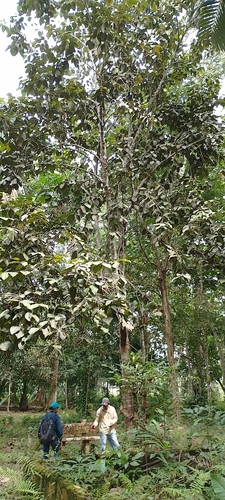
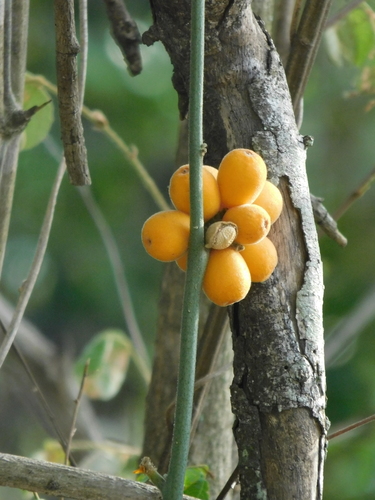
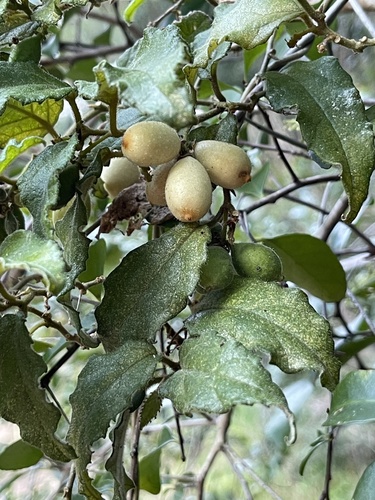
A small branched tree. It grows 12 m tall. The bark is smooth and pale grey to brown. Young branches have golden brown hairs. The leaves are simple and alternate. They are 5-12 cm long by 2-5 cm wide. They are sword shaped and wedge shaped at the base and taper to the tip. They are hairy. The flowers are yellow and in loose groups in the axils of leaves. The fruit are orange to red and oval. They are 2.2 cm long by 1.5 cm wide. There is a woody stone inside that has ridges along it.
Edible Uses
The juicy, sweet, pulpy seeds inside the fruit are eaten, especially by children.
Traditional Uses
The juicy sweet pulpy seeds are eaten.
This uses section is brief — help expand it
Distribution
It is a tropical plant. It grows in mountain forests. In Tanzania it grows between 900-2,000 m above sea level.
Where It Grows
Africa, East Africa, Tanzania,
Cultivation
Plants can be grown from seeds.
Other Uses
The wood is hard. It is used for building poles, pestles, carvings, tool handles and spoons. The wood is used for fuel and to make charcoal.
Production
Fruit develop in May - July.
Other Information
The fruit are eaten especially by children.
Synonyms
Also Known As
Mbululu, Mkaangambeyu, Mkarangamwitu, Mmavimavi, Mnozambeyu, Muvulambe, Mvalambe