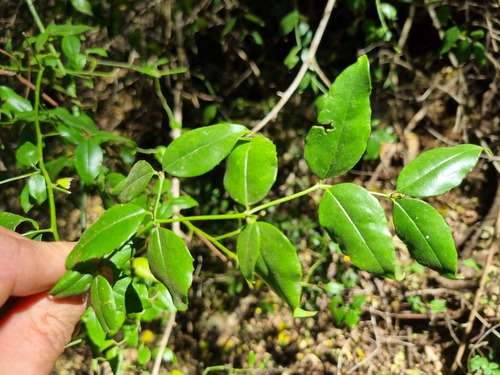
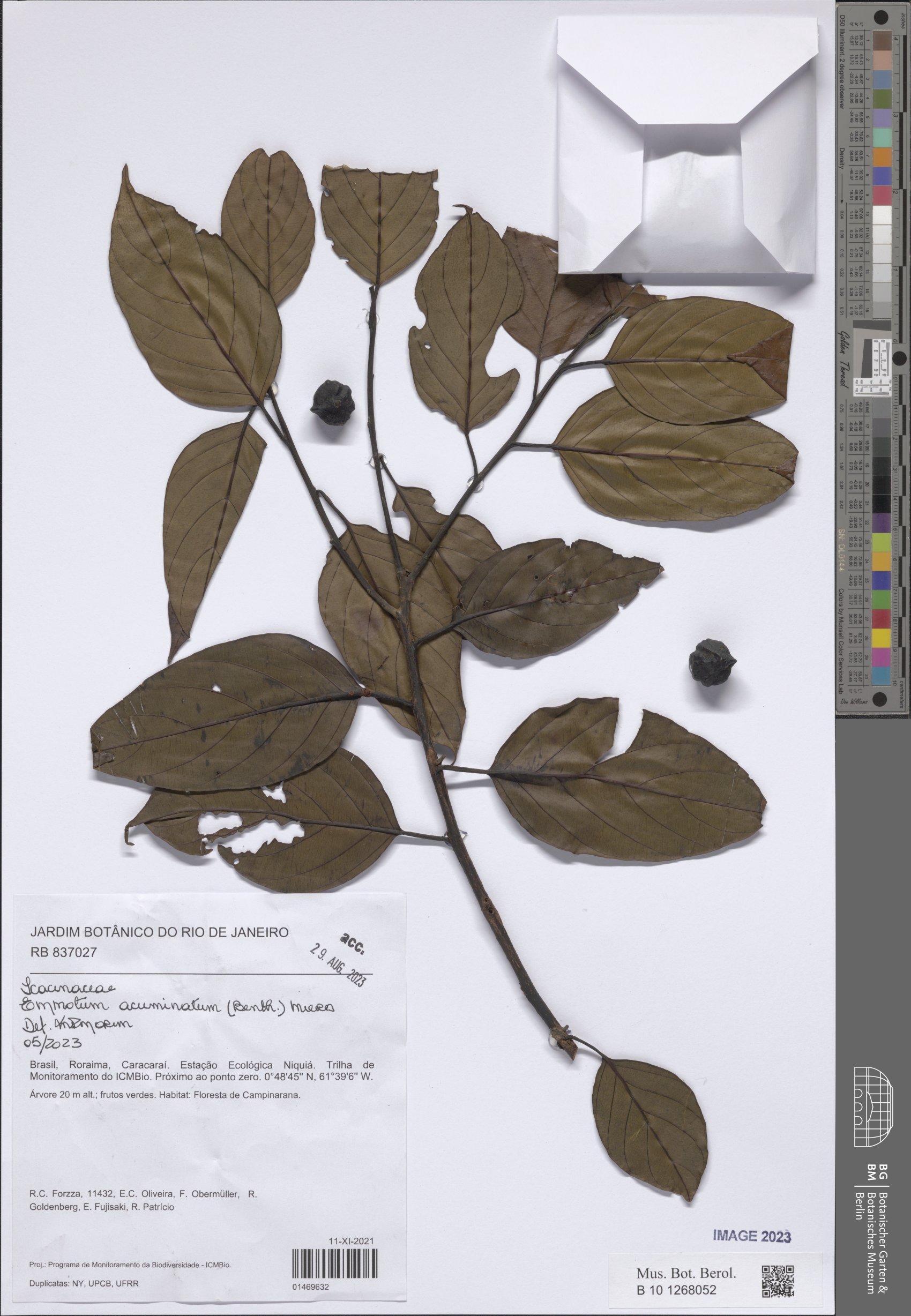
Poraqueiba paraensis
Ducke
Umari, Marizeira
Icacinaceae Edible: Starch, Oil, Fruit, Seeds
Description
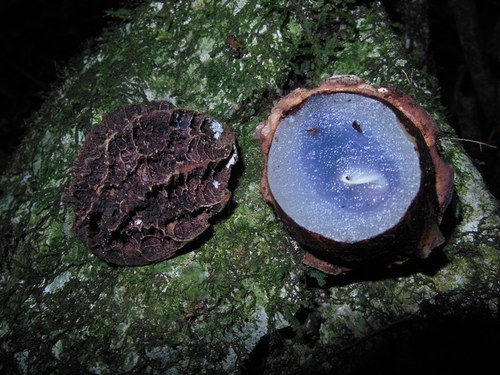
A tropical fruit tree that produces oblong, orange to yellow fruits with an oily texture. The fleshy aril surrounding the seed is the primary edible portion.
Edible Uses
The aril (fleshy layer around the seed) is eaten fresh. The fruit, seeds, and oil are also edible portions.
Traditional Uses
The aril of fleshy layer around the seed is eaten.
This uses section is brief — help expand it
Distribution
A tropical plant.
Where It Grows
Amazon, Brazil, Colombia, Ecuador, French Guiana, Peru, South America, Suriname, Venezuela,
Other Information
It is a cultivated fruit tree.
Notes
There are 2-3 Poraqueiba species.
Also Known As
Guacuri, Mari, Mari-gordo, Nemote, Nimuhe, Turi, Umari-amarelo, Umary, Yuri
References (15)
- Arch. Jard. Bot. Rio de Janeiro 4:116. 1925
- Cavalcante, P.B. 1991. Frutas comestíveis da Amazônia. Edições CEJUP.
- Fouqué, A. 1972. Espèces fruitières d'Amérique tropicale. Institut français de recherches fruitierès outre-mer
- Grandtner, M. M. & Chevrette, J., 2013, Dictionary of Trees, Volume 2: South America: Nomenclature, Taxonomy and Ecology. Academic Press p 518
- Hanelt, P. et al, (Eds.), 2001, Mansfield's encyclopedia of agricultural and horticultural crops. p 1677
Show all 15 references Hide references
- Hermandez Bermejo, J.E., and Leon, J. (Eds.), 1994, Neglected Crops. 1492 from a different perspective. FAO Plant Production and Protection Series No 26. FAO, Rome. p15
- Heywood, V.H., Brummitt, R.K., Culham, A., and Seberg, O. 2007, Flowering Plant Families of the World. Royal Botanical Gardens, Kew. p 173
- Kermath, B. M., et al, 2014, Food Plants in the Americas: A survey of the domesticated, cultivated and wild plants used for Human food in North, Central and South America and the Caribbean. On line draft. p 678
- Kew Plants of the World Online
- Martin, F. W., et al, 1987, Perennial Edible Fruits of the Tropics. USDA Handbook 642 p 96
- Morley, B.D., & Toelken, H.R., (Eds), 1983, Flowering Plants in Australia. Rigby. p 222
- Paz, F. S., et al, 2021, Edible Fruit Plant Species in the Amazon Forest Rely Mostly on Bees and Beetles as Pollinators. Journal of Economic Entomology, XX(XX), 2021, 1–13
- Reis, S. V. and Lipp, F. L., 1982, New Plant Sources for Drugs and Foods from the New York Botanical Garden herbarium. Harvard. p 167
- Silva, S. P. 1991. Frutas Brasil. Empresa das Artes. São Paulo.
- Vasquez, R. and Gentry, A. H., 1989, Use and Misuse of Forest-harvested Fruits in the Iquitos Area. Conservation Biology 3(4): 350f