Poraqueiba sericea
Tul.
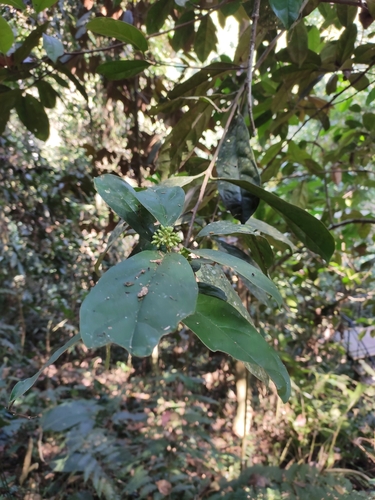
Silky poraqueiba
iNaturalist· cc-by-nc
(c) plantas_bioblitz, some rights reserved (CC BY-NC)
iNaturalist· cc-by-nc
(c) plantas_bioblitz, some rights reserved (CC BY-NC)
iNaturalist· cc-by-nc
(c) plantas_bioblitz, some rights reserved (CC BY-NC)
Summary
Source: WikipediaPoraqueiba sericea (common name: umari) is a species of tree in the family Metteniusaceae. It is native to South America.
Description
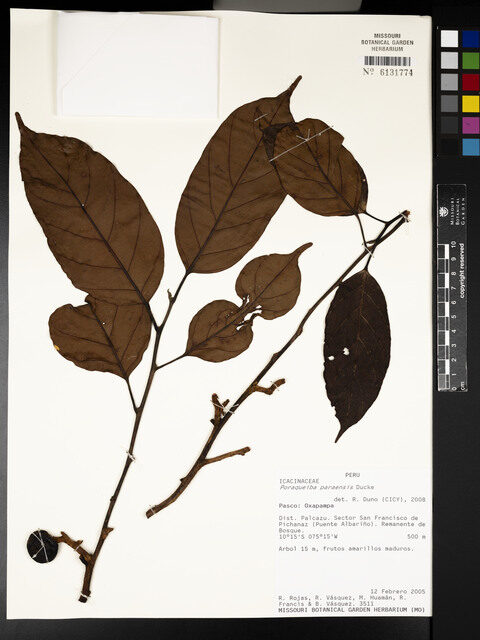
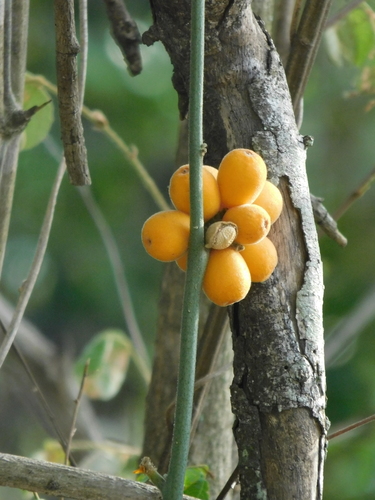
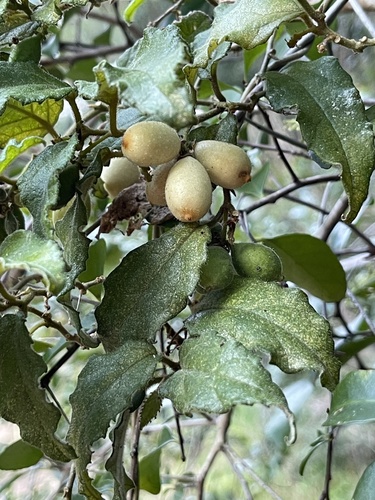
An evergreen tree. It grows 10-25 m high. The trunk can be 60 cm across. The branches are large. The leaves are simple and alternate. They are 12-28 cm long. The flowers are small and in the axils of leaves. The fruit is fleshy with a hard stone inside. The fruit is 8 cm long by 5 cm across.
Edible Uses
The fruit can be eaten raw or cooked. The fleshy pulp has a peculiar taste and aroma, is often served with manioc flour, and can be made into a butter for spreading on bread. The fruit contains 12% oil and is rich in starch. The yellowish fruits are around 7cm long and 5cm wide. An edible oil is obtained from both the fruit pulp and the seed.
Traditional Uses
The fleshy fruit are rich in oil and are edible. Flour is produced from the seeds. The seed oil is used to fry fish. The leaves are used to make a herbal tea.
Medicinal Uses
None known
Distribution
It is a tropical plant. It grows in regions with 1,700 mm of rain per year. It grows naturally in dryland forest in Brazil.
Where It Grows
Amazon, Brazil*, Colombia, Ecuador, Peru, South America, Venezuela,
Cultivation
Plants are grown from seed. Ripe fruit are harvested and put into a heap until they soften then the seeds are removed. Fresh seeds are planted and germinate in 4-6 weeks.
Propagation
Seed is best sown as soon as it is ripe in a partially shaded position in individual containers. A medium germination rate can be expected, with seeds sprouting within 28–42 days. Plants should be ready to plant out 7–8 months later.
Other Uses
The tree is often interplanted in agroforestry systems with crops such as Brazil nut, cashew, uvilla, and Inga species that grow well in poor clay soils. Children cut the endosperm of the fruit into thin, opaque slices to make toy glasses. The wood is medium to thick-textured, straight-grained, moderately heavy and hard, with moderate mechanical properties and not durable. It is suitable for carpentry and internal construction use, and is popular for making charcoal.
Production
Plants grow at a moderate rate.
Other Information
It is a cultivated food plant. It is widely grown in the Amazon. The fruit are sold in markets in the Amazon.
Notes
The fruit pulp is rich in oil (12%) and starch.
Synonyms
Also Known As
Caniba, Capibare, Guacure, Humari, Ja-o. Llori, Mari, Mari-preto, Umari, Umari-roxo, Yumari, Yuri
References (22)
- Ann. Sci. Nat. Bot. ser. 3, 11:172. 1849
- Etkin, N.L. (Ed.), 1994, Eating on the Wild Side, Univ. of Arizona. p 123, 140
- Grandtner, M. M. & Chevrette, J., 2013, Dictionary of Trees, Volume 2: South America: Nomenclature, Taxonomy and Ecology. Academic Press p 518
- Hanelt, P. et al, (Eds.), 2001, Mansfield's encyclopedia of agricultural and horticultural crops. p 1677
- Hermandez Bermejo, J.E., and Leon, J. (Eds.), 1994, Neglected Crops. 1492 from a different perspective. FAO Plant Production and Protection Series No 26. FAO, Rome. p 198
Show all 22 references Hide references
- Hunter, D., et al, 2019, The potential of neglected and underutilized species for improving diets and nutrition. Planta (2019) 250:709-729
- INFOODSUpdatedFGU-list.xls
- Kermath, B. M., et al, 2014, Food Plants in the Americas: A survey of the domesticated, cultivated and wild plants used for Human food in North, Central and South America and the Caribbean. On line draft. p 678
- Lopez-Diago, D. & Garcia, N., 2021, Wild edible fruits of Colombia. Biota ColomBiana 22 (2) p 39
- Lorenzi, H., 2002, Brazilian Trees. A Guide to the Identification and Cultivation of Brazilian Native Trees. Vol. 02 Nova Odessa, SP, Instituto Plantarum p 132
- Lorenzi, H., Bacher, L., Lacerda, M. & Sartori, S., 2006, Brazilian Fruits & Cultivated Exotics. Sao Paulo, Instituto Plantarum de Estuados da Flora Ltda. p 150
- Macbride, J. F., 1951, Flora of Peru. Vol. 8 Part 3A No. 1. Field Museum Natural History. Chicago. p 230
- Martin, F. W., et al, 1987, Perennial Edible Fruits of the Tropics. USDA Handbook 642 p 96
- Morley, B.D., & Toelken, H.R., (Eds), 1983, Flowering Plants in Australia. Rigby. p 222
- Reis, S. V. and Lipp, F. L., 1982, New Plant Sources for Drugs and Foods from the New York Botanical Garden herbarium. Harvard. p 167
- Roa, J. A. G. & Boada, D. S. G., 2018, Fundación para el Fortalecimiento de la Fruticultura y Plantas Alimenticias no Convencionales en Colombia.
- Smith, N., Mori, S.A., et al, 2004, Flowering Plants of the Neotropics. Princeton. p 193
- Vael, L., 2015, Ethnobotanical study of the plant use in the natural landscape of two mestizo communities in the Ucayali region of the Peruvian Amazon. Universiteit Gent.
- Vasquez, R. and Gentry, A. H., 1989, Use and Misuse of Forest-harvested Fruits in the Iquitos Area. Conservation Biology 3(4): 350f
- Villachica, H., (Ed.), 1996, Frutales Y hortalizas promisorios de la Amazonia. FAO, Lima. p 277
- Wiersema, J. H. & Leon, B., 2013, World Economic Plants. A Standard Reference CRC Press. 2nd Ed. p 552
- World Checklist of Useful Plant Species 2020. Royal Botanic Gardens, Kew