Polyporandra scandens
Becc.
Dodofu
gbif· cc0
President and Fellows of Harvard College
gbif· cc0
President and Fellows of Harvard College
gbif· cc0
President and Fellows of Harvard College
Description
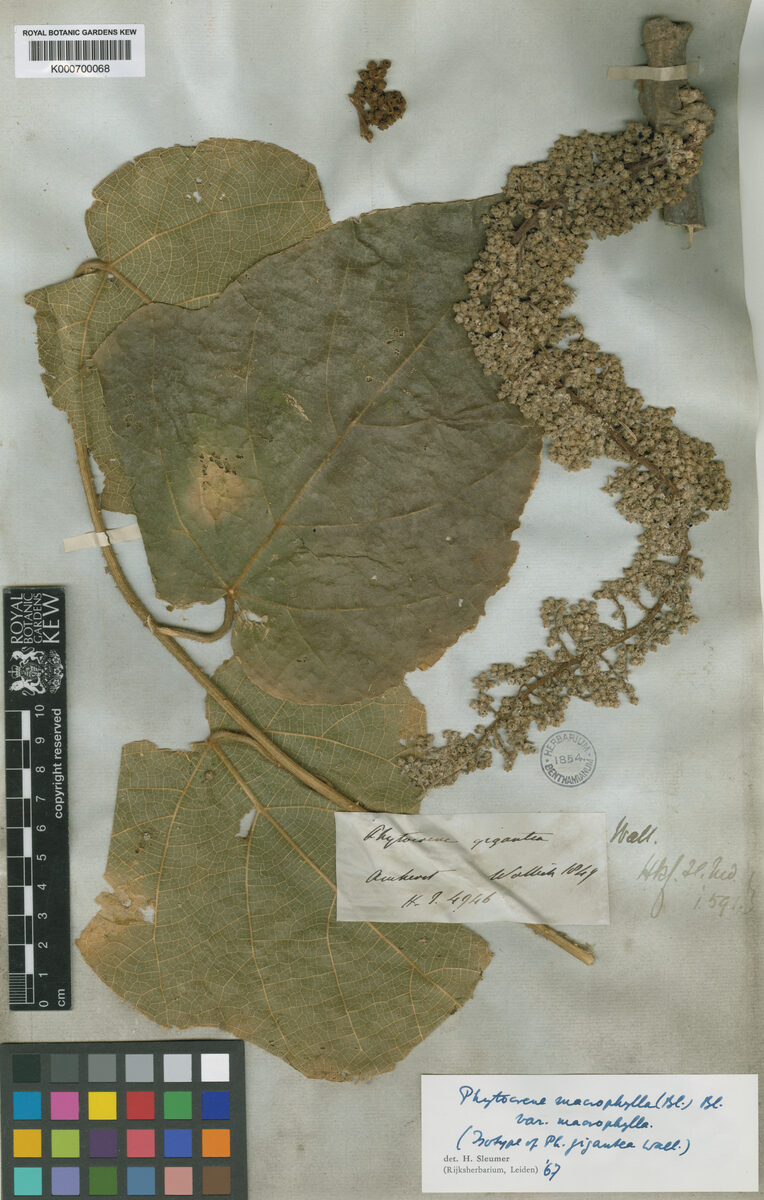
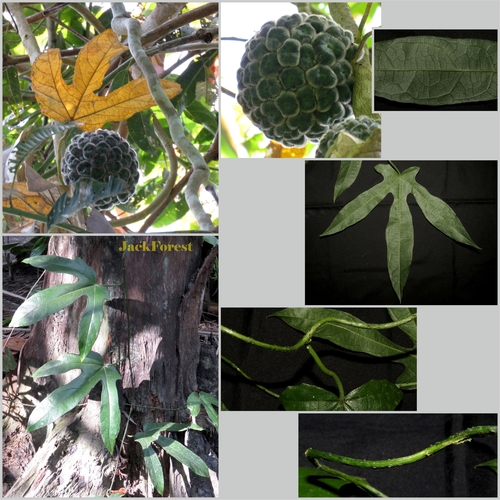
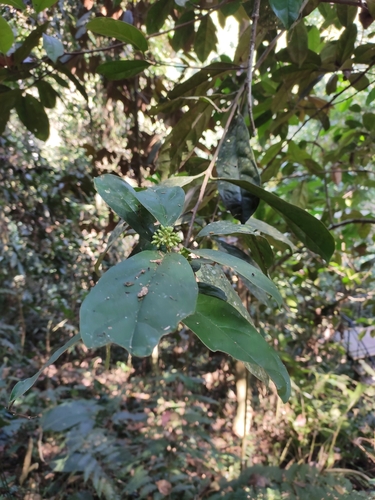
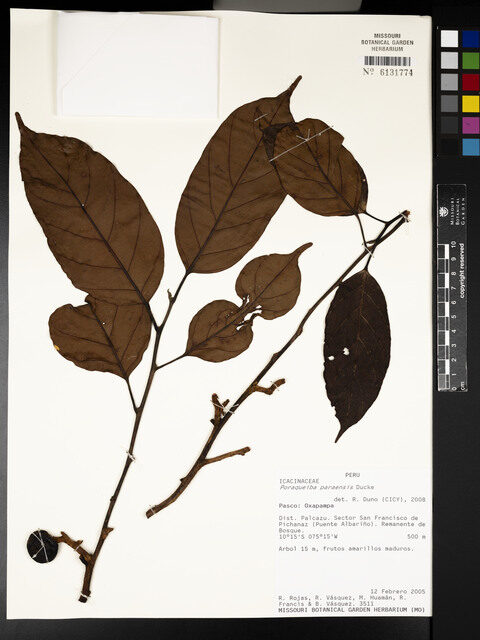
A woody creeper. It can be 35 m long and 8 cm across. The leaves are opposite and with a rounded base and tapering to a tip. The leaves are slightly unequal and they are hairy underneath. The leaves are 7-15 cm long by 4-9 cm wide. The flower panicles occur as 1 to 3 from the same leaf axil. They are 3-9 cm long.
Edible Uses
The leaves are cooked and eaten or added to taro to give flavour.
Traditional Uses
The leaves are cooked and eaten or added to taro to give flavour.
This uses section is brief — help expand it
Distribution
A tropical plant. It grows in lowland rainforest up to 700 m altitude. It climbs over shrubs in the rainforest.
Where It Grows
Asia, Australia, Indonesia, Pacific, Papua New Guinea, PNG, SE Asia, Solomon Islands,
Notes
The vine is used for tying fences.
Also Known As
Paikwado'kwadoia
References (4)
- Altschul, S.V.R., 1973, Drugs and Foods from Little-known Plants. Notes in Harvard University Herbaria. Harvard Univ. Press. Massachusetts. no. 2572
- Flavelle, A. J., 1991, A Traditional Agroforestry Landscape on Fergusson Island, Papua New Guinea. M. Sc. Univ. of British Columia. p 162
- French, B.R., 2010, Food Plants of Solomon Islands. A Compendium. Food Plants International Inc. p 376
- Sleumer, 1971, Icacinaceae. In Flora Malesia. Ser. 1 Vol. 7:1 p 67 (including drawing).