Dolichos trilobus
L.
Japanese arrowroot
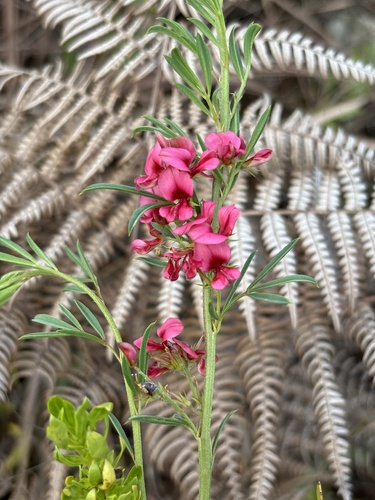
iNaturalist· cc0
no rights reserved, uploaded by 葉子
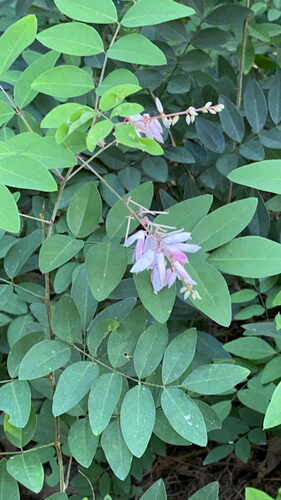
iNaturalist· cc0
no rights reserved, uploaded by 葉子
iNaturalist· cc-by-nc
(c) Linda Loffler, some rights reserved (CC BY-NC), uploaded by Linda Loffler
Description
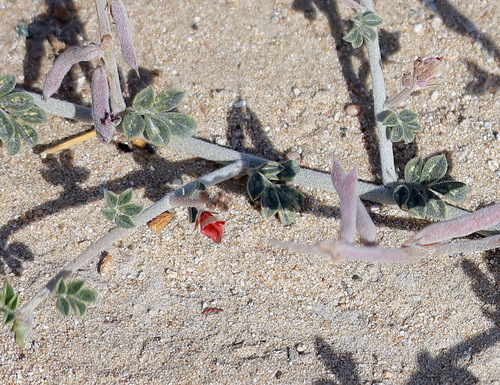
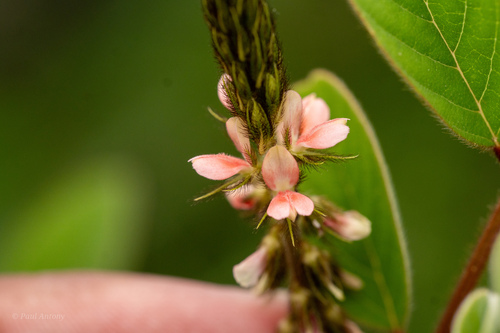
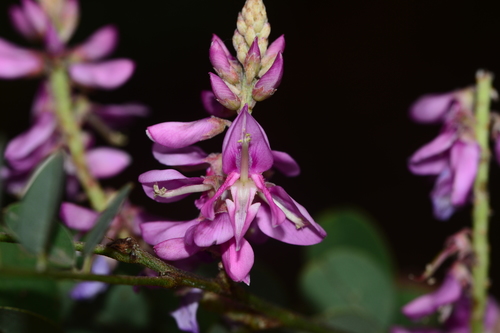
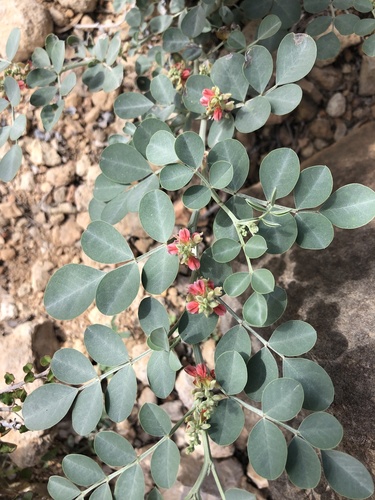
A bean plant. It is a twining herb. It keeps growing from year to year from root tubers. The leaves are compound with 3 leaflets. The leaf stalks are 2-3 cm long. The leaflets are 4 sided and 2-6 cm long by 2-5 cm wide. The flowering shoots are in the axils of leaves and there are 1-4 flowers in a group. The fruit is a pod 6 cm long by 8 mm wide. It is slightly curved. There are 6-7 seeds.
Edible Uses
Seeds - cooked. They can be cooked while fresh or after being dried in the sun. They are eaten with ugali or rice. Coconut milk or pounded groundnuts can be added while cooking in order to make the dish more palatable. The dried seeds can be stored for several months.
Traditional Uses
The seeds are edible. They are collected and cooked while fresh or after being dried in the sun.
This uses section is brief — help expand it
Medicinal Uses
The tubers are pounded and used as medicine to treat chickenpox.
Distribution
It is a tropical plant. It grows in grassland and bushland. It grows from sea level to 1,200 m above sea level in Tanzania.
Where It Grows
Africa, Angola, Arabia, Asia, Burundi, Cameroon, Central Africa, China, East Africa, East Timor, Ethiopia, Ghana, India, Indochina, Indonesia, Kenya, Laos, Malawi, Middle East, Mozambique, Myanmar, Namibia, Nigeria, Philippines, Rwanda, Saudi Arabia, SE Asia, Senegal, Sierra Leone, Somalia, South Africa, Southern Africa, Sri Lanka, Taiwan, Tanzania, Timor-Leste, Togo, Uganda, Vietnam, West Africa, Yemen, Zambia, Zimbabwe,
Cultivation
It can be grown from fresh seed.
Other Uses
The plant is sometimes grown as a green manure.
Production
Dried seeds can be stored for several months.
Nutrition
| Part | Moisture | kJ | kcal | Protein | Vit A | Vit C | Iron | Zinc |
|---|---|---|---|---|---|---|---|---|
| Roots | 72.4 | 1794 | — | 7.1 | — | — | 0.2 | 4.4 |
Synonyms
Also Known As
Dau ba-thuy, Kattupayer, Minna, Timbaweni, Van kurthi
References (8)
- Arinathan, V., et al, 2007, Wild edibles used by Palliyars of the western Ghats, Tamil Nadu. Indian Journal of Traditional Knowledge. 6(1) pp 163-168
- Binu, S., 2010, Wild edible plants by the tribals in Pathanamthitta district, Kerala. Indian Journal of Traditional Knowledge. 9(2): 309-312
- East African Herbarium records, 1981,
- Grubben, G. J. H. and Denton, O. A. (eds), 2004, Plant Resources of Tropical Africa 2. Vegetables. PROTA, Wageningen, Netherlands. p 561
- Kumar, R. & Saikia, P., 2020, Wild edible plants of Jharkhand and their utilitarian perspectives. Indian Journal of Traditional Knowledge Vol 19 (2), April 2020, pp 237-250
Show all 8 references Hide references
- Peters, C. R., O'Brien, E. M., and Drummond, R.B., 1992, Edible Wild plants of Sub-saharan Africa. Kew. p 133
- Pigafetta, 1525,
- Ruffo, C. K., Birnie, A. & Tengnas, B., 2002, Edible Wild Plants of Tanzania. RELMA p 280