Acacia kempeana
F. Muell.
Witchetty bush, Kemp’s Wattle
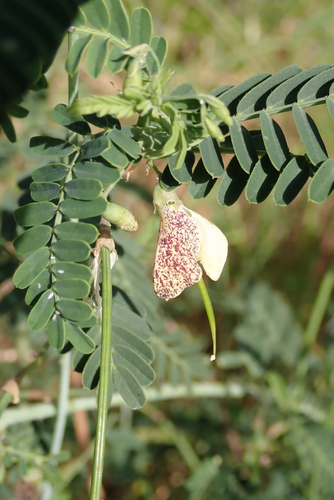
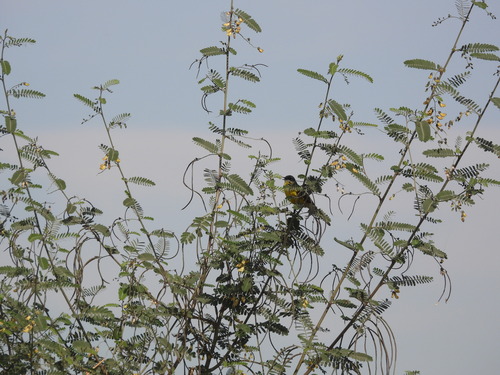
iNaturalist· cc-by-nc
(c) Dr Manfred Jusaitis, some rights reserved (CC BY-NC), uploaded by Dr Manfred Jusaitis
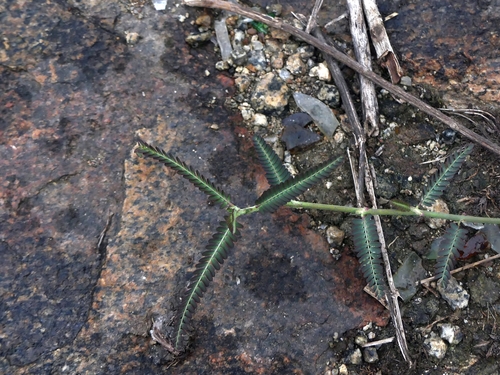
iNaturalist· cc-by-nc
(c) Glenda Walter, some rights reserved (CC BY-NC), uploaded by Glenda Walter
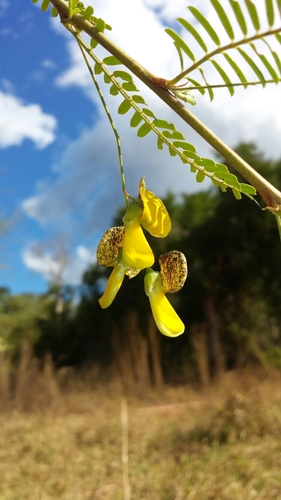
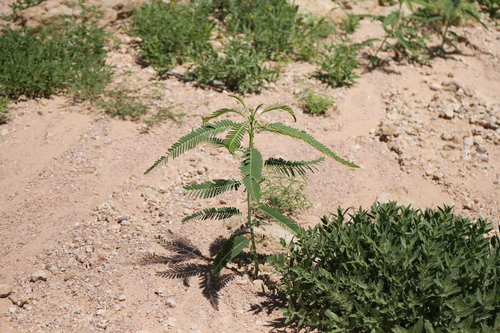
iNaturalist· cc0
no rights reserved, uploaded by Melissa Doherty
Summary
Source: WikipediaAcacia kempeana (Acacia or ακακία (akakia) from the Greek word Akis for thorn and kempeana after Pastor Kempe, co-founder of Lutheran Mission at Hermannburg-Ntaria in 1877), commonly known as wanderrie wattle, witchetty bush or granite wattle, is a shrub in subfamily Mimosoideae of family Fabaceae that is endemic to arid parts of central and western Australia.
Description
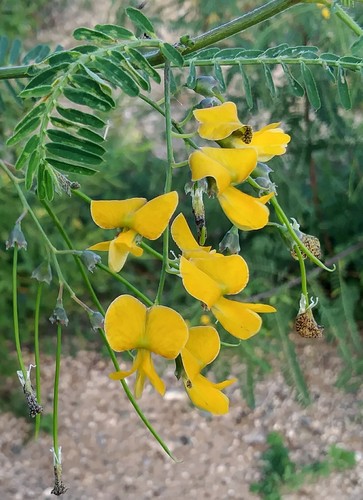
A shrub or small tree. It grows 5 m tall. There are prickles along the stem. The leaves are twice divided and there are 8-18 pairs of pinnae. There are up to 50 pairs of pinnules on each pinnae. The flowers are yellow. They are in large clusters at the ends of branches. The pods are flattened.
Edible Uses
Witchetty grubs are a traditional staple food in arid regions. These larvae feed on the roots of the witchetty bush (for which they are named), as well as other Acacia species. The bush also provides edible gum and seeds.
Traditional Uses
The seed are eaten. The tree harbours a large tasty grub which is eaten. Grubs can be 11.5 g weight. The grubs can be eaten raw or lightly roasted. They are good protein. The Red Lerp scale produces a honey dew which is eaten. It also has edible gum.
Medicinal Uses
The phyllodes and inner bark from the roots were used traditionally for medicinal purposes. No more information is given. The bark of all Acacia species contains greater or lesser quantities of tannins and are astringent. Astringents are often used medicinally - taken internally, for example. they are used in the treatment of diarrhoea and dysentery, and can also be helpful in cases of internal bleeding. Applied externally, often as a wash, they are used to treat wounds and other skin problems, haemorrhoids, perspiring feet, some eye problems, as a mouth wash etc. Many Acacia trees also yield greater or lesser quantities of a gum from the trunk and stems. This is sometimes taken internally in the treatment of diarrhoea and haemorrhoids.
Known Hazards
The seed of many Acacia species, including this one, is edible and highly nutritious, and can be eaten safely as a fairly major part of the diet. Not all species are edible, however, and some can contain moderate levels of toxins. Especially when harvesting from the wild, especial care should be taken to ensure correct identification of any plants harvested for food. Especially in times of drought, many Acacia species can concentrate high levels of the toxin Hydrogen cyanide in their foliage, making them dangerous for herbivores to eat.
Distribution
It is widespread in central Australia. It requires well drained soil. It can grow in part or full sunlight. It can withstand some drought and frost and grows in semi arid areas. It is often in limestone areas. Hot fires can kill it but it can re-shoot after cool fires in winter. It can grow in arid places.
Where It Grows
Australia*,
Cultivation
It is grown from seed. The seed needs treatment to break the hard seed coat. Normally this is by putting the seeds in very hot water and letting the water cool down overnight then planting the seeds immediately.
Propagation
Seed - it has a hard seedcoat and benefits from scarification before sowing in order to speed up and improve germination. This can usually be done by pouring a small amount of nearly boiling water on the seeds (being careful not to cook them!) and then soaking them for 12 - 24 hours in warm water. By this time they should have imbibed moisture and swollen - if they have not, then carefully make a nick in the seedcoat (being careful not to damage the embryo) and soak for a further 12 hours before sowing. Seeds can store for 14 years at room temperature with only 11% loss of viability.
Other Uses
The stem and roots were used traditionally to fashion fighting and fish spears.
Production
Plants flower and seed well only after reasonable rains. The trees look more green at these times.
Notes
There are about 1,350 Acacia species. Over 1,000 occur in Australia. Also as Mimosaceae.
Nutrition
| Part | Moisture | kJ | kcal | Protein | Vit A | Vit C | Iron | Zinc |
|---|---|---|---|---|---|---|---|---|
| Seed | 4.5 | 1225 | 293 | 24 | — | — | 3.8 | 3.3 |
| Gum | — | — | — | — | — | — | — | — |
| Honeydew | — | — | — | — | — | — | — | — |
Synonyms
Also Known As
Atnyima, Ngarlkirdi, Yiripili
References (19)
- Bodkin, F., 1991, Encyclopedia Botanica. Cornstalk publishing, p 22
- Bonney, N., 1997, Economic Native Trees and Shrubs for South Australia. Greening Australia (SA) inc. Campbelltown SA 5074 p 7
- Cancilla, D., 2018, Ethnobotanical and Ethnozoological Values Desktop Assessment - Eliwana Project. p 9
- Chem. & Druggist (Australas.) suppl. 5:26. 1882
- Cherikoff V. & Isaacs, J., The Bush Food Handbook. How to gather, grow, process and cook Australian Wild Foods. Ti Tree Press, Australia p 42, 188
Show all 19 references Hide references
- Elliot, W.R., & Jones, D.L., 1982, Encyclopedia of Australian Plants suitable for cultivation. Vol 2. Lothian. p 70
- Goddard, C. & Kalotas A. (Eds.), Punu, 2002, Yankunytjatjara plant use. Jukurrpa books. p 44
- Hall, N. et al, 1972, The Use of Trees and Shrubs in the Dry Country of Australia, AGPS, Canberra. p 348
- Hiddins, L., 1999, Explore Wild Australia with the Bush Tucker Man. Penguin Books/ABC Books. p 168
- Isaacs, J., 1987, Bush Food, Aboriginal Food and Herbal Medicine. Weldons. p 107, 110, 112
- Latz, P & Wightman, G., 1995, Desert Bush Tucker Identikit. Common Native Food Plants of Central Australia. Parks & Wild Commission Northern territory. p 22
- Lazarides, M. & Hince, B., 1993, Handbook of Economic Plants of Australia, CSIRO. p 4
- Lister, P.R., P. Holford, T. Haigh, and D.A. Morrison, 1996, Acacia in Australia: Ethnobotany and potential food crop. p. 228-236. In: J. Janick (ed.), Progress in new crops. ASHS Press, Alexandria, VA.
- Low, T., 1991, Wild Food Plants of Australia. Australian Nature FieldGuide, Angus & Robertson. p 179
- Miers, G., 2004, Cultivation and sustainable wild harvest of Bushfoods by Aboriginal Communities in Central Australia. RIRDC report W03/124 p 19
- Paczkowska, G . & Chapman, A.R., 2000, The Western Australian Flora. A Descriptive Catalogue. Western Australian Herbarium. p 312
- Pennock, A., et al, Australian Dry-zone Acacias for Human Food: Proceedings of a Workshop.
- Smith, K & I., 1999, Grow your own bushfoods. New Holland. Australia. p 101
- Urban, A., 1990, Wildflowers of Inland Australia. Portside editions. p 84