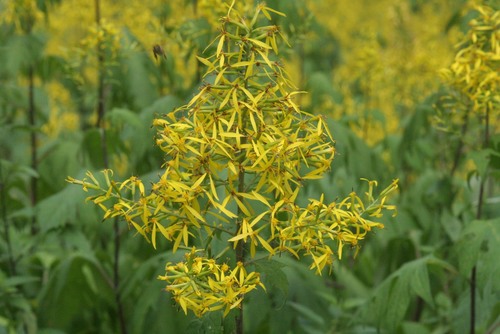
Wyethia glabra
Gray
Coast Range Mulesears
iNaturalist· cc-by-nc
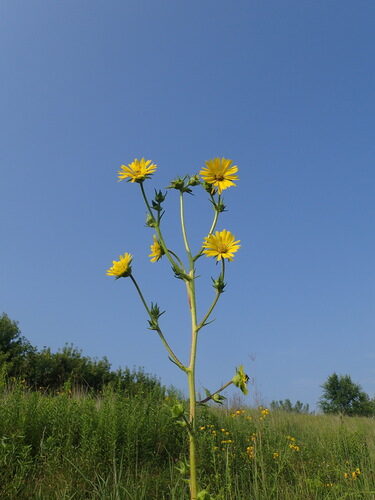
(c) Jim Grove, some rights reserved (CC BY-NC)
iNaturalist· cc-by-nc
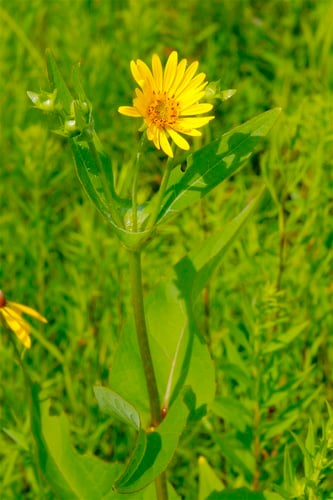
(c) Sarah, some rights reserved (CC BY-NC)
iNaturalist· cc-by-nc
(c) Sarah, some rights reserved (CC BY-NC)
Summary
Source: WikipediaWyethia glabra is a species of flowering plant in the family Asteraceae known by the common name Coast Range mule's ears. It is endemic to California, where it grows in the North and Central Coast Ranges. It is a perennial herb growing from a tough taproot and caudex unit and producing a stem up to 40 centimeters tall. It is hairless to hairy and glandular. The leaves have lance-shaped or oval blades up to 45 centimeters long. The inflorescence is usually a solitary flower head or occasionally a cluster of 2 or more. The head has lance-shaped leaflike phyllaries at the base. It contains up to 21 yellow ray florets each up to 5 centimeters long and many yellow disc florets. The fruit is an achene over a centimeter long, including its pappus.
Description
A perennial herb of the Asteraceae family found in temperate regions.
This description is brief — help expand it
Edible Uses
The seeds are eaten fresh or used in pinole.
Traditional Uses
The seeds are eaten fresh or used in pinole.
This uses section is brief — help expand it
Distribution
It is a temperate plant.
Where It Grows
North America, USA,
References (2)
- Anderson, M. K., 2012, Edible Seeds and Grains of California Tribes and the Klamath Tribe of Oregon in the Phoebe Apperson Hearst Museum of Anthropology Collections, University of California, Berkeley. USDA p 54
- Moerman, D. F., 2010, Native American Ethnobotany. Timber Press. p 601