Helianthus annuus subsp. lenticularis
Douglas
Wild sunflower, Showy sunflower
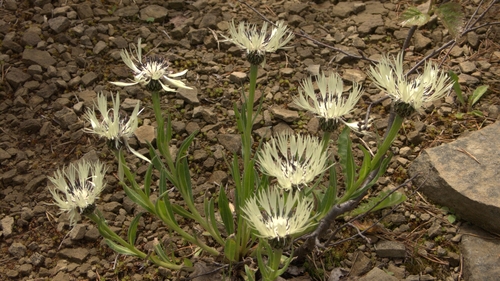
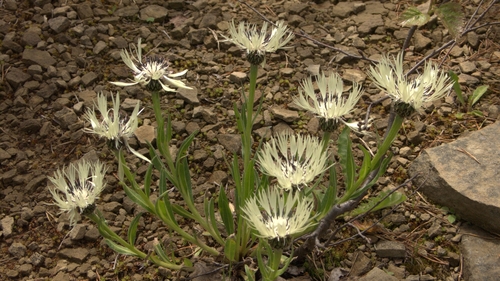
iNaturalist· cc-by-nc
(c) Shaun Michael, some rights reserved (CC BY-NC), uploaded by Shaun Michael
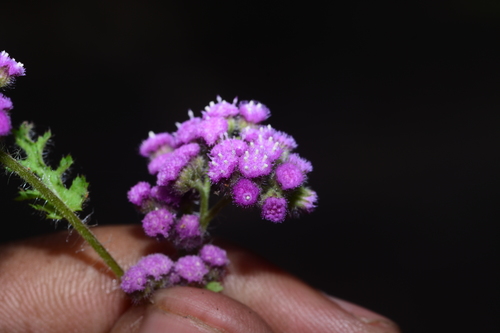
iNaturalist· cc-by-nc
(c) Emily Scherer, some rights reserved (CC BY-NC), uploaded by Emily Scherer
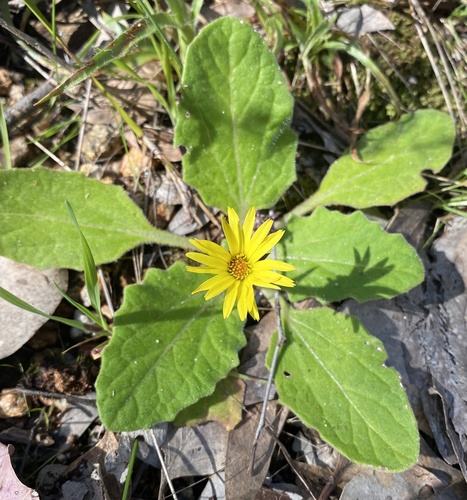
iNaturalist· cc-by-nc
(c) Kevin Fistanic, some rights reserved (CC BY-NC), uploaded by Kevin Fistanic
Description
An annual plant. It grows 1-2 m high. It has fleshy roots. The leaves are mainly alternate and simple. They are oval and have a heart shaped base. They have a leaf stalks and have coarse teeth. They are 10-20 cm long. The flowers are large yellow disks that are brown in the centre. The flower heads can occur singly or as several together. They are 7.5-15 cm across. The fruit is a smooth dry achene.
Edible Uses
The seeds are edible and can be eaten.
Known Hazards
Almost all Helianthus species in North and South America are noted as edible, suggesting no significant hazards for this subspecies.
Distribution
It is a temperate plant. It grows along roadsides and in waste places.
Where It Grows
Canada, North America, USA,
Notes
Almost all Helianthus (60 species) in N and S America are edible.
References (5)
- Beckstrom-Sternberg, Stephen M., and James A. Duke. "The Foodplant Database." http://probe.nalusda.gov:8300/cgi-bin/browse/foodplantdb.(ACEDB version 4.0 - data version July 1994)
- Bocek, B. R., 1984, Ethnobotany of Costanoan Indians, California, Based on Collections by John P. Harrington. Economic Botany 38(2): 240-255
- Cormack, R. G. H., 1967, Wild Flowers of Alberta. Commercial Printers Edmonton, Canada. p 378
- J. Lindley, Edward's Bot. Reg. 15: t. 1265. 1829
- Plants for a Future database, The Field, Penpol, Lostwithiel, Cornwall, PL22 0NG, UK. http://www.scs.leeds.ac.uk/pfaf/