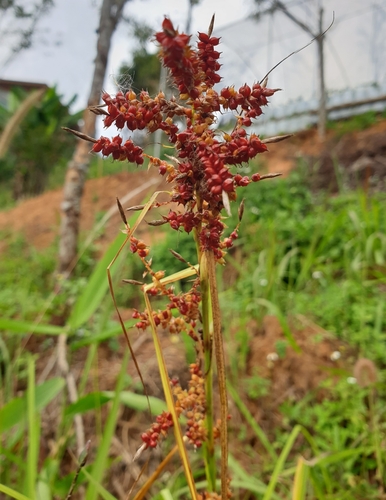
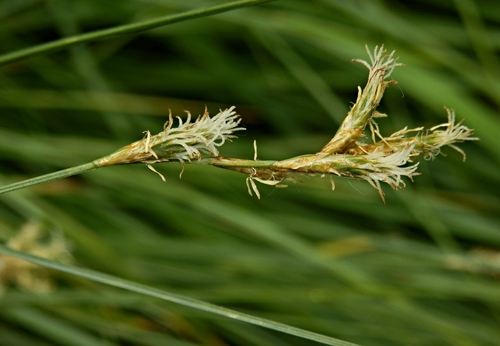
Schoenoplectus pungens
(Vahl) Palla
Threesquare bulrush
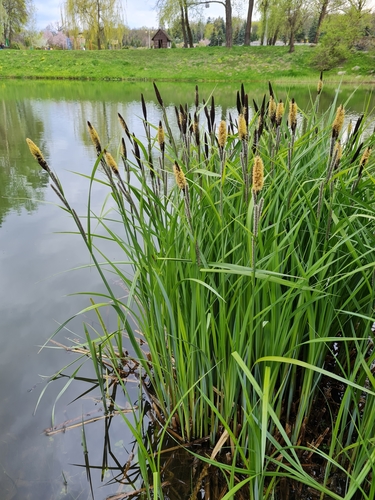
iNaturalist· cc-by-nc
(c) Samuel Brinker, some rights reserved (CC BY-NC), uploaded by Samuel Brinker
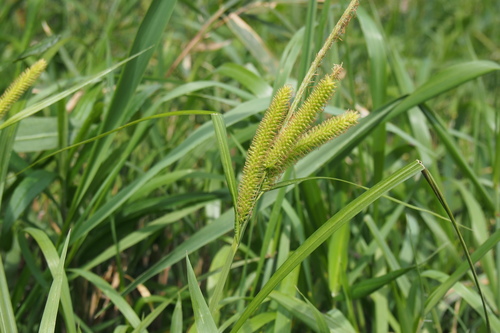
iNaturalist· cc-by-sa
(c) Douglas Goldman, some rights reserved (CC BY-SA), uploaded by Douglas Goldman
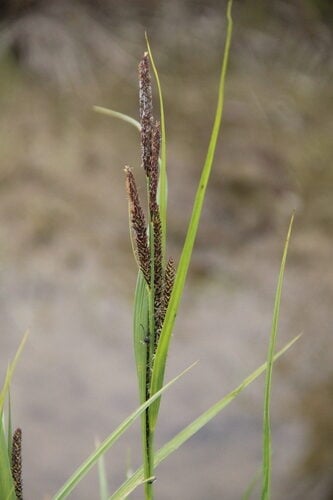
iNaturalist· cc-by-nc
(c) Ashley M Bradford, some rights reserved (CC BY-NC), uploaded by Ashley M Bradford
Summary
Source: WikipediaSchoenoplectus pungens is a species of flowering plant in the sedge family known as common threesquare, common three-square bulrush and sharp club-rush. It is a herbaceous emergent plant that is widespread across much of North and South America as well as Europe, New Zealand and Australia.
Description
Evergreen perennial sedge reaching 1 m tall and 1 m wide at a fast growth rate. Hardy to UK zone 5. Wind-pollinated flowers attract wildlife. Grows in light sandy, medium loamy, and heavy clay soils. Tolerates mildly acid to very alkaline and saline soils. Requires full sun and prefers wet soil or standing water.
Edible Uses
The achenes (seeds) are the most practical edible part, with an edibility rating of 2.5/5 for seed and 2/5 overall; shoots and stem bases are small and fibrous and contribute little caloric value. Seeds have a mild, cereal-like taste that improves substantially with dry toasting, which eliminates any lacustrine notes and produces a pleasantly nutty meal. Grinding the toasted seeds yields a meal that can be combined with sweeter flours such as acorn, amaranth, or wheat to improve texture and binding in flatbreads. For porridge, simmer milled seed with 4–6 parts water until thick. Sprouting begins in spring, flowering follows in late spring to early summer, and seeds ripen in summer — earlier at low elevations. Rhizomes can be lifted at any time but are too slender to justify the effort. Harvest seedheads as they turn brown and brittle, dry in ventilated sacks, rub to release achenes, winnow, toast briefly, then mill. Dry seed thoroughly before storage to prevent mould. The species is most often confused with S. americanus, as both have triangular stems; S. pungens is typically shorter and stockier, while softstem and tule have round stems — checking stem cross-section is a reliable way to distinguish them. Small bulrush seeds were historically collected, parched, and ground as supplemental grains in multiple North American traditions.
Traditional Uses
The seeds are parched and ground into flour and used in porridge.
This uses section is brief — help expand it
Medicinal Uses
None known
Distribution
It is a temperate plant. It grows from sea level to 1,400 m above sea level.
Where It Grows
Argentina, Australia, Chile, North America, South America*, Tasmania, USA,
Propagation
Divide crowns in early spring, or sow cold-stratified seed on saturated media. Light aids germination; do not bury seed deeply.
Other Uses
Vegetative material has been used for mats and thatch. The plant provides cover for amphibians and shorebirds; seeds are taken by ducks and rails; and stems support periphyton communities that fuel aquatic food webs.
Synonyms
References (1)
- Moerman, D. F., 2010, Native American Ethnobotany. Timber Press. p 523 (As Scirpus pungens)