Polygonum posumbu
Buch.-Ham.
Kengoi
iNaturalist· cc-by-nc
(c) Sara Rall, some rights reserved (CC BY-NC)
iNaturalist· cc-by-nc
(c) katharina2525, some rights reserved (CC BY-NC)
iNaturalist· cc-by-nc
(c) katharina2525, some rights reserved (CC BY-NC)
Description
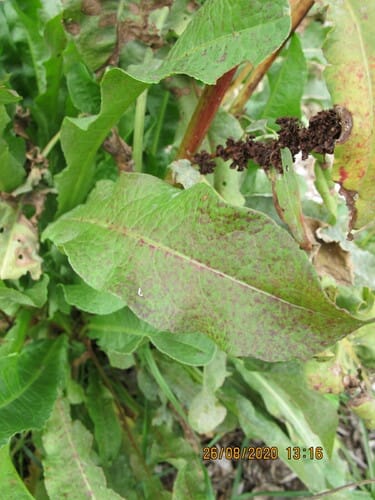
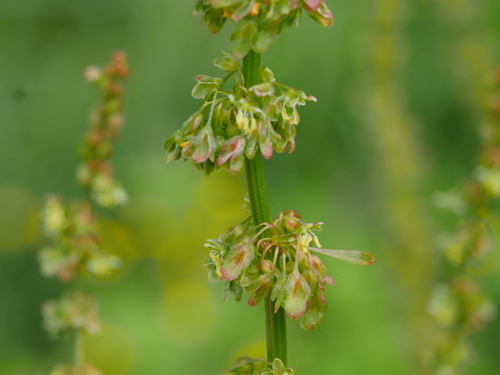
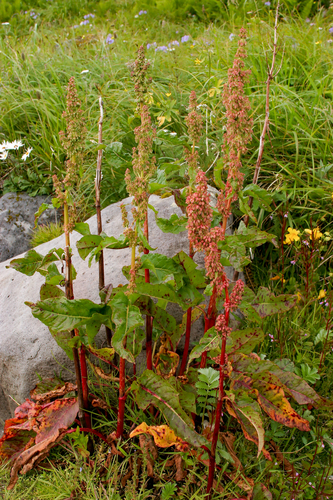
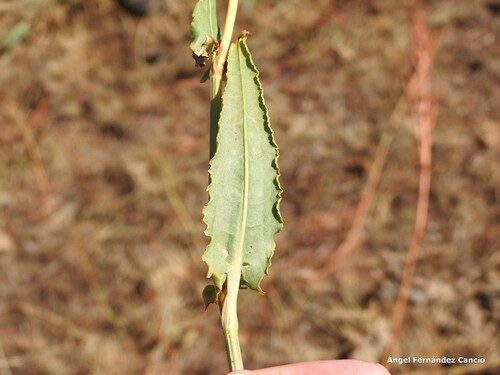
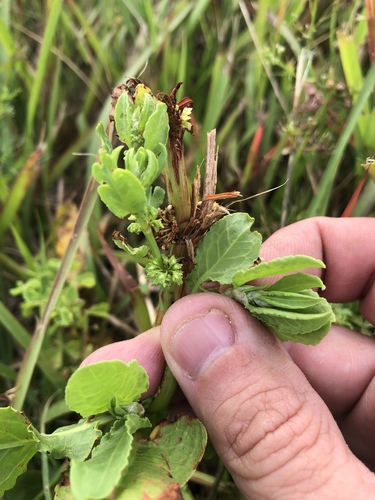
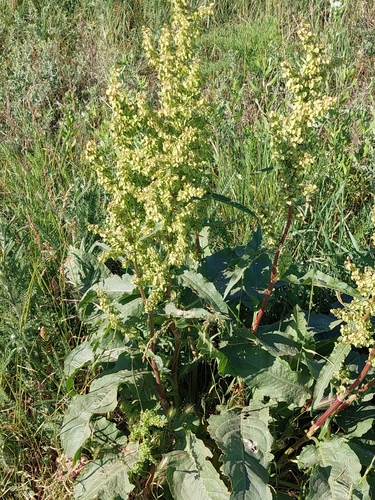
A herb. It grows each year from seed. The stems lie along the ground and are 30-70 cm long. The plant is branched at the base. The leaves are oval and 3-6 cm long by 1-2 cm wide. The flowering shoots can be in the axils of leaves or at the ends of branches. The fruit is 3 sided.
Edible Uses
The leaves are used as a spice, in chutney, and as a vegetable, and are sold in local markets. The shoots and leaves are both edible.
Traditional Uses
The leaves are used as a spice and in chutney. They are also used as a vegetable.
This uses section is brief — help expand it
Distribution
It is a tropical plant. It grows between 100-3,000 m above sea level. In Sichuan and Yunnan.
Where It Grows
Asia, China, Himalayas, India, Indochina, Indonesia, Japan, Korea, Myanmar, Nepal, Northeastern India, Philippines, SE Asia, Taiwan, Thailand, Tibet, Vietnam,
Other Information
Leaves are sold in local markets.
Synonyms
Also Known As
Namne ao, Nghe nho, Phak-pai, Singjo bua, Singju
References (7)
- Flora of China @ efloras.org Volume 5
- Jain et al, 2011, Dietary Use and Conservation Concern of Edible Wetland Plants at Indo-Burma Hotspot: A Case Study from Northeast India. Journal of Ethnobiology and Ethnomedicine 7:29 p 7 (As Persicaria posumba)
- Medhi, P. & Borthakur, S. K., 2012, Phytoresources from North Cachur Hills of Assam -3: Edible plants sold at Hflong market. Indian Journal of Natural Products and Resources. 3(1) pp 84-109
- Medhi, P. & Borthakur, S. K., 2013, Wild edible plants sold by the Zeme Nagas at the makeshift market of Mahur, Dima Hasao district of Assam. Pleione 7(1): 84 - 93. 2013 (As Persicaria posumbu)
- Medhi, P., Sarma, A and Borthakur, S. K., 2014, Wild edible plants from the Dima Hasao district of Assam, India. Pleione 8(1): 133-148
Show all 7 references Hide references
- Meitei, L. R., et al, 2022, An ethnobotanical study on the wild edible plants used by forest dwellers in Yangoupokpi Lokchao Wildlife Sanctuary, Manipur, India. Ethnobotany Research and Application 23:15 (As Persicaria posumbu)
- Murtem, G. & Chaudhrey, P., 2016, An ethnobotanical note on wild edible plants of Upper Eastern Himalaya, India. Brazilian Journal of Biological Sciences, 2016, v. 3, no. 5, p. 63-81