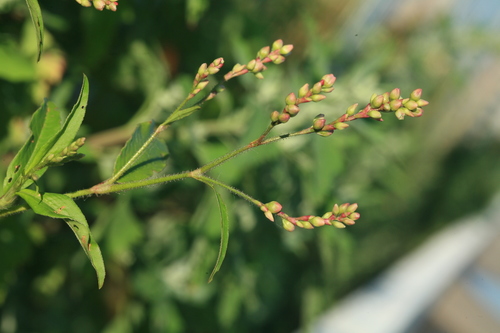
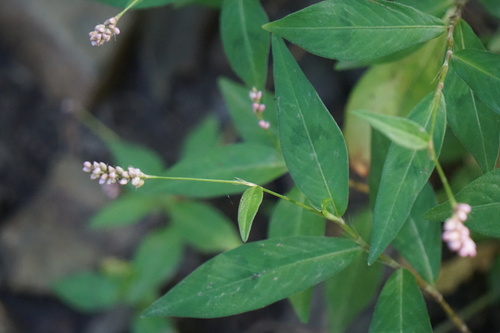
Rumex patientia
L.
Patience Dock, Spinach dock, Herb Patience
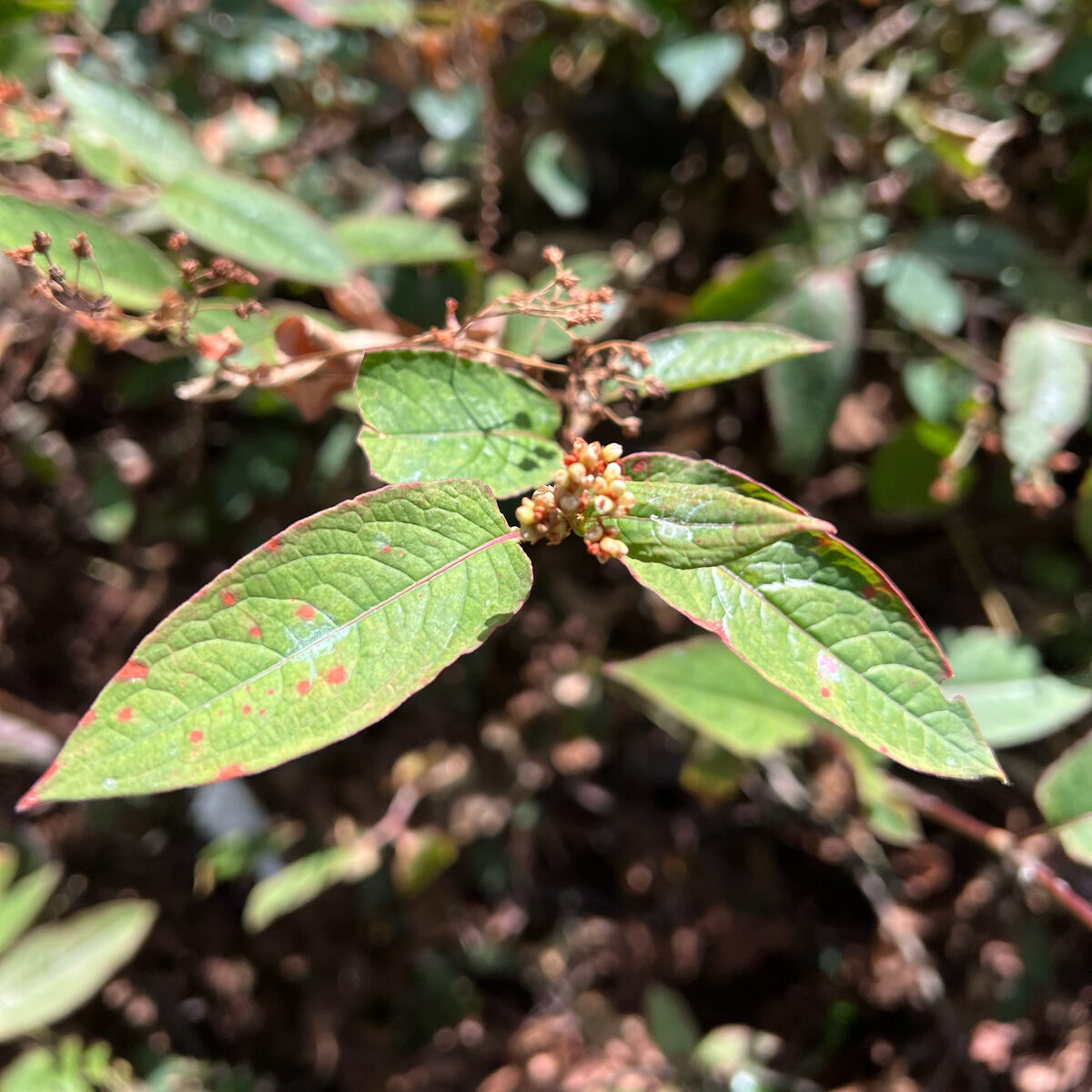
iNaturalist· cc-by-nc
(c) drabyniuk, some rights reserved (CC BY-NC)
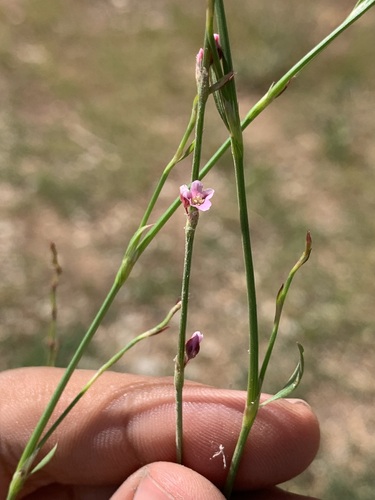
iNaturalist· cc-by-nc
(c) Aleksandr_Levon, some rights reserved (CC BY-NC), uploaded by Aleksandr_Levon
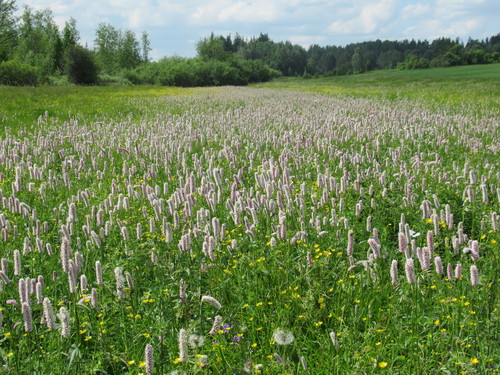
iNaturalist· cc-by-nc
(c) Dariia Borovyk, some rights reserved (CC BY-NC), uploaded by Dariia Borovyk
Summary
Source: WikipediaRumex patientia, known as patience dock, garden patience, herb patience, or monk's rhubarb, is a herbaceous perennial flowering plant belonging to the family Polygonaceae. In spring it is often consumed as a leaf vegetable and as a filling in pies in Southern Europe, especially in Bulgaria, North Macedonia, Turkey, Bosnia and Herzegovina and Serbia. It is also used in Romania in spring broths or sarmale.
Description
A herbaceous perennial plant with a tough rootstock. It grows to 2 m tall. The leaves are long and sword shaped. They are 15-30 cm long by 4-15 cm wide. The upper leaves on the stem do not have leaf stalks. The flowers are small and green. The seeds are brown.
Edible Uses
The leaves can be eaten raw or cooked. They are often used like spinach or made into a puree, frequently mixed with a quarter part of sorrel to add flavour. The taste is fairly mild and the leaves make an excellent vegetable, with the additional benefit of being produced very early in the year. The hybrid Rumex patientia x tianschanicus is noted as a good staple crop with balanced carbohydrates.
Traditional Uses
The young leaves are eaten like a vegetable. They are cooked or added to soups. The leaves are used for sarma in Turkey. They are rolled around a filling of rice or minced meat. The roots are sweet and are eaten.
Medicinal Uses
The juice and a root infusion have both been used as a poultice and salve for various skin problems. A root infusion has also been used to treat constipation. The leaves have been rubbed inside the mouth to relieve sore throats.
Known Hazards
Plants can contain quite high levels of oxalic acid, which is what gives the leaves of many members of this genus an acid-lemon flavour. Perfectly alright in small quantities, the leaves should not be eaten in large amounts since the oxalic acid can lock-up other nutrients in the food, especially calcium, thus causing mineral deficiencies. The oxalic acid content will be reduced if the plant is cooked. People with a tendency to rheumatism, arthritis, gout, kidney stones or hyperacidity should take especial caution if including this plant in their diet since it can aggravate their condition.
Distribution
It is a temperate or Mediterranean climate plant. It grows in wetlands. In Sichuan.
Where It Grows
Albania, Armenia, Asia, Balkans, Bosnia, Britain, Bulgaria, Caucasus, Central Asia, China, Croatia, Dominican Republic, Europe, Greece, Haiti, Hungary, India, Kazakhstan, Korea, Kyrgyzstan, Macedonia, Mediterranean, Middle East, Mongolia, North America, Pakistan, Palestine, Romania, Russia, Senegal, Serbia, Slovenia, Tajikistan, Turkey, Türkiye, USA, West Africa, West Indies,
Cultivation
Experimental Crop Industrial Crop: Biomass Management: Coppice Management: Standard Staple Crop: Balanced carbA very easily grown plant, it succeeds in most soils, preferring a moist moderately fertile well-drained soil in a sunny position. Formerly cultivated for its edible leaves, these can be available in early February if the winter is mild. An important food plant for the caterpillars of many species of butterfly.The hybrid Rumex patientia x tianschanicus (Hybrid sorrel) is a good Carbon Farming plant. Rumex patientia x tianschanicus cultivation: new crop. Management: standard, coppice. Staple Crop: balanced carb. Industrial Crop: biomass.
Propagation
Sow seed in spring in a cold frame. Prick seedlings out into individual pots once large enough to handle, and plant out during summer. Plants can also be propagated by division in spring.
Other Uses
No specific dye data has been recorded for this species, but roots of many plants in this genus yield dark green to brown and dark grey dyes without requiring a mordant. This plant is associated with carbon farming and food forest systems.
Other Information
It is a commercially cultivated vegetable.
Notes
There are about 200 Rumex species. It is rich in Vitamin A & C.
Synonyms
Also Known As
Ateveligi, Efelek, Evelik, Ilibada, Labada, Lososdi, Lososka, Masnik, Sabia, Salq, Spanakov lapad, Trpežna kislica, Zundaa
References (48)
- Ali-Shtayeh, M. S., et al, 2008, Traditional knowledge of wild edible plants used in Palestine (Northern West Bank): A comparative study. J Ethnobiol Ethnomed. 4: 13
- Ambasta S.P. (Ed.), 2000, The Useful Plants of India. CSIR India. p 535
- Ari, S., et al, 2015, Ethnobotanical survey of plants used in Afyonkarahisar-Turkey. Journal of Ethnobiology and Ethnomedicine 11:84
- Cakir, E. A., 2017, Traditional knowledge of wild edible plants of Iğdır Province (East Anatolia, Turkey). Acta Soc Bot Pol. 2017;86(4):3568
- Denes, A., et al, 2012, Wild plants used for food by Hungarian ethnic groups living in the Carpathian Basin. Acta Societatis Botanicorum Poloniae 81 (4): 381-396
Show all 48 references Hide references
- Dogan, A. & Tuzlaci, E., 2015, Wild Edible Plants of Pertek (Tunceli-Turkey). Marmara Pharmaceutical Journal 19: 126-135
- Dogan, Y., et al, 2004, The Use of Wild Edible Plants in Western and Central Anatolia (Turkey). Economic Botany 58(4) pp. 684-690
- Dogan, Y., 2012, Traditionally used wild edible greens in the Aegean Region of Turkey. Acta Societatis Botanicorum Poloniae 81(4): 329-342
- Dogan, Y. et al, 2013, Wild Edible Plants sold in the Local Markets of Izmir, Turkey. Pak. J. Bot. 45(S1): 177-184
- Dogan, Y., et al, 2015, Of the importance of a leaf: the ethnobotany of sarma in Turkey and the Balkans. Journal of Ethnobiology and Ethnomedicine, 11:56
- Ertug, F, Yenen Bitkiler. Resimli Türkiye Florası -I- Flora of Turkey - Ethnobotany supplement
- Facciola, S., 1998, Cornucopia 2: a Source Book of Edible Plants. Kampong Publications, p 187
- FAO, 1988, Traditional Food Plants, FAO Food and Nutrition Paper 42. FAO Rome p 431
- Flora of China @ efloras.org Volume 5
- Hammer, K. & Spahillari, M., 1999, Crops of European origin. in Report of a networking group on minor crops. IPGRI p 46
- Hancer, C. K., et al, 2020, Traditional Knowledge of Wild Edible Plants of Biga (Çanakkale), Turkey. Acta Societatis Botanicorum Poloniae / 2020 / Volume 89 / Issue 1 / Article 8914
- Hedrick, U.P., 1919, (Ed.), Sturtevant's edible plants of the world. p 584
- Hinnawi, N. S. A., 2010, An ethnobotanical study of wild edible plants in the Northern West Bank "Palestine". An-Najah National University. p 95
- http://www.botanic-gardens-ljubljana.com/en/plants
- Hu, Shiu-ying, 2005, Food Plants of China. The Chinese University Press. p 375
- Irving, M., 2009, The Forager Handbook, A Guide to the Edible Plants of Britain. Ebury Press p 179
- Jardin, C., 1970, List of Foods Used In Africa, FAO Nutrition Information Document Series No 2.p 98
- Kargioglu, M. et al, 2010, Traditional Uses of Wild Plants in the Middle Aegean Region. Human Ecology 38:429-450
- Kayabasi, N. P., et al, 2018, Wild edible plants and their traditional use in the human nutrition in Manyas (Turkey). Indian Journal of Traditional Knowledge. Vol. 17(2), April 2018, pp 299-306
- Kays, S. J., and Dias, J. C. S., 1995, Common Names of Commercially Cultivated Vegetables of the World in 15 languages. Economic Botany, Vol. 49, No. 2, pp. 115-152
- Kiple, K.F. & Ornelas, K.C., (eds), 2000, The Cambridge World History of Food. CUP p 1854
- Koca, I., et al, 2015, Some Wild Edible Plants and Their Dietary Fiber Contents. Pakistan Journal of Nutrition. 14(4): 188-194
- Luczaj, L. et al, 2014, Wild Food Plants of Dalmatia (Croatia). in A. Pieroni, C. L. Quave (eds.), Ethnobotany and Biocultural Diversities in the Balkans, p 143
- Mabey, R., 1973, Food for Free. A Guide to the edible wild plants of Britain, Collins. p 105
- Luczaj, L., et al, 2015, Wild food plants and fungi used by Ukrainians in the western part of the Maramureş region in Romania. Acta Soc Bot Pol 84(3):339–346
- Martin, F.W. & Ruberte, R.M., 1979, Edible Leaves of the Tropics. Antillian College Press, Mayaguez, Puerto Rico. p 214
- Nedelcheva A., 2013, An ethnobotanical study of wild edible plants in Bulgaria. EurAsian Journal of BioSciences 7, 77-94
- Özdemir, E. and Kültür, S., 2017, Wild Edible Plants of Savaştepe District (Balıkesir, Turkey), Marmara Pharm J 21/3: 578-589
- Pieroni, A. et al, 2013, One century later: the folk botanical knowledge of the last remaining Albanians of the upper Reka Valley, Mount Korab, Western Macedonia. Journal of Ethnobiology and Ethnomedicine. 9:22
- Pieroni, A. & Soukand, R., 2017, The disappearing wild food and medicinal plant knowledge in a few mountain villages of North-Eastern Albania. Journal of Applied Botany and Food Quality 90, 58 - 67
- Plants for a Future database, The Field, Penpol, Lostwithiel, Cornwall, PL22 0NG, UK. http://www.scs.leeds.ac.uk/pfaf/
- Plants of Haiti Smithsonian Institute http://botany.si.edu/antilles/West Indies
- Redzic, S. J., 2006, Wild Edible Plants and their Traditional Use in the Human Nutrition in Bosnia-Herzegovina. Ecology of Food and Nutrition, 45:189-232
- Redzic, S., 2010, Use of Wild and Semi-Wild Edible Plants in Nutrition and Survival of People in 1430 Days of Siege of Sarajevo during the War in Bosnia and Herzegovina (1992–1995). Coll. Antropol 34 (2010) 2:551-570
- Schneider, E., 2001, Vegetables from Amaranth to Zucchini: The essential reference. HarperCollins. p 574
- Sp. pl. 1:333. 1753
- Terra, G.J.A., 1973, Tropical Vegetables. Communication 54e Royal Tropical Institute, Amsterdam, p 70
- Ullah, I, et al, 2017, Analysis of nutrients and minerals of some wild edible plants. International Journal of Fauna and Biological Studies. 4(6):35-39
- USDA, ARS, National Genetic Resources Program. Germplasm Resources Information Network - (GRIN). [Online Database] National Germplasm Resources Laboratory, Beltsville, Maryland. Available: www.ars-grin.gov/cgi-bin/npgs/html/econ.pl (10 April 2000)
- Wang, J. et al, 2013, A Study on the Utilization of Wild Plants for Food in Liangshan Yi Autonomous Prefecture. Plant Diversity and Resources. 35(4): 416-471
- Wiersema, J. H. & Leon, B., 2013, World Economic Plants. A Standard Reference CRC Press. 2nd Ed. p 601
- World Checklist of Useful Plant Species 2020. Royal Botanic Gardens, Kew
- Zhang, Y., et al, 2014, Diversity of wetland plants used traditionally in China: a literature review. Journal of Ethnobiology and Ethnomedicine. 10:72