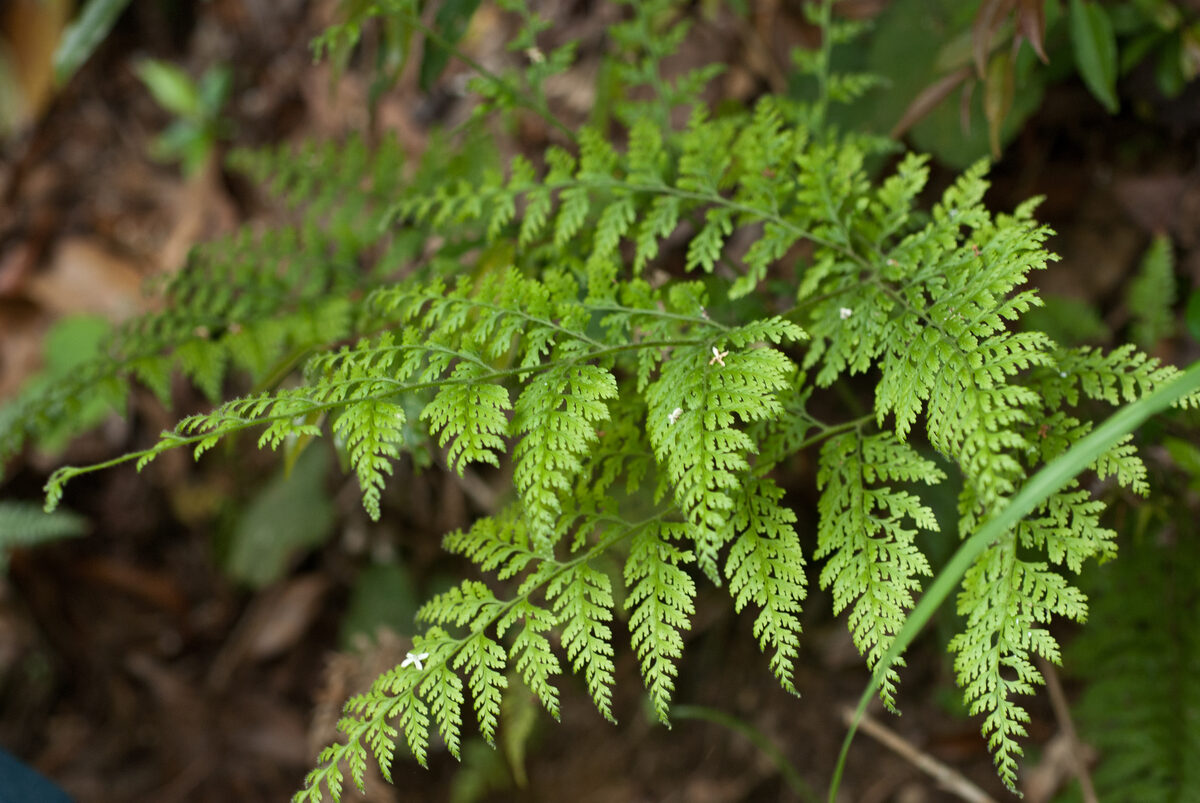
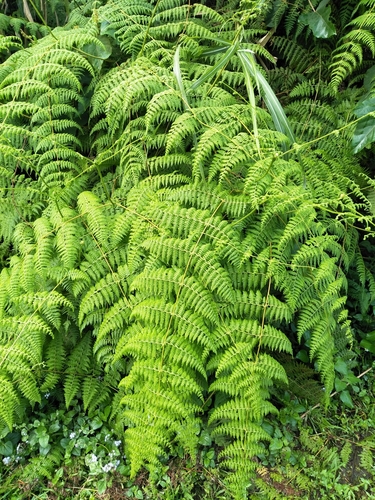
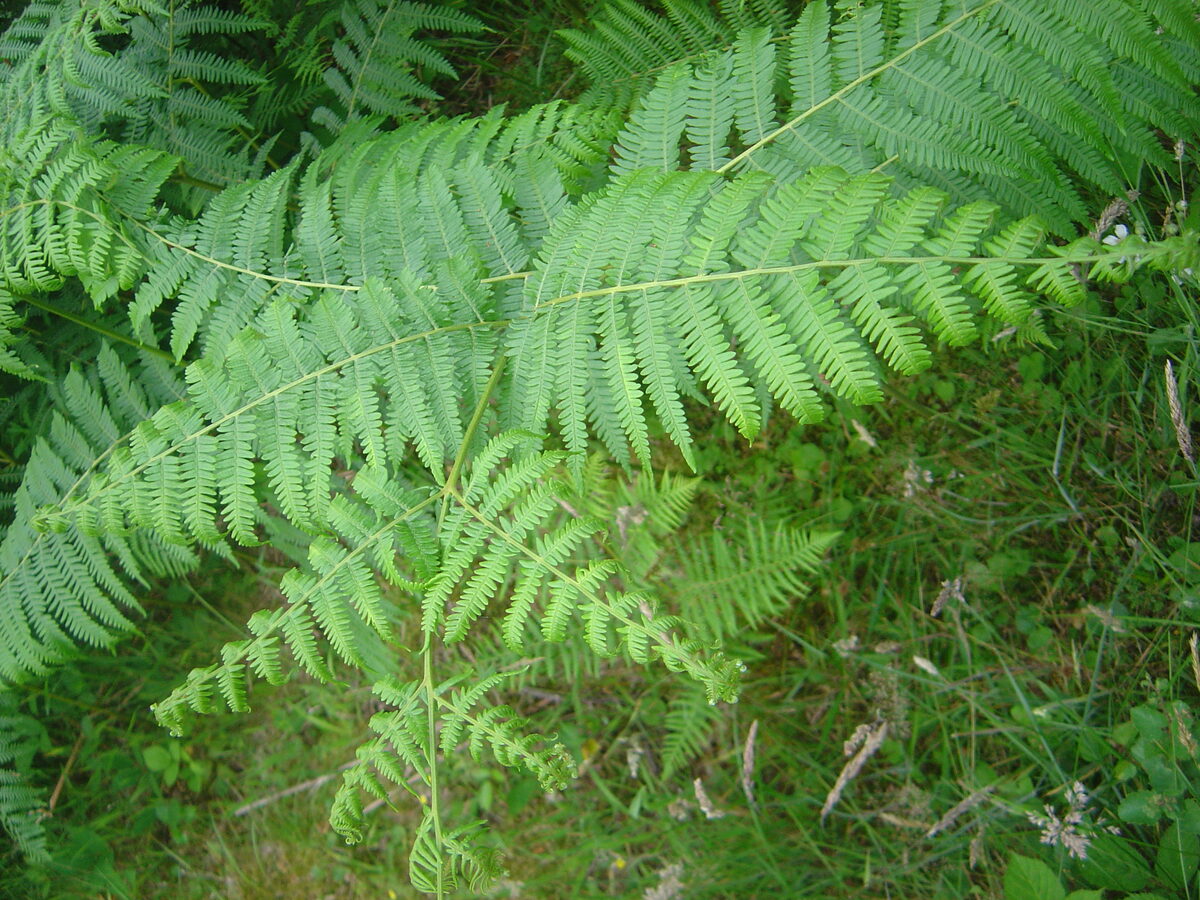
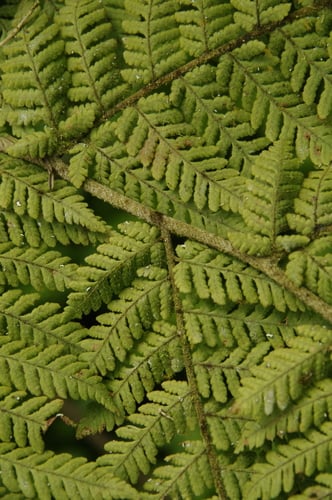
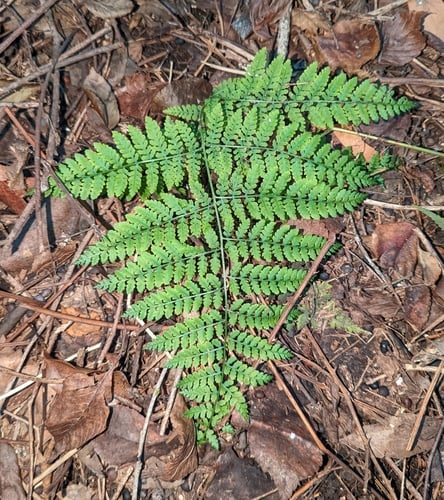
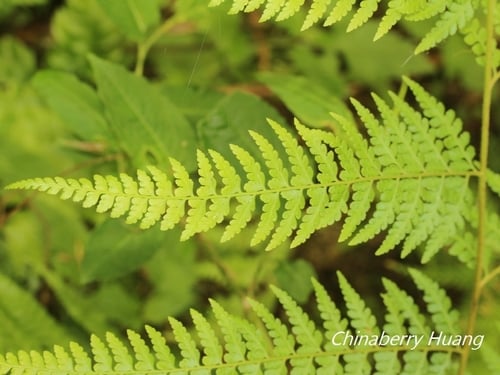
Pteridium aquilinum
(L.) Kuhn
iNaturalist· cc-by
(c) Timothy McNitt, some rights reserved (CC BY), uploaded by Timothy McNitt
iNaturalist· cc-by-nc-sa
(c) c michael hogan, some rights reserved (CC BY-NC-SA), uploaded by c michael hogan
iNaturalist· cc-by
(c) João Medeiros, some rights reserved (CC BY)
Summary
Source: WikipediaPteridium aquilinum, commonly called bracken, brake, pasture brake, common bracken, and also known as eagle fern, is a species of fern occurring in temperate and subtropical regions in both hemispheres. Originally native to Eurasia and North America, the extreme lightness of its spores has led to it achieving a cosmopolitan distribution.
Description
A fern. The leaves are fleshy and simple. They are leathery. The spores are on spikes at the ends of the plant.
This description is brief — help expand it
Edible Uses
The root is cooked and can be dried and ground into a powder. It is very fibrous, so traditionally it was baked after drying, the outer skin peeled off, and the inner root pounded with sticks to remove the fibres. Dried root stores for years and contains around 60% starch, with dry-weight starch content ranging from 43 to 72%. This starch can be extracted and used to make dumplings, eaten with soya flour and sugar as a delicacy. Because the root has a somewhat constipating effect, it is best eaten alongside foods with a laxative quality. Young shoots, harvested while still unfurling and less than 20cm long, can be eaten raw or cooked — used like asparagus or spinach. Longer shoots have a poor taste. The shoots are somewhat bitter, so they are often blanched for a few minutes in boiling water and then soaked in cold water for two hours before cooking, though this significantly reduces nutritional value. The shoots should be steeped in lye first. Occasional use should cause no problems, but regular consumption is not advisable as the shoots may be carcinogenic. The plant also yields an edible saccharine substance.
Traditional Uses
The very young fiddle heads are peeled and boiled and eaten. The water is often changed several times. They are canned for later use. The rhizomes are used as an ingredient in bread. They are also pickled. Caution: This plant contains chemicals that cause cancer.
Medicinal Uses
The young shoots are diuretic, refrigerant, and vermifuge, and have been eaten as a treatment for cancer. The leaves have been used in a steam bath to treat arthritis, and a decoction of the plant has been used for tuberculosis. A poultice of pounded fronds and leaves is applied to sores of any type and used to hold broken bones in place. The root is antiemetic, antiseptic, an appetite stimulant, and tonic. A tincture of the root in wine treats rheumatism, and a root tea is used for stomach cramps, chest pains, internal bleeding, diarrhoea, colds, and expelling worms. Poulticed root is applied to sores, burns, and caked breasts.
Known Hazards
The plant contains the carcinogenic compound ptaquiloside. Ptaquiloside is known to cause haemorrhagic diseases in ruminants, tumours and haematological problems in non-ruminants, and is correlated with oesophageal and gastric cancer in humans. Chronic bracken consumption is also associated with upper digestive tract (UDT) squamous cell carcinomas in cattle (ruminants)—with the most aggressive and serious tumors located in the caudal (lower) UDT. High stomach cancer rates are found in Japan and North Wales, where the young stems are used as a vegetable, but it is unknown whether bracken plays any part or if the cancer can be attributed to another cause. Consumption of ptaquiloside-contaminated milk is thought to contribute to human gastric cancer in the Andean states of Venezuela. The spores have also been implicated as carcinogens. Consumption of contaminated water and meat may be dangerous as well. However, ptaquiloside is water-soluble, and is reduced by soaking bracken in cool water. Korean and Japanese cooks have traditionally soaked the shoots in water and ash to detoxify the plant before eating. Ptaquiloside also degenerates at room temperature, which explains why the rat studies were done with the toxin stored at −20 °C (−4 °F). At boiling temperature, the carcinogen denatures almost completely. Salt and baking soda also help with volatilizing the chemical. It has been suggested that selenium supplementation can prevent as well as reverse the immunotoxic effects induced by ptaquiloside from Pteridium aquilinum.
Distribution
It is a temperate plant. It grows in shady places.
Where It Grows
Africa, Alaska, Angola, Asia, Brazil, Britain, Cameroon, Central Africa, China, Congo DR, Crete, Czech Republic, East Africa, Estonia, Europe, Fiji, Finland, Gabon, Greece, Himalayas, India, Indochina, Indonesia, Japan, Korea, Laos, Luxembourg, Madagascar, Malaysia, Mediterranean, Mongolia, Mozambique, Nepal, Nigeria, North America, Northeastern India, Nepal, NW India, Pacific, Pakistan, Papua, Philippines, Russia, Scandinavia, SE Asia, Slovenia, South Africa, Southern Africa, South America, Spain, Sweden, Tibet, Turkey, Türkiye, USA, West Papua,
Cultivation
Pteridium aquilinum is possibly the most widespread species of plant in the world, it can be found on every continent, even Antarctica, from the temperate to the tropical zones, though especially in the temperate regions. Prefers a light, acid, deep sandy soil. Dislikes shade according to some reports whilst another says that it tolerates full sun but prefers light shade. Prefers a pH in the range 4 to 6. This is an extremely invasive plant and is a noxious weed. It is one of the most widespread plants in the world, being found in all parts of the globe other than the extreme north and south. Plants can be cut down twice a year to provide compost material, this will not kill the plants. If the plants are cut down three times a year this will gradually weaken and eventually kill them. Members of this genus are rarely if ever troubled by browsing deer.
Propagation
Spores can be surface-sown in the same way as other ferns, though this plant spreads readily on its own without assistance. Division is also possible but is rarely necessary.
Other Uses
Bracken fern can be used as ground cover to prevent soil erosion and improve soil quality, though it is considered invasive in some areas and can suppress other plants. A glue can be made from the rootstock. The fronds yield a brown dye (reported as green in another source). The fibrous remnants of edible roots make good tinder. The rhizome lathers readily in water and can be used as a soap. A decoction of the root has been used as a hair wash, and the roots have been rubbed into the scalp to promote hair growth. Roots can be pounded to remove bark, split into flat strips, and used as the black strands in cheap baskets. Plant ash is rich in potassium and can serve as fertilizer, and is also used in glass manufacture (mixed with sand) and soap making (mixed with vegetable oil). Roots contain up to 20% potash in early summer, falling to around 5% in autumn. The whole plant is a valuable compost addition, rich in potash and well suited to composting tree seeds. Cutting the plant twice a year allows it to continue growing; three cuts annually will gradually weaken and kill it. Dried fronds make a very durable thatch. The leaves are used as packing material for fruit, keeping it fresh and cool without imparting colour or flavour, and as basket linings, fruit-drying rack liners, and bedding. The leaves repel insects and help prevent rot in stored fruits. Dried bracken fronds are useful as a garden mulch for tender plants, keeping soil warmer, protecting from wind, and reducing rainfall penetration.
Notes
It causes cancer.
Synonyms
Also Known As
Aetos, Biteku, Churuli, Egrelti, Falguera, Fteri, Helecho, Idea, Jie ma, Jue fen, Jue tai cai, Kakaie, Kwangai, Losup, Nteko, Matekwa tekwa, Nkungambwa, Okang oing, Paku bedegak, Paporotnik, Resam, Samambaia-das-taperas, Shatri, Thaivasoppu, Uneu
References (43)
- Amoroso, V. B., et al., 2017, Bringing back the Lost Value of Philippine EdibleFerns: Their Antioxidant, Proteins and Utilization. International Journal of Advanced research. 5(4), 757-770
- Blanco-Salas, J., et al, 2019, Wild Plants Potentially Used in Human Food in the Protected Area “Sierra Grande de Hornachos” of Extremadura (Spain). Sustainability 2019, 11, 456
- Bonet, M. A. & Valles, J., 2002, Use of non-crop food vascular plants in Montseny biosphere reserve (Catalonia, Iberian Peninsula). International Journal of Food Sciences and Nutrition (2002) 53, 225–248
- Cerne, M., 1992, Wild Plants from Slovenia used as Vegetables. Acta Horticulturae 318.
- Chai, P. P. K. (Ed), et al, 2000, A checklist of Flora, Fauna, Food and Medicinal Plants. Lanjak Entimau Wildlife Sanctuary, Sarawak. Forestry Malaysia & ITTO. p 159
Show all 43 references Hide references
- Chapman, J. D. & Chapman, H. M., 2001, The Forest Flora of Taraba and Andamawa States, Nigeria. WWF & University of Canterbury. p 216
- Chen, B. & Qiu, Z., Consumer's Attitudes towards Edible Wild Plants, Ishikawa Prefecture, Japan. p 24 www.hindawi.com/journals/ijfr/aip/872413.pdf
- Dangol, D. R. et al, 2017, Wild Edible Plants in Nepal. Proceedings of 2nd National Workshop on CUAOGR, 2017.
- Dretakis, M. et al, 2012, Flora and Fauna Biodiversity in an ancient olive grove in Crete (Greece) in Calabrese G. (Ed.) Study on Biodiversity in Century-Old Olive Groves. CIHEAM - Mediterranean Agronomic Institute of Bari. p 94
- Ertug, F, Yenen Bitkiler. Resimli Türkiye Florası -I- Flora of Turkey - Ethnobotany supplement
- Gautam, R. S., et al, 2022, Ethnobotanical Review of Wild Edible Plants of Nepal. Journal of Natural History Museum Volume 32, 2021-22 p 111
- Ghosh, C. & Das A. P., 2011, Some useful and poisonous tea garden weeds from the Darjiling District of West Bengal, India. Pleione 5(1): 91 - 114
- Guo, C., et al, 2022, An Ethnobotany Survey of Wild Plants Used by the Tibetan People of the Yadong River Valley, Tibet, China. Journal of Ethnobiology and Ethnomedicine p 24
- Haj, F., et al, 2012, Species Diversity and Ethno Botanical Classes of the Flora of Allai Valley District Battagram Pakistan. International Journal of Plant Research 2012, 2(4): 111-123
- Heller, C. A., 1962, Wild Edible and Poisonous Plants of Alaska. Univ. of Alaska Extension Service. p 25
- Hirono, I., 1993, Edible Plants Containing Naturally Occurring Carcinogens in Japan. Jpn. J. Cancer Res. 84, 997-1006
- Irving, M., 2009, The Forager Handbook, A Guide to the Edible Plants of Britain. Ebury Press p 353
- Joshi, K. and Joshi, A. R., 2008, Ethnobotanical Studies on Some Lower Plants of the Central Development Region, Nepal. Ethnobotanical Leaflets 12:832-40
- Joshi, N., et al, 2007, Traditional neglected vegetables of Nepal: Their sustainable utilization for meeting human needs. Tropentag 2007. Conference on International Agricultural Research for Development.
- Kalle, R. & Soukand, R., 2012, Historical ethnobotanical review of wild edible plants of Estonia (1770s-1960s) Acta Societatis Botanicorum Poloniae 81(4):271-281
- Kang, Y., et al, 2012, Wild food plants and wild edible fungi in two valleys on the Qinling Mountains (Shaanxi, central China) Journal of Ethnobiology and Ethnomedicine; 9:26
- Kermath, B. M., et al, 2014, Food Plants in the Americas: A survey of the domesticated, cultivated and wild plants used for Human food in North, Central and South America and the Caribbean. On line draft. p 726
- Kinupp, V. F., 2007, Plantas alimenticias nao-convencionais da regiao metropolitana de Porto Alegre, RS, Brazil p 76
- Kolosova, V., et al, 2020, Foraging in Boreal Forest: Wild Food Plants of the Republic of Karelia, NW Russia. Foods 2020, 9, 1015; p 8
- Latham, P., 2004, Useful Plants of Bas-Congo province. Salvation Army & DFID p 231
- Liengola, I. B., 2001, A contribution to the study of native edible plants by the Turumbu and Lokele of the Tshopo District, Province Orientale, D. R. Congo. Syst. Geogr. Pl. 71:687-698
- Lim, T. K., 2015, Edible Medicinal and Non Medicinal Plants. Volume 9, Modified Stems, Roots, Bulbs. Springer p 69
- Maroyi, A., 2014, Not just minor wild edible forest products: consumption of pteridophytes in sub-Saharan Africa. Journal of Ethnobiology and Ethnomedicine. 10:78
- Menendez-Baceta, G., et al, 2012, Wild edible plants traditionally gathered in Gorbeialdea (Biscay, Basque Country) Genetic Resources and Crop Evolution 59:1329-1347
- Milliken, W., 2000, Ethnobotany of the Yali of West Papua. Royal Botanical Garden, Edinburgh. p 10 (near Baliem)
- Moerman, D. F., 2010, Native American Ethnobotany. Timber Press. p 452
- Narayanan Ratheesh, M. K. et al, 2011, Wild edible plants used by the Kattunaikka, Paniya and Kuruma tribes of Wayanad District, Kerala, India. Journal of Medicinal Plants Research Vol. 5(15), pp. 3520-3529
- Patiri, B. & Borah, A., 2007, Wild Edible Plants of Assam. Geethaki Publishers. p 164
- Peters, C. R. et al, 1992, Edible Wild Plants of SubSaharan Africa, Royal Botanical Gardens, Kew p 5
- Sher, H. et al, 2011, Ethnobotanical and Economic Observations of Some Plant Resources from the Northern Parts of Pakistan. Ethnobotany research & Applications 9:027-041
- Simkova, K. et al, 2014, Ethnobotanical review of wild edible plants used in the Czech Republic. Journal of Applied Botany and Food Quality 88, 49-67
- Singh, B., et al, 2012, Wild edible plants used by Garo tribes of Nokrek Biosphere Reserve in Meghalaya, India. Indian Journal of Traditional Knowledge. 11(1) pp 166-171
- Taram, M., et al, 2018, Wild Food Plant Resources of Komkar Adi Tribe of Upper Siang District in Arunachal Pradesh, India. Bulletin of Arunachal Forest Research, Vol. 33(2), 27-35
- Terashima, H., et al, 1991, Ethnobotany of the Lega in the tropical rainforest of eastern Zaire: part 1, Zone de Mwenga. African Study Monographs. Suppl. 15:1-61
- Ulian, T., et al, 2020, Unlocking plant resources to support food security and promote sustainable agriculture. Plants, People, Planet. 2020;2:421–445.
- Urgamal, M., et al, 2014, Conspectus of the Vascular Plants of Mongolia. Mongolia Academy of Sciences Institute of Botany and National University of Mongolia Department of Biology. p 31
- Wang, J., et al, 2020, An ethnobotanical survey of wild edible plants used by the Yi people of Liangshan Prefecture, Sichuan Province, China. Journal of Ethnobiology and Ethnomedicine 16:10 p 7
- World Checklist of Useful Plant Species 2020. Royal Botanic Gardens, Kew