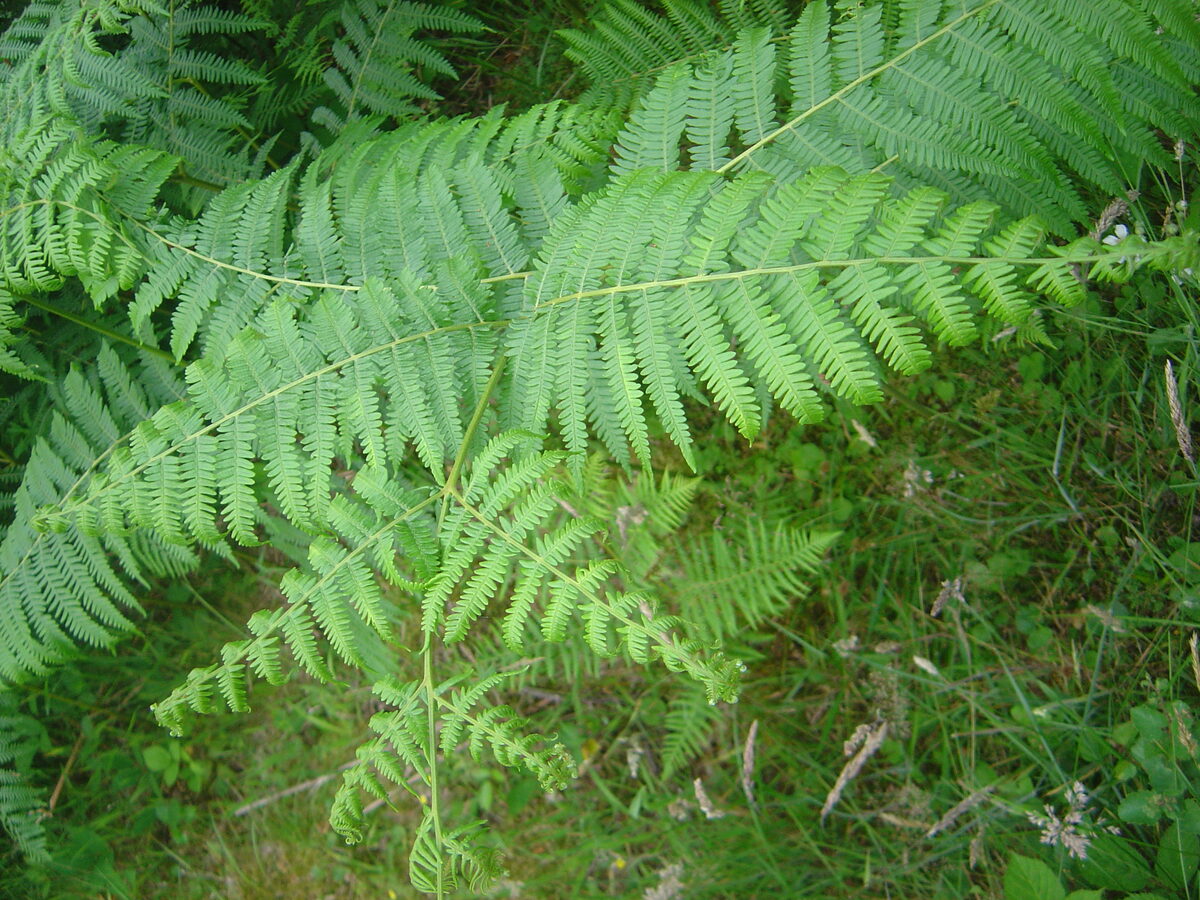
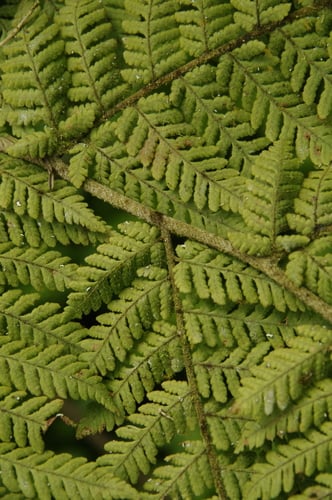
Pteridium aquilinum var. esculentum
(G. Forst.) Kuhn
Bracken fern, Fiddlehead Fern
iNaturalist· cc-by-nc-sa
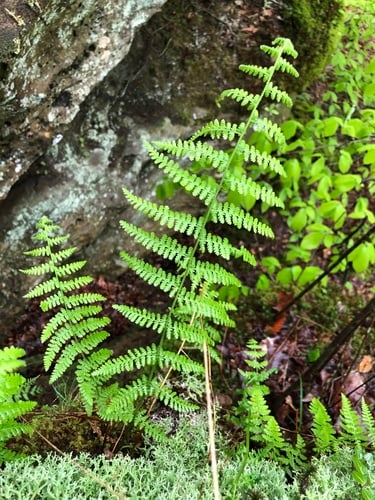
(c) Reiner Richter, some rights reserved (CC BY-NC-SA)
iNaturalist· cc-by-nc-sa
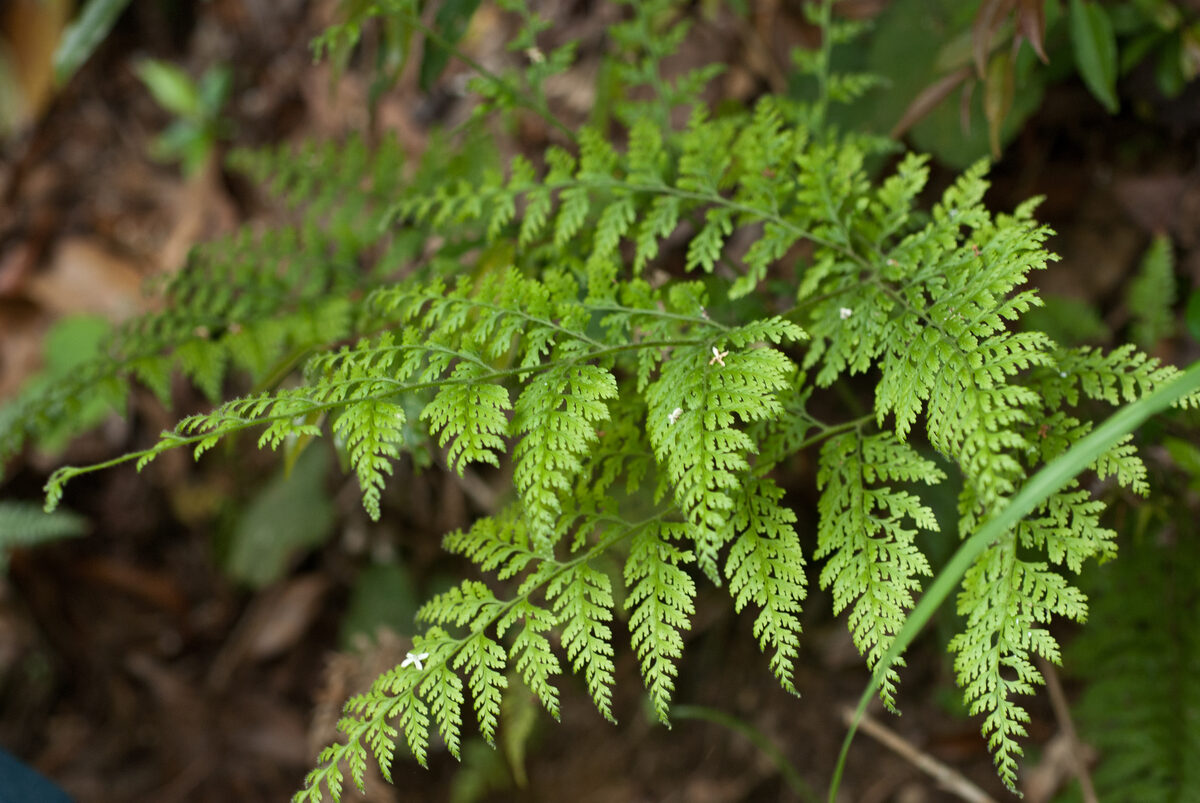
(c) c michael hogan, some rights reserved (CC BY-NC-SA), uploaded by c michael hogan
iNaturalist· cc-by-nc-sa
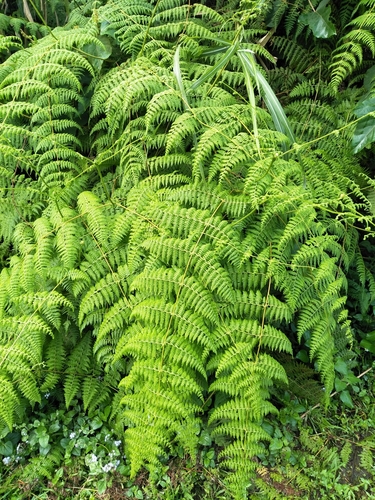
(c) Reiner Richter, some rights reserved (CC BY-NC-SA)
Summary
Source: WikipediaPteridium aquilinum, commonly called bracken, brake, pasture brake, common bracken, and also known as eagle fern, is a species of fern occurring in temperate and subtropical regions in both hemispheres. Originally native to Eurasia and North America, the extreme lightness of its spores has led to it achieving a cosmopolitan distribution.
Description
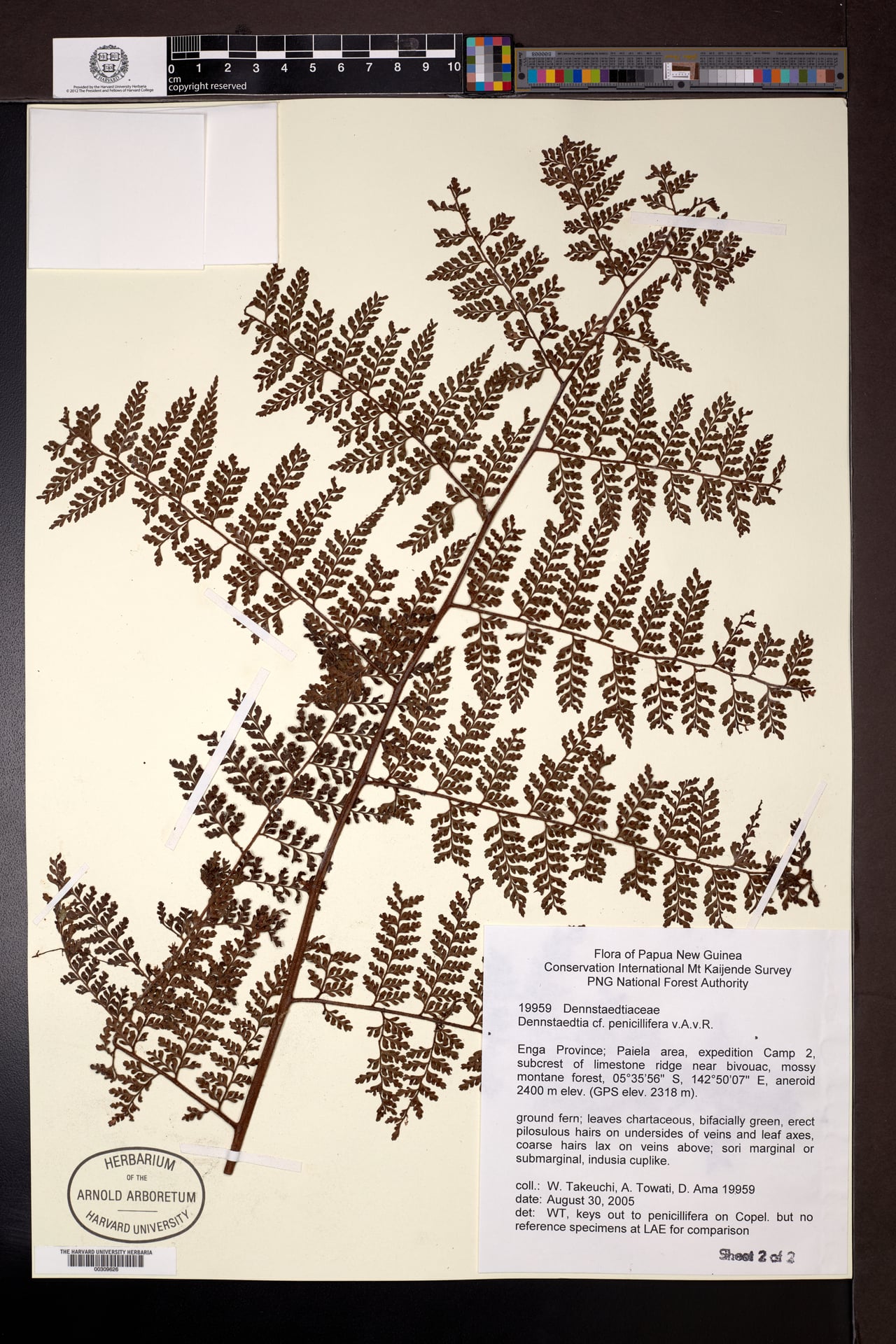
A fern. It grows on land. The rhizome is long and creeping. It is covered with fine pale brown hairs. The fronds are large. They are divided 3-4 times. The lowest pair of leaflets are larger than the others. The young leaves curl like a fiddle-head before they unfold. The spore bodies are around the edge. Now Pteridium esculentum
Edible Uses
The young tender fronds (fiddleheads) are cooked and eaten as a vegetable. Underground stems and roots have been eaten as a famine food, roasted and ground into flour.
Traditional Uses
The young tender fronds (fiddleheads) are cooked and eaten as a vegetable. The underground stems or roots have been eaten as a famine food. They can be roasted and ground into flour. CAUTION: The young fronds contain a cancer causing substance called ptaquiloside. Cooking or blanching may remove this but normally bracken should not be eaten regularly.
Medicinal Uses
P. aquilinum has been investigated for its anti-inflammatory and antioxidative properties. In Finnish traditional medicine, bracken has been used as a remedy in many ways: Elias Lönnrot advised to use a powder made of the plant's roots to drive away maggots. A decoction made of bracken was used to treat stomach problems, gout and joint pain. The leaves have been used as filling in mattresses, because it was believed to lessen rheumatic pain and drive away vermin.
Known Hazards
The plant contains the carcinogenic compound ptaquiloside. Ptaquiloside is known to cause haemorrhagic diseases in ruminants, tumours and haematological problems in non-ruminants, and is correlated with oesophageal and gastric cancer in humans. Chronic bracken consumption is also associated with upper digestive tract (UDT) squamous cell carcinomas in cattle (ruminants)—with the most aggressive and serious tumors located in the caudal (lower) UDT. High stomach cancer rates are found in Japan and North Wales, where the young stems are used as a vegetable, but it is unknown whether bracken plays any part or if the cancer can be attributed to another cause. Consumption of ptaquiloside-contaminated milk is thought to contribute to human gastric cancer in the Andean states of Venezuela. The spores have also been implicated as carcinogens. Consumption of contaminated water and meat may be dangerous as well. However, ptaquiloside is water-soluble, and is reduced by soaking bracken in cool water. Korean and Japanese cooks have traditionally soaked the shoots in water and ash to detoxify the plant before eating. Ptaquiloside also degenerates at room temperature, which explains why the rat studies were done with the toxin stored at −20 °C (−4 °F). At boiling temperature, the carcinogen denatures almost completely. Salt and baking soda also help with volatilizing the chemical. It has been suggested that selenium supplementation can prevent as well as reverse the immunotoxic effects induced by ptaquiloside from Pteridium aquilinum.
Distribution
A temperate plant. In Nepal it grows between 1200-3400 m altitude. In southern China it grows at about 1,000 m above sea level. It grows in open, damp hillsides. It suits hardiness zones 8-11.
Where It Grows
Africa, Angola, Asia, Australia, Balkans, Bosnia, Cambodia, Cameroon, Central Africa, China, Congo DR, East Africa, East Timor, Eswatini, Europe, Fiji, France, Gabon, Himalayas, India, Indochina, Indonesia, Japan, Korea, Madagascar, Malaysia, Nepal, New Caledonia, New Zealand, Norfolk Island, North America, Pacific, Philippines, Samoa, SE Asia, Southern Africa, Sri Lanka, Swaziland, Taiwan, Thailand, Timor-Leste, USA, Vanuatu, Vietnam, Worldwide,
Other Information
It is a commercially cultivated vegetable. It has been used as a minor food in many countries. It is still used significantly in Japan and Korea. It is available imported in Chinese stores in Australia.
Synonyms
Also Known As
Adlerfarn, Bujad, Felce aquilina, Gougere aigle, Isili, Kosari, Lilele, Pako shida, Pako, Phak kuut, Sawarabi, Zenmai
References (28)
- Ambasta S.P. (Ed.), 2000, The Useful Plants of India. CSIR India. p 500 (As Pteridium aquilinum var. esculentum)
- Andrews, S.B., 1990, Ferns of Queensland. A handbook to the ferns and fern allies. Queensland DPI p 131
- Anderson, E. F., 1993, Plants and people of the Golden Triangle. Dioscorides Press. p 219
- Chaetopt. 27. 1882
- "Chinese Nutrition Journal", 2002, Vol 23(8) p 298 (As Petridium aquilinum L.)
Show all 28 references Hide references
- Clarke, P. A., 2013, The Aboriginal Ethnobotany of the Adelaide Region, South Australia. Transactions of the Royal Society of South Australia. (2013), 137(1): 97-126
- Cundall, P., (ed.), 2004, Gardening Australia: flora: the gardener's bible. ABC Books. p 1106 (As Pteridium aquilinum var. esculentum)
- Grubben, G. J. H. and Denton, O. A. (eds), 2004, Plant Resources of Tropical Africa 2. Vegetables. PROTA, Wageningen, Netherlands. p 439
- Henty, E.E., 1980, Harmful Plants in Papua New Guinea. Botany Bulletin No 12. Division Botany, Lae, Papua New Guinea. p 4 (As Pteridium aquilinum var. esculentum)
- Islam, M., 1983, Utilisation of Certain Ferns and Fern Allies in the North-Eastern Region, India. J.Econ. Tax. Bot. Vol.4.No.3 pp 861- (Pteris aquilinum)
- Jardin, C., 1970, List of Foods Used In Africa, FAO Nutrition Information Document Series No 2.p 112 (As Pteridium aquilinum var. esculentum)
- Kays, S. J., and Dias, J. C. S., 1995, Common Names of Commercially Cultivated Vegetables of the World in 15 languages. Economic Botany, Vol. 49, No. 2, pp. 115-152 (As Pteridium aquilinum)
- Kiple, K.F. & Ornelas, K.C., (eds), 2000, The Cambridge World History of Food. CUP p 1736 (As Pteridium aquilinum var. esculentum)
- Long, C., 2005, Swaziland's Flora - siSwati names and Uses http://www.sntc.org.sz/flora/
- Manandhar, N.P., 2002, Plants and People of Nepal. Timber Press. Portland, Oregon. p 383
- Pham-Hoang Ho, 1999, An Illustrated Flora of Vietnam. Nha Xuat Ban Tre. p 121 ?
- Plants for a Future database, The Field, Penpol, Lostwithiel, Cornwall, PL22 0NG, UK. http://www.scs.leeds.ac.uk/pfaf/
- Rajkalkshmi, P. et al, 2001, Total carotenoid and beta-carotene contents of forest green leafy vegetables consumed by tribals of south India. Plant Foods for Human Nutrition 56:225-238
- Redzic, S. J., 2006, Wild Edible Plants and their Traditional Use in the Human Nutrition in Bosnia-Herzegovina. Ecology of Food and Nutrition, 45:189-232
- Saunders, C.F., 1948, Edible and Useful Wild Plants. Dover. New York. p 114
- Singh, H.B., Arora R.K.,1978, Wild edible Plants of India. Indian Council of Agricultural Research, New Delhi. p 34
- SUTTON,
- Termote, C., et al, 2011, Eating from the wild: Turumbu, Mbole and Bali traditional knowledge of non-cultivated edible plants, District Tshopo, DRCongo, Gen Resourc Crop Evol. 58:585-618
- USDA, ARS, National Genetic Resources Program. Germplasm Resources Information Network - (GRIN). [Online Database] National Germplasm Resources Laboratory, Beltsville, Maryland. Available: www.ars-grin.gov/cgi-bin/npgs/html/econ.pl (10 April 2000)
- van der Burg, W.J., 2004. Pteridium aquilinum (L.) Kuhn. [Internet] Record from Protabase. Grubben, G.J.H. & Denton, O.A. (Editors). PROTA (Plant Resources of Tropical Africa), Wageningen, Netherlands. < http://database.prota.org/search.htm>. Accessed 22 October 2009.
- van Wyk, B., 2005, Food Plants of the World. An illustrated guide. Timber press. p 315
- Vartak, V.D. and Kulkarni, D.K., 1987, Monsoon wild leafy vegetables from hilly regions of Pune and neighbouring districts, Maharashtra state. J. Econ. Tax. Bot. Vol. 11 No. 2 pp 331-335
- www.eFloras.org Flora of China