Microlepia speluncae
(L.) T. Moore
Cave Fern, Limpleaf fern
iNaturalist· cc-by-nc
(c) Lijin Huang (紫楝), some rights reserved (CC BY-NC), uploaded by Lijin Huang (紫楝)
iNaturalist· cc-by-nc
(c) whc, some rights reserved (CC BY-NC), uploaded by whc
iNaturalist· cc0
no rights reserved
Description
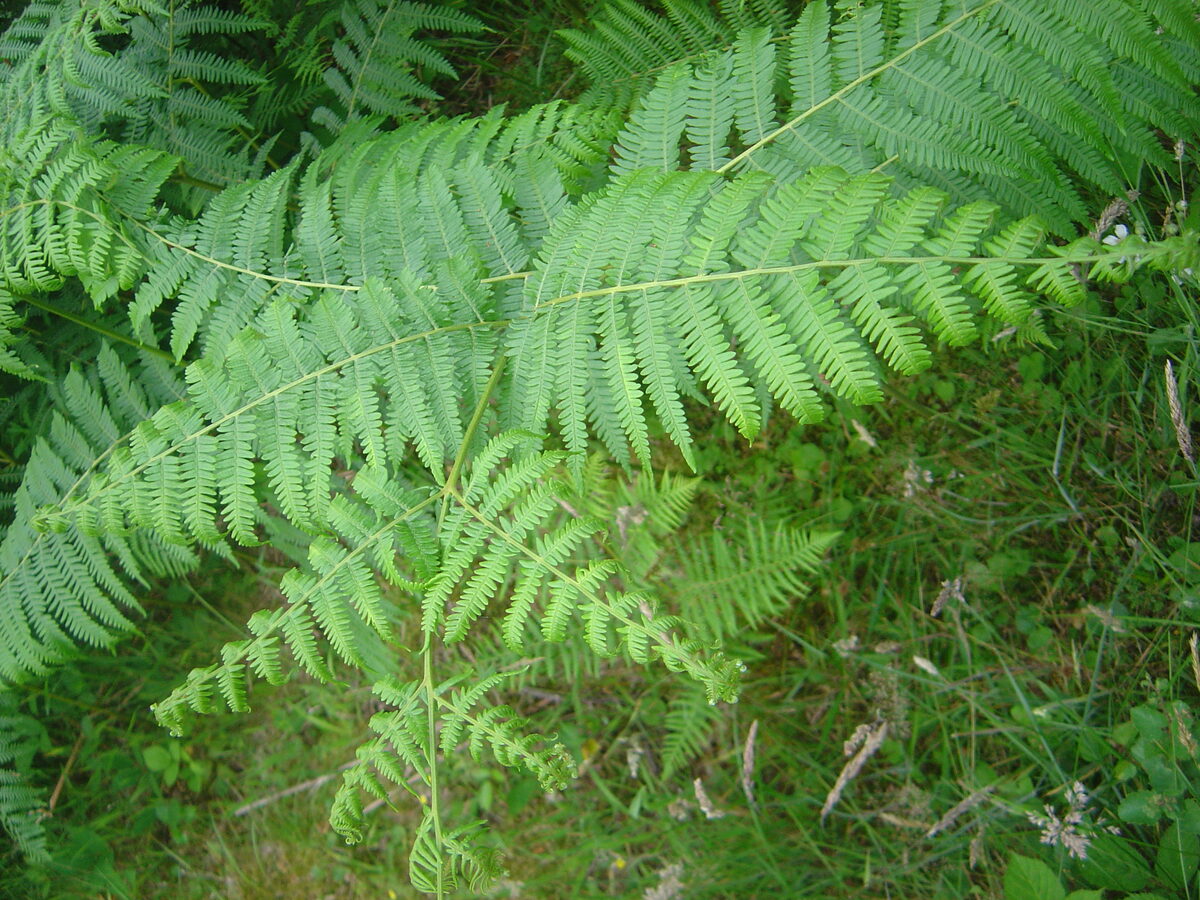
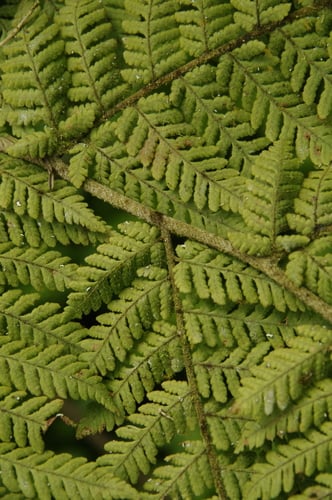
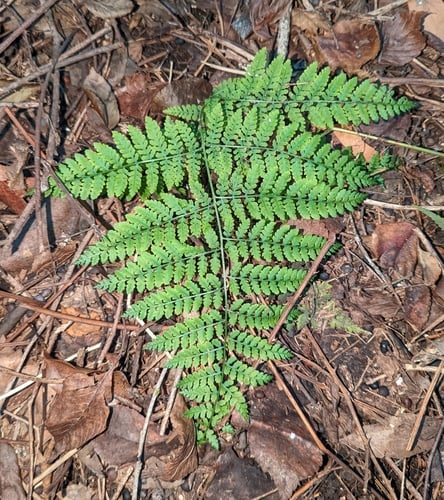
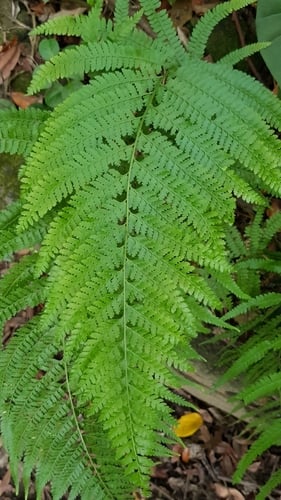
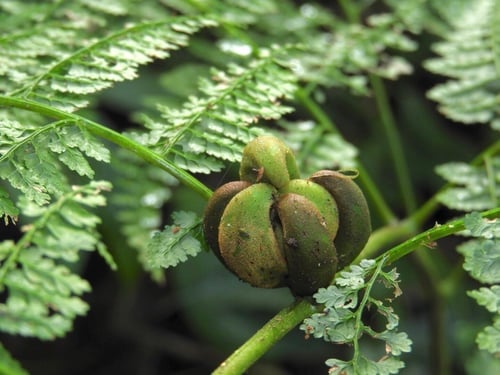
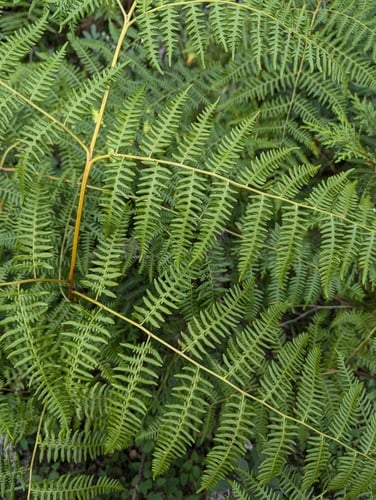
A large fern. It has creeping rhizomes. These are fleshy. It grows 0.7-2 m high. It forms spreading clumps. The fronds are erect and pale green. They are 0.7-2 m long and the stalks are 30-70 cm long. They are pale brown and hairy. The frond blade is 0.7-1.3 m long by 0.6-1 m wide and they are almost a triangle shape. They are divided 2-4 times. They are dull green. The sori or spore bodies are cup shaped.
Edible Uses
The leaves and shoots are eaten as a vegetable, though caution is advised.
Traditional Uses
CAUTION: It is possibly poisonous.
This uses section is brief — help expand it
Medicinal Uses
None mentioned.
Known Hazards
Possibly poisonous.
Distribution
It is a tropical plant. It grows in sheltered spots in the rainforest. It grows up to 1,200 m above sea level. It suits humid locations. In Zimbabwe it grows up to 1,650 m above sea level. In Argentina it grows below 700 m above sea level. It suits hardiness zones 11-12.
Where It Grows
Africa, American Samoa, Argentina, Asia, Australia, Bhutan, Botswana, Brazil, Cambodia, Central African Republic, CAR, Congo DR, China, East Africa, East Timor, Eswatini, Gabon, Guam, Himalayas, India, Indochina, Indonesia, Japan, Laos, Madagascar, Micronesia, Myanmar, Nepal, Pacific, Palau, Papua New Guinea, PNG, Paraguay, Philippines, SE Asia, Sierra Leone, Solomon Islands, South Africa, Southern Africa, South America, Sri Lanka, Swaziland, Taiwan, Thailand, Timor-Leste, Vietnam, Wallis and Futuna, West Africa, West Indies, Worldwide, Zimbabwe,
Cultivation
Plants can be grown from spores or by division of the clump. Plants do not like to be disturbed. They are slow to establish after moving.
Notes
There are about 45-50 Microlepia species. They grow in the tropics.
Synonyms
Also Known As
Kilele, Kirere, Pakis gua, Teanum, Tortum, Tumbin
References (23)
- Andrews, S.B., 1990, Ferns of Queensland. A handbook to the ferns and fern allies. Queensland DPI p 129
- Burkill, I.H., 1966, A Dictionary of the Economic Products of the Malay Peninsula. Ministry of Agriculture and Cooperatives, Kuala Lumpur, Malaysia. Vol 2 (I-Z) p 1492
- Chaffey, C.H., 1999, Australian Ferns. Growing them successfully. Kangaroo Press. p 11, 179, 196
- Chin, W.Y., 1998, Ferns in the Tropics. Kangaroo. p 141
- Cowie, I, 2006, A Survey of Flora and vegetation of the proposed Jaco-Tutuala-Lore National Park. Timor-Lests (East Timor) www.territorystories.nt/gov.au p 46
Show all 23 references Hide references
- Croft, J., 1982, Ferns and Man in New Guinea
- Cronin, L., 1989, The Concise Australian Flora. Reed. p 280
- Cundall, P., (ed.), 2004, Gardening Australia: flora: the gardener's bible. ABC Books. p 894
- Elliot, W.R., & Jones, D.L., 1993, Encyclopedia of Australian Plants suitable for cultivation. Vol 6. Lothian. p 404 (Photo)
- Flora of Solomon Islands
- Goudey, C.J., 1988, A Handbook of Ferns for Australia and New Zealand. Lothian. p 123
- Harris, D. J., 2002, The vascular plants of the Dzanga-Sangha Reserve, Central African Republic. National Botanic Garden of Belgium, 2002. – 274 pages p 28
- Hibbert, M., 2002, The Aussie Plant Finder 2002, Florilegium. p 197
- Index fil. XVIII. 1857
- Leach, G., 1972,
- Leach, G. J., 1988, Bush Food Plants of the Blackwater and Karawari Rivers Area, East Sepik Province, Papua New Guinea. Science in New Guinea 14(2). p 98
- Paczkowska, G . & Chapman, A.R., 2000, The Western Australian Flora. A Descriptive Calatogue. Western Australian Herbarium. p 23
- Setshogo, M. P., 2005, Preliminary checklist of the plants of Botswana. Southern African Botanical Diversity Network Report No. 37. SABONET, Pretoria and Gaborone.
- Sukarya, D. G., (Ed.) 2013, 3,500 Plant Species of the Botanic Gardens of Indonesia. LIPI p 873
- Swaziland's Flora Database http://www.sntc.org.sz/flora
- World Checklist of Useful Plant Species 2020. Royal Botanic Gardens, Kew
- Yamada, T., 1999, A report of the Ethnobotany of the Nyindu in the Eastern part of the former Zaire. African Study Monographs 20(1):1-72
- www.eFloras.org Flora of China